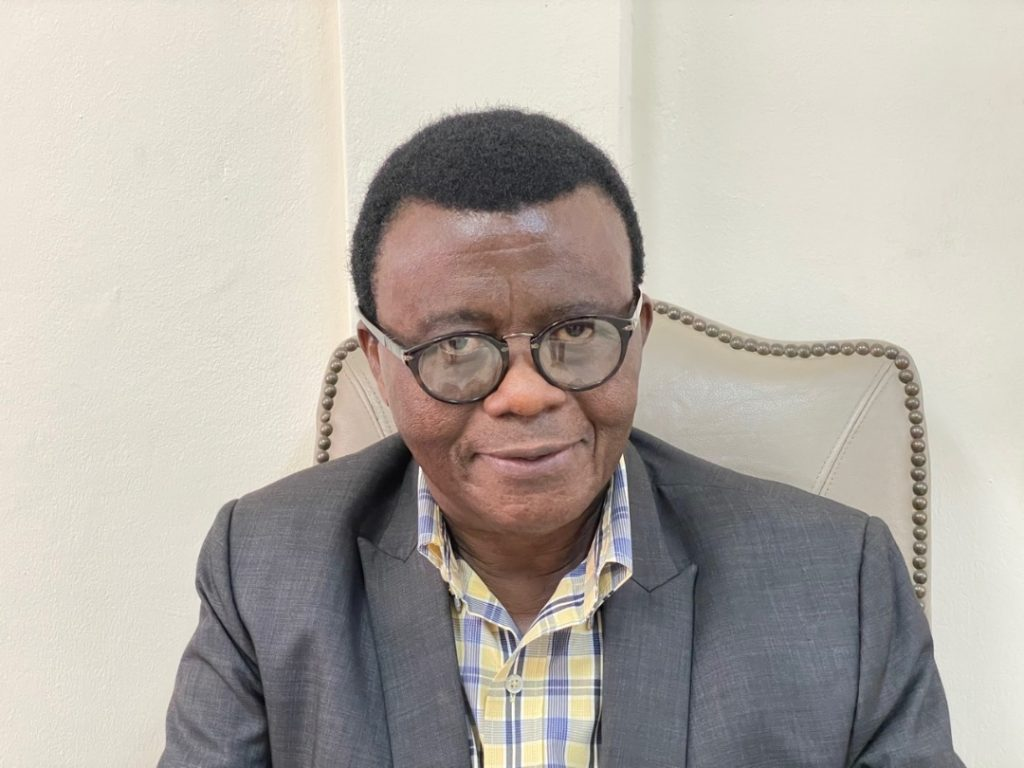

A Governance Expert, Professor Baffour Agyeman-Duah, has called for a thorough, national probe into the operations of the Ghana Cocoa Board (COCOBOD).
He made the point that there is a need to clean up COCOBO and ensure that future managers do not mismanage it with recklessness.
“We need a national probe into the operations of COCOBOD since 1992. We need to clean up the mess and create new laws that will prevent management from being reckless,” he said on the Key Points on TV3 Saturday, February 7.
He added that it sad for “so-called knowledgeable” people to be put in charge of such strategic national assets only for them to mismanage them.
His comment came after the CEO of Ghana Cocoa Board (COCOBOD), Dr Randy Abbey announced that the COCOBOD Bill would be going to Parliament by next week.
He said that the Bill will look at new funding and pricing models.
Dr Abbey indicated that with almost 80 years of operations, COCOBD cannot continue to do the same things all the time. This explains the introduction of the Bill, he said
“Hopefully, by next week, the COCOBOD Bill will go to parliament,” he said on the Key Points on TV3 Saturday, February 7.
He added, “We need to review our prices to make them competitive.”
Dr Randy Abbey further assured cocoa farmers that COCOBOD and the government are finding solutions to the issues that they are currently experiencing.
He said this after apologising to the farmers for the issues they are saddled with.
Meanwhile, a Legal practitioner and policy analyst, Austin Kwabena Brako-Powers, has called on the government to urgently renegotiate the current cocoa farmgate price with farmers, warning that prevailing global market conditions have made the existing price unsustainable.
According to him, the national conversation on cocoa pricing has been distorted by politics, preventing a clear understanding of the real economic challenges facing the sector. “The essence of the entire discussion has been lost to politics. The conversation is riddled with political point-scoring rather than facts,” he said.
Mr Brako-Powers explained on TV3’s Big Issues on Friday, February 6, 2026, that the fundamental issue confronting the cocoa sector is the volatility of global spot prices, which have significantly altered the economic assumptions underlying Ghana’s current farmgate pricing structure.
He argued that it is no longer feasible for the government to continue guaranteeing the farmgate price of GH₵58,000 per metric ton for the 2025/2026 cocoa season under current market conditions. “Today, the government simply will not be able to pay the farmgate price as fixed,” he stated.
Despite this, Mr Brako-Powers stressed that cocoa farmers who have already supplied beans through Licensed Buying Companies (LBCs) have enforceable accrued rights that must be honoured. “These are accrued obligations. Farmers have supplied cocoa, and the government must pay them what they are owed,” he said.
He noted, however, that once existing obligations are settled, the government must return to the table to renegotiate future pricing arrangements in a transparent and realistic manner, grounded in market realities rather than political promises.
Mr Brako-Powers rejected attempts by political actors to shift blame between government and COCOBOD, insisting that the current difficulties cannot be explained simply by claims of mismanagement. “Those blaming COCOBOD or the government alone know that this is not the real reason why we are here,” he said.
He also dismissed suggestions that the lack of syndicated loans is solely responsible for the crisis, describing such arguments as overly simplistic. While acknowledging that the syndicated loan model has its flaws, he said it has been used for nearly three decades and cannot suddenly be blamed for current challenges.
“We need to engage in a dispassionate and honest discussion,” Mr Brako-Powers said. “We promised more to cocoa farmers, but when we went to the international market, the numbers simply did not support those promises.”
He urged policymakers to set aside politics and confront the hard economic questions. “Sometimes we just need to do the math. Was it truly tenable to fix the farmgate price at GH₵58,000 under these conditions?” he asked.
Describing himself as a realist, Mr Brako-Powers warned against what he called “highfalutin political promises” that may be popular but economically unsound, stressing that unrealistic pricing ultimately harms both farmers and the state.
He also cautioned against illegal responses to pricing pressures, reminding stakeholders that cocoa smuggling remains a criminal offence and undermines Ghana’s cocoa industry.
Mr Brako-Powers concluded by calling for honesty, realism, and transparency in renegotiating cocoa prices, arguing that only a fact-based approach—free from political spin—will safeguard farmers’ interests and ensure the long-term sustainability of the cocoa sector.