
Every rainy season, the story is the same. Floods claim lives, homes are destroyed, businesses suffer heavy losses, and public officials promise that “this will never happen again.”
Yet the following year, the same headlines return. We often blame climate change or natural disasters, but the uncomfortable truth is that many of the disasters we experience are not natural. They are political.
Ghana has no shortage of laws, policies, or institutions. What we lack is the political courage to enforce them consistently and fairly. Too many leaders govern with one eye on the next election instead of the next generation, calculating how every decision will affect their electoral fortunes rather than making the difficult choices that would secure the country’s future.
This fear of political backlash has become one of the greatest obstacles to national development.
The evidence is all around us. Buildings continue to appear on waterways despite clear planning regulations. Refuse is dumped indiscriminately into drains and open spaces despite sanitation by-laws.
Illegal mining continues to destroy forests and pollute rivers despite repeated government interventions. Commercial drivers impose unauthorised transport fares on commuters with little consequence. In each case, the laws already exist. What is missing is not legislation but consistent enforcement.
Governments often hesitate because they fear being portrayed as insensitive or anti-people. The opposition frequently exploits this hesitation, presenting every enforcement exercise as an attack on ordinary citizens rather than supporting difficult but necessary national decisions. Governments retreat, enforcement weakens, and the nation pays the price.
The victims are not politicians. They are ordinary Ghanaians whose homes flood because drains are blocked, whose livelihoods collapse because environmental laws go unenforced, and whose taxes are wasted because projects are abandoned midway. Our politics has become increasingly focused on winning elections rather than building a nation.
Parliament, which should be the centre of thoughtful legislation and effective oversight, has also fallen short of public expectations. Debates are often dominated by partisan exchanges that generate headlines but rarely produce lasting solutions.
Members of Parliament were elected to protect the interests of their constituents and advance national development, yet political point-scoring too often overshadows constructive policymaking. Citizens deserve representatives who spend less time scoring political victories and more time solving national problems.
Ghana’s four-year presidential term compounds the problem. In practice, a newly elected government spends much of its first year settling into office, appointing officials, reviewing programmes, and correcting inherited challenges.
By the final year, political attention has already shifted to campaigning. This leaves barely two years for concentrated governance, hardly enough time to pursue ambitious, long-term national transformation.
Perhaps the most wasteful consequence of partisan politics is the abandonment of ongoing public projects whenever governments change. Projects funded by taxpayers are left to deteriorate simply because they were initiated by a previous administration, while scarce resources are diverted to new projects that may themselves be abandoned after the next election. This cycle has cost Ghana billions of cedis and delayed development across many sectors. Government projects should never belong to political parties. They belong to the people of Ghana.
Another major challenge is the excessive concentration of government institutions and economic activity in Greater Accra. The capital has grown increasingly congested, placing enormous pressure on housing, transportation, healthcare, education, and sanitation.
Meanwhile, many regions remain underdeveloped and continue to lose skilled workers to Accra in search of employment and opportunity. A deliberate policy of relocating selected ministries, departments, and agencies to regional capitals would help correct this imbalance, stimulating local economies, creating jobs, and attracting investment to underserved regions.
Ghana’s progress should not be measured by the growth of one city but by the development of all its regions.
To its credit, the current administration deserves commendation for continuing and completing a number of projects initiated by previous governments. Whether one supports the government or not, continuity in national development should be encouraged. National progress should not depend on which party occupies office. It should be protected by policy and law.
Good intentions alone, however, are not enough. Ghana urgently needs strong and genuinely independent institutions capable of enforcing the law without political interference. Regulatory agencies, law enforcement bodies, and public oversight institutions must have the legal authority, financial independence, and professional autonomy to carry out their responsibilities impartially.
Illegal structures should be demolished regardless of who owns them. Environmental laws should be enforced regardless of political affiliation. Public officers should perform their duties without waiting for political approval. When institutions are stronger than political interests, democracy becomes more meaningful and development becomes sustainable.
Ghana’s future depends on our willingness to rise above partisan politics. We need leaders prepared to take unpopular but necessary decisions in the national interest.
We need an opposition that supports good policy regardless of who introduces it. We need a Parliament that becomes a true engine of national progress rather than a stage for partisan confrontation.
We need a development agenda that deliberately spreads opportunity across all regions instead of concentrating it in the capital. Above all, we need citizens who reward responsible leadership instead of rewarding political expediency.
History teaches us that no nation has achieved lasting development through politics alone. Progress comes from discipline, continuity, accountability, strategic planning, balanced regional development, and the consistent application of the rule of law.
Ghana deserves better.
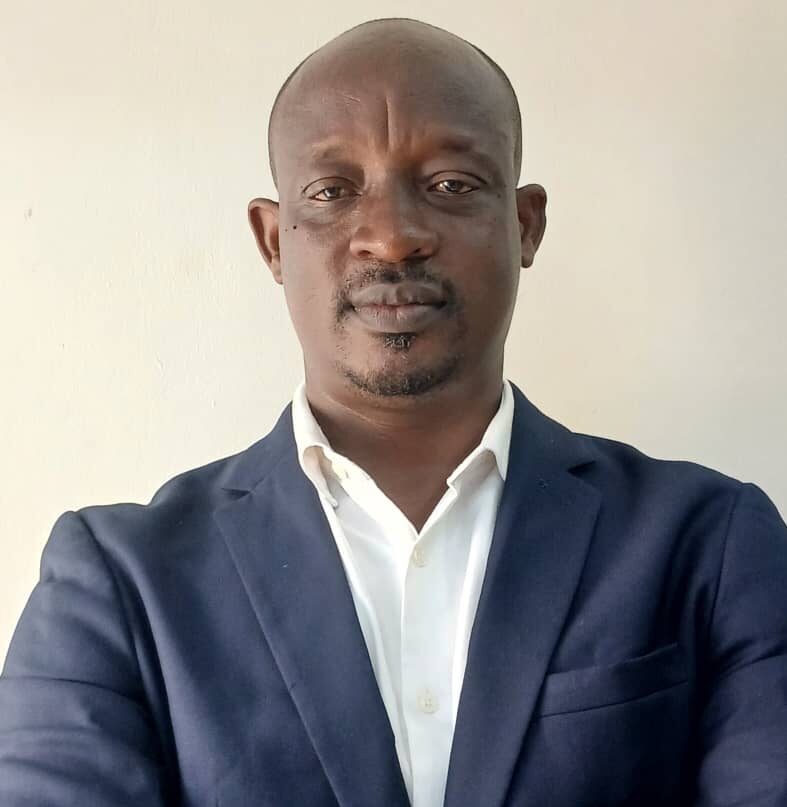
By Godwin Kwawu
Godwin is a lecturer, Department of Marketing, Accra Technical University (ATU)
He can be contacted via [email protected]