
Over time, I have come to believe that one of the most compelling democratic reforms our nation can pursue is the mandatory adoption of mixed-gender presidential tickets.
If we genuinely celebrate women’s participation in public life and champion gender inclusion, then our political system must make it possible and ordinary for women to occupy the highest offices of the state.
A country’s commitment to gender equality should not be judged only by the number of women in public office. It should also be measured by whether women have a fair and realistic path to the highest leadership positions. When those opportunities are limited, inclusion becomes more symbolic than real.
This is why I believe women in top leadership positions represent more than inclusion for its own sake. Their presence shows that democracy and equal opportunity are working in practice. Women should not have to struggle for recognition at the highest levels of governance; their place in a nation’s presidential leadership should be seen as normal, expected, and essential to public life.
To the best of current knowledge, no country requires its President and Vice President to be of opposite sexes. This gives Ghana a rare opportunity to lead the world by mandating mixed-gender presidential tickets and setting a new standard for inclusive leadership.
Some may see this proposal as unconventional. I see it as a necessary step forward. If we are serious about tackling gender imbalance and expanding opportunities for women, then we must be willing to adopt bold reforms that turn inclusion from rhetoric into reality.
Ghana Must Lead the Way with Mandatory Gender-Balanced Presidential Tickets
Such a reform would strengthen Ghana’s commitment to gender equality and make inclusive leadership a defining feature of our democracy. Rather than treating inclusion as an aspiration, we should embed it in the very structure of the Presidency.
If we are serious about balanced representation, then we must be intentional about ensuring that both women and men have a place at the highest level of national leadership.
As a media practitioner, I have witnessed women make exceptional contributions to Ghana’s development across politics, business, education, healthcare and community leadership.
Their achievements prove that leadership is defined not by gender, but by competence, vision, and dedication. A gender-balanced presidency would therefore be more than a symbolic gesture; it would be a deliberate recognition of the value that both women and men bring to national governance.
Ghana speaks often about gender balance and equal opportunity. Yet I believe the political class must do more than champion the rhetoric. It must give practical expression to the cause by adopting reforms that place gender inclusion at the centre of political leadership.
While current efforts to empower women are commendable, they can be elevated further through bold measures that inspire future generations and advance the broader goal of empowering the girl child.
At the very least, a legal requirement for mixed-gender presidential tickets would transform the Presidency into both a driver and a symbol of gender inclusion. It would create a powerful incentive for political parties to nurture diverse leadership and help accelerate progress toward national gender representation goals.
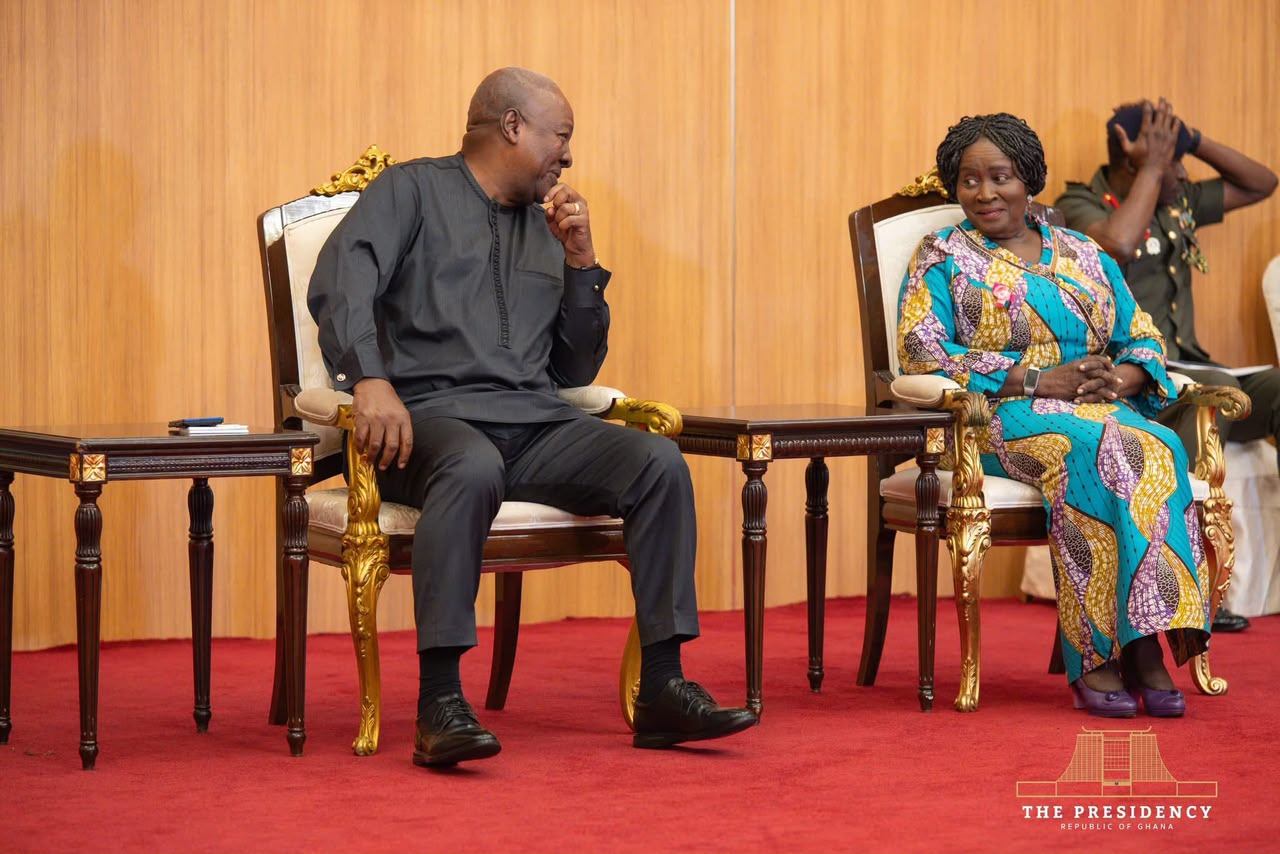
The 2024 elections marked a historic milestone with the election of H.E. Jane Naana Opoku-Agyemang as Ghana’s first female Vice President. Rather than allowing that achievement to stand alone, we should build upon it and deepen the gains it represents.
From my observation and research, her election has inspired many women and girls to see themselves as capable of reaching the highest levels of leadership. It stands as powerful evidence of what becomes possible when barriers to women’s political participation are removed. Indeed, 2024 was a defining year in Ghana’s journey toward greater gender inclusion.
That same year also saw the passage of the Affirmative Action (Gender Equity) Act, 2024 (Act 1121), reinforcing our national commitment to equal opportunity and representation. These achievements should not mark the end of the conversation; they should serve as the foundation for even more ambitious reforms that preserve and strengthen the progress made for future generations.
The passage of the Affirmative Action Act was rightly celebrated. Yet I believe Ghana can take an even bolder step by mandating gender-balanced presidential tickets. Such a reform would not only advance gender equity at home but also position Ghana as a global leader in inclusive governance.
Indeed, the First Schedule of the Affirmative Action (Gender Equity) Act, 2024 sets progressive targets for female representation across public and private decision-making institutions. Building on that framework by requiring gender-balanced presidential tickets would be a logical and transformative next step in Ghana’s pursuit of genuine equality.
The Affirmative Action (Gender Equity) Act, 2024 sets ambitious targets: 30 percent female representation by 2026, 35 percent by 2028 and gender parity by 2034.
These are commendable goals, but they raise a fundamental question: why not start at the very top, the Presidency? If we truly seek to institutionalise gender equality, then the highest office of the land should lead the way. Leadership sets the tone for society.
A constitutional requirement for mixed-gender presidential tickets would move Ghana beyond targets and declarations to decisive action.
By requiring every presidential ticket to comprise both a man and a woman, Ghana would transform the presidency into a symbol and instrument of inclusion. The highest office should reflect the partnership between women and men that drives national development. Whether male-female or female-male, every presidential ticket should embody equality, representation, and national unity.
What I Found About Africa
Africa has repeatedly shown that women can lead at the highest level. From Ellen Johnson Sirleaf in Liberia to Samia Suluhu Hassan in Tanzania, Joyce Banda in Malawi, Sahle-Work Zewde in Ethiopia and Netumbo Nandi-Ndaitwah in Namibia, women have demonstrated leadership, competence and resilience at the summit of political power.
Yet female leadership at the highest level remains the exception rather than the norm. Ghana has an opportunity not simply to celebrate these breakthroughs, but to build on them by institutionalising gender-balanced presidential tickets. Such a reform would position the country as a continental leader in inclusive governance and transform gender equality from aspiration into constitutional practice.
As Ghana approaches its 70th anniversary of independence, this milestone should represent renewal, reform and progress. The next chapter of our democratic journey should begin with a bold commitment to gender-balanced leadership.
It must start here. It must end the era of the all-male presidential ticket.
By Kwame Anum, Media Practitioner & Student of International Affairs and Diplomacy