
When tensions rise between Iran and Israel, the immediate images are missiles and diplomacy. But for Ghana and West Africa, the real story is measurable in barrels, basis points, freight days, and cedi depreciation.
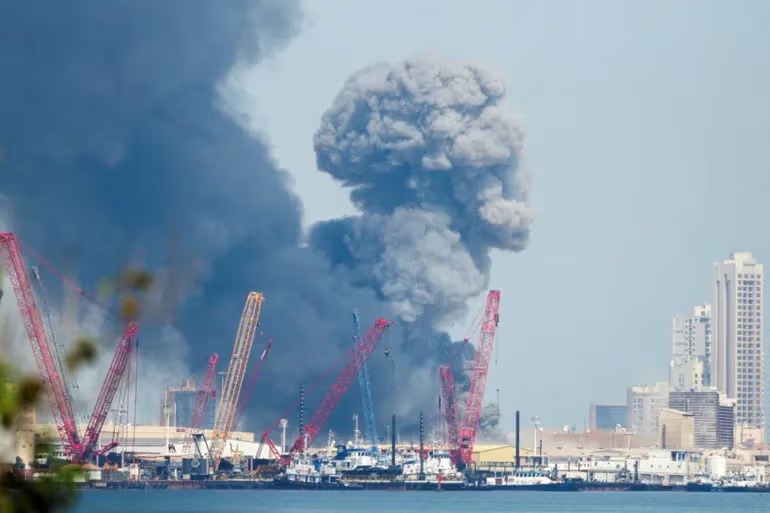
Roughly 20 percent of globally traded crude oil passes through the Strait of Hormuz. That single maritime corridor carries between 17 and 20 million barrels per day in recent years. Even the perception of disruption pushes Brent crude upward within hours.
During recent Middle East escalations, Brent has recorded intraday jumps of 5 to 10 percent. For an import dependent economy like Ghana, this is not abstract volatility. Ghana imports the bulk of its refined petroleum products. Every 10 dollar increase in Brent, sustained over a quarter, can add hundreds of millions of dollars to the national import bill depending on volumes.
The transmission mechanism into Ghana’s economy is data traceable. Brent rises. The dollar typically strengthens in risk off episodes. The cedi weakens. The landed cost of petroleum products rises. The National Petroleum Authority pricing window adjusts. Pump prices move. Transport fares follow. Food inflation accelerates.
Ghana’s CPI structure shows transport and food as dominant contributors to inflation. Transport costs respond quickly to fuel price adjustments. Food follows because haulage is road dependent. In previous oil price spikes, transport inflation in Ghana has risen into double digits within weeks of sustained crude increases. The secondary pass through into food prices typically lags by one to two months. That pattern has been consistent across multiple global oil cycles.
Shipping compounds the shock. When security risks intensify in the Red Sea and surrounding corridors, container lines reroute vessels around the Cape of Good Hope. That diversion can add 10 to 14 days to Asia to West Africa voyages and significantly increase bunker fuel costs. Insurance war risk premiums also rise. For bulk commodities and containerized cargo entering Tema Port and Takoradi Port, the result is higher freight rates and longer lead times.
Freight indices during recent Red Sea disruptions showed increases of 30 to 100 percent on some routes compared to pre disruption baselines. Even if West Africa is not directly in the conflict zone, global shipping markets are integrated. A container that costs 2000 dollars to ship under normal conditions may temporarily rise to 3000 or more when rerouting and insurance are factored in. That additional cost feeds directly into imported goods prices, from wheat and rice to pharmaceuticals and spare parts.
The foreign exchange dimension is equally critical. In periods of geopolitical escalation, capital flows toward safe haven assets. The US dollar strengthens. Frontier market currencies face pressure. Ghana’s exchange rate historically exhibits sensitivity to global dollar strength and commodity price swings. A simultaneous oil price spike and cedi depreciation amplifies the shock because petroleum is priced in dollars. If Brent rises 10 percent and the cedi weakens 5 percent, the effective local currency cost can increase by more than 15 percent before taxes and margins.
Higher import bills affect reserves. The Bank of Ghana must manage foreign exchange liquidity while maintaining inflation control. If reserves decline relative to import cover, sovereign risk perceptions can worsen. Eurobond yields for frontier economies typically widen during global stress events. That raises refinancing costs and complicates fiscal planning for the Ministry of Finance.
West Africa’s exposure varies but remains significant. Nigeria benefits from higher crude prices as an exporter, yet domestic subsidy pressures and FX distortions can offset gains. Côte d’Ivoire and Senegal, like Ghana, are exposed through refined fuel imports and shipping costs. Sahelian economies facing fiscal fragility are particularly vulnerable to imported inflation shocks. Regional trade integration means inflationary pressure in one economy can spill into cross border markets.
There is also a security and information dimension that is measurable. Middle East escalations often correlate with spikes in online misinformation and polarizing narratives in African digital spaces. Monitoring tools routinely detect increased keyword volume and coordinated amplification during such crises. Public demonstrations and diplomatic statements follow. Governments must balance domestic sentiment with external partnerships.
The humanitarian stress channel is not hypothetical. Fuel costs influence hospital generator operations, ambulance logistics, and food distribution chains. If shipping delays extend pharmaceutical lead times by even a week, public health facilities operating on tight inventory cycles may experience stock pressure. For lower income households that already allocate a large share of income to food and transport, even a 5 to 10 percent price increase materially affects welfare.
Quantitatively, consider a scenario where Brent averages 15 dollars higher over a six-month period. For a country importing roughly 100 thousand barrels per day of refined products equivalent, that can translate into additional import costs exceeding 250 million dollars over half a year before exchange rate effects. If the cedi depreciates 7 percent in the same window, the local currency burden expands further. Add a 20 to 30 percent freight rate increase for containerized imports, and the cumulative inflationary impulse becomes significant.
The conclusion is empirical rather than rhetorical. The Iran Israel tension matters to Ghana and West Africa because energy markets, shipping lanes, currency markets, and capital flows are globally integrated. The data show that oil price spikes pass through to pump prices. Freight disruptions raise landed costs. Risk off sentiment pressures currencies and bond yields. These effects are observable in CPI prints, FX charts, port statistics, and fiscal accounts.
Geography does not insulate economies from global shocks. The numbers consistently demonstrate that instability in a major energy corridor thousands of kilometers away can alter inflation trajectories, trade balances, and fiscal stability in Accra, Lagos, Abidjan, and Dakar within weeks.