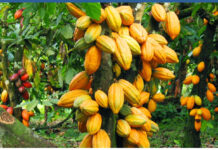

The 9th Ghana Economic Update, released on Thursday August 15 by the World Bank, raises red flags over the financial health of the Ghana Cocoa Board (COCOBOD), stating that persistent operational and fiscal challenges could threaten one of the country’s most critical export industries.
The World Bank report highlights a disconnect between record-high international cocoa prices and Ghana’s underperforming production levels. It also points to COCOBOD’s mounting debts to suppliers and its continued engagement in quasi-fiscal operations—activities beyond its core mandate—as key drivers of financial risk.
“These structural and financial pressures, if left unaddressed, could undermine Ghana’s broader economic stability,” the report cautions, emphasising cocoa’s role as a major source of foreign exchange and rural livelihoods.
Cocoa is Ghana’s second-largest export earner after gold, bringing in billions of dollars annually. Yet, the Bank says inefficiencies in the sector are preventing the country from fully capitalising on favourable market conditions.
The World Bank report also urges stronger oversight and accountability, not just in agriculture but across the energy sector as well, to reduce fiscal vulnerabilities. It also calls on COCOBOD to refocus on its primary role—sustaining cocoa production—while streamlining operations to improve financial health.
Analysts say the window of opportunity presented by high cocoa prices could be short-lived, and warn that production and financing bottlenecks must be resolved quickly if Ghana hopes to maintain its competitiveness in the global cocoa market.
BY COFFIE MAWUEDEM NOEL