


A US$20.49 billion asset recovery exercise, a US$235 million international arbitration award, a central bank with negative equity exceeding GH¢96 billion and several unresolved public infrastructure commitments.
These are among the issues that received little or no specific attention in Ghana’s 2027 Budget Statement.
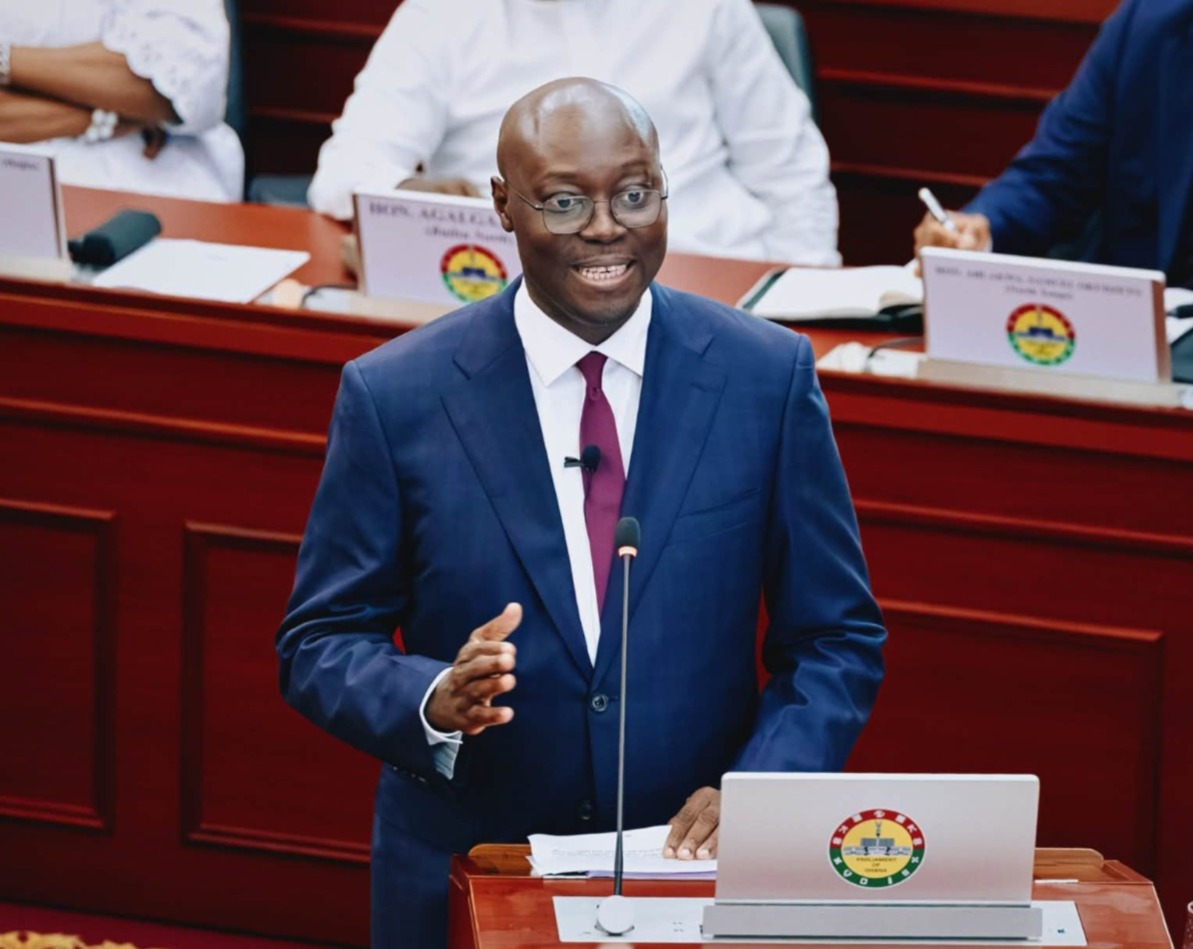
On Thursday, November 12, Finance Minister Dr. Cassiel Ato Forson presented the 2027 Budget to Parliament under the theme The New Economy, New Ghana, Jobs and Prosperity. At the heart of the budget is an ambitious US$10 billion economic transformation programme spanning agriculture, energy, industrialisation and employment.
The proposals are ambitious, but beyond the new commitments lies another important conversation: the status of existing obligations, unresolved financial liabilities and promises made in previous years.
An examination of the 316-page budget statement by By the Numbers identified ten issues of significant national interest that either received no specific mention or lacked critical details necessary for measuring progress.
The billions Ghana hopes to recover
Perhaps one of the most striking omissions is Operation Recover All Loot (ORAL), an initiative that featured prominently in President John Dramani Mahama’s campaign ahead of the 2024 general elections.
Established as part of the government’s broader anti-corruption agenda, the committee was tasked with gathering information on suspected corruption and the misappropriation of public assets.
On February 10, 2025, the committee presented its findings to President Mahama, identifying 36 financial cases with an estimated value of US$20.49 billion. The President subsequently referred the report to the Attorney-General for investigation.
The figure was substantial, particularly for a country emerging from a sovereign debt crisis.
For perspective, the estimated value of the cases was nearly seven times the size of Ghana’s US$3 billion IMF Extended Credit Facility programme.
However, almost two years into the government’s tenure, the 2027 Budget provides no consolidated update on how much has been recovered specifically through ORAL, how many cases have progressed to prosecution, or what financial recovery targets have been set for the coming year.
It is important to distinguish between the estimated value of cases under investigation and money that can actually be recovered. Not every allegation will result in a successful prosecution or financial recovery.
Nevertheless, publishing measurable outcomes would provide an important basis for evaluating the effectiveness of the initiative.
The unresolved financial burden of the Bank of Ghana
Another significant omission concerns the financial position of the Bank of Ghana.
The central bank’s financial difficulties became particularly pronounced following Ghana’s domestic debt restructuring exercise. In 2022, the Bank recorded a loss of GH¢60.8 billion, of which GH¢53.1 billion was attributed to the government’s domestic debt restructuring.
By the end of 2025, its negative equity had increased considerably.
This represents a deterioration of approximately 57% within one year.
Unlike commercial banks, central banks can continue operating with negative equity. However, prolonged financial weakness can create challenges for monetary policy, institutional independence and financial credibility.
In its 2026 Article IV consultation, the IMF identified the need for a credible recapitalisation plan, with full recapitalisation expected by the end of 2032.
elibrary.imf.org
Despite this, the 2027 Budget does not outline a specific government funding commitment towards the recapitalisation exercise.
The fundamental question is not simply whether the central bank will be recapitalised, but how the government intends to finance it and what implications this could have for future budgets.
The National Cathedral and the cost of an unfinished project
The National Cathedral remains one of Ghana’s most controversial public infrastructure projects.
In July 2025, the government disclosed that beyond the previously reported US$58 million in payments and commitments, an additional US$39 million was reportedly outstanding to the contractor.
This brought the reported combined financial exposure to approximately US$97 million, although the entire amount should not be interpreted as money already spent.
Following an audit by Deloitte and Touche, President Mahama directed the dissolution of the Cathedral’s Board of Trustees and the closure of its Secretariat.
However, dissolving the institutions responsible for managing the project does not automatically extinguish its contractual obligations.
The 2027 Budget offers no project-specific update on the outstanding liabilities, the future of the infrastructure, or the potential recovery of public funds.
For taxpayers, the question is whether the financial cost of the Cathedral has ended or whether further obligations will eventually find their way into the national expenditure framework.
A US$235 million water project liability
The financial implications of the Teshie desalination plant present another concern.
The facility, originally established to improve water supply to communities in eastern Accra, became the subject of an international arbitration dispute following the termination of its water purchase agreement.
In September 2026, an International Chamber of Commerce tribunal awarded approximately US$235 million to Befesa Desalination Developments Ghana Limited and Standard Bank of South Africa.
Government subsequently announced that it was negotiating to acquire the facility at a lower cost, potentially avoiding payment of the full arbitration award.
However, two months after the announcement, the 2027 Budget provides no specific update on the proposed acquisition, settlement arrangements or financing requirements.
The concern is not only about the financial liability but also the country’s ability to provide reliable water supply to affected communities.
Whether government eventually pays the arbitration award or negotiates an alternative settlement, the transaction could have implications for public finances.
The SML contracts and the question of recovery
The controversial contracts involving Strategic Mobilisation Ghana Limited (SML) generated considerable public debate over procurement practices, revenue assurance and value for money.
According to the Office of the Special Prosecutor, SML had received approximately GH¢1.44 billion in payments by December 2024.
Following investigations and an external audit, government terminated the contracts. Criminal allegations arising from the investigations remain matters for judicial determination.
The termination of a controversial contract, however, represents only one aspect of accountability.
There are equally important questions regarding the recovery of public funds, outstanding contractual obligations and the financial savings arising from the termination.
The 2027 Budget provides no specific breakdown of these issues.
Judgment debts: A financial risk without a consolidated figure
Unlike some of the other issues, judgment debts are explicitly acknowledged in the budget.
Government reveals that more than 80% of the value of substantial judgment claims is denominated in foreign currencies, exposing the country to additional exchange-rate risks.
The budget also discloses that a court order prevented government from accessing its Contingency Fund to respond to flooding in June 2026.
Government intends to amend the State Proceedings Act to address challenges associated with the enforcement of judgments against public institutions.
What remains unclear, however, is the consolidated value of the outstanding judgment claims.
If government cannot quantify its overall exposure, how can citizens properly assess the associated fiscal risk?
There is also a distinction between pending legal claims, final judgments and amounts approved for settlement. Each category carries different financial risks and must be accounted for separately.
The Public Financial Management Act, 2016 (Act 921), and its accompanying regulations recognise the importance of identifying and quantifying fiscal risks, including contingent liabilities.
GH¢1 billion for national service, but no new allowance rate
For thousands of young graduates, the silence surrounding national service allowances is particularly significant.
Government has allocated GH¢1 billion for the payment of national service allowances in 2027. However, the budget does not specify whether the monthly allowance, currently approximately GH¢715, will be increased.
In July 2026, the National Service Authority disclosed that it was pursuing an increase to at least GH¢1,200. This would represent an adjustment of approximately 68%.
Using GH¢715 as the monthly benchmark, the GH¢1 billion allocation could theoretically support approximately 116,550 personnel for twelve months.
At the proposed GH¢1,200 monthly rate, the same allocation could support only about 69,444 personnel for the same period.
These are illustrative calculations, assuming the entire allocation is used exclusively for twelve monthly allowance payments.
Without information on the number of beneficiaries or the approved monthly rate, it is difficult to determine whether the allocation is adequate or whether personnel should expect an increase.
Agenda 111: Another year, another completion target
The healthcare sector presents a similar accountability challenge.
Agenda 111 was introduced under the previous administration to expand healthcare infrastructure across the country, particularly in districts without hospitals.
In March 2022, then-President Nana Addo Dankwa Akufo-Addo indicated that all 111 hospitals would be commissioned before the end of his tenure in January 2025. That target was not achieved.
The 2026 Budget subsequently targeted the completion of ten of the stalled hospital projects.
Now, the 2027 Budget allocates GH¢1 billion towards the completion of 35 district hospitals under the initiative.
While this represents a more ambitious target, the budget does not identify the specific 35 facilities, their individual completion rates or the outstanding cost of each project.
Distributing the allocation equally would amount to an average of approximately GH¢28.6 million per hospital, although actual completion costs will differ depending on the stage of construction.
Beyond the announcement, communities deserve to know whether their hospitals are among those scheduled for completion.
More importantly, completing a hospital building is not the same as making it operational. Equipment, staffing, utilities and recurrent expenditure must also be considered.
An economic transformation agenda without an annual jobs target
Job creation is central to the government’s new economic transformation programme.
The 2027 Budget acknowledges that Ghana recorded an unemployment rate of approximately 12.8% in 2025 and targets a reduction to below 8% by 2030.
This would require a reduction of more than 4.8 percentage points.
However, despite several programme-specific employment projections, the budget does not provide a consolidated nationwide job creation target for 2027.
This matters because economic growth does not automatically translate into employment.
An economy driven largely by capital-intensive sectors such as mining and oil production can record impressive growth figures without generating enough jobs to absorb its expanding labour force.
Government must therefore establish measurable annual employment targets against which the success of its economic transformation programme can be assessed.
Fighting galamsey: Beyond arrests and seizures
The government’s fight against illegal mining is another area where the distinction between activities and outcomes becomes critical.
Between January and August 2026, the National Anti-Illegal Mining Operations Secretariat reported:
- 274 operations across 58 districts.
- 349 persons arrested.
- 7,896 items of mining equipment seized or destroyed.
- 146 firearms recovered.
For 2027, government has allocated GH¢200 million to NAIMOS and GH¢400 million towards land reclamation.
However, the budget does not provide corresponding figures on prosecutions, convictions or the final legal status of the 349 individuals arrested.
Neither do the arrest figures alone establish the extent to which illegal mining has declined or degraded water bodies have recovered.
Arrests are a measure of enforcement activity. Convictions, sustained reductions in illegal mining and improvements in environmental conditions are measures of effectiveness.
A comprehensive assessment must account for both.
Beyond the promises: The real test of accountability
The omissions identified in the 2027 Budget do not necessarily mean government has abandoned these issues. Some may be addressed through separate ministerial budgets, ongoing investigations or subsequent policy decisions.
Nevertheless, the national budget remains one of the most important instruments through which government communicates its priorities, financial obligations and performance to citizens.
Its credibility must therefore be measured not only by the size of new allocations and the ambition of new promises, but also by how transparently it accounts for previous commitments.
Announcements create expectations. Clear figures establish benchmarks. Measurable targets allow citizens to track progress.
And without these, promises become increasingly difficult to evaluate.
Ultimately, the purpose of a national budget is not merely to announce what government intends to do. It is also to account for what government has done, what remains outstanding and how public resources have been managed. That is the foundation of accountability.
By Wisdom Sarfo