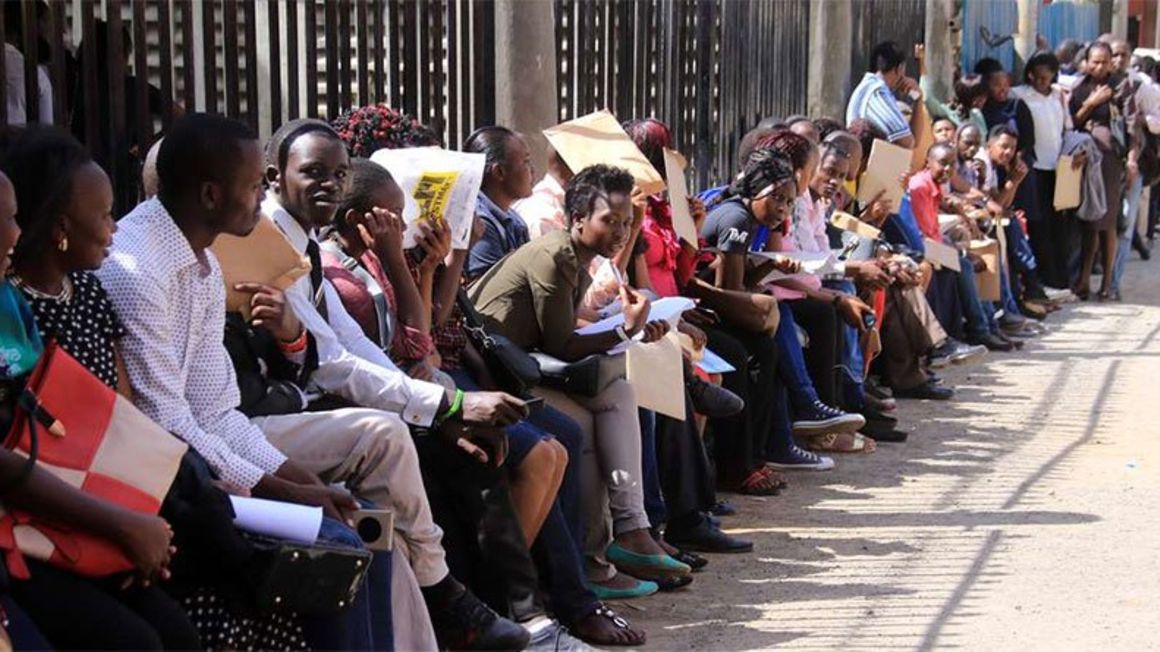

Legal practitioner Martin Kpebu has pointed out the danger that the increasing unemployment rate in Ghana poses to national security.
He makes the point that if care is not taken, unemployed persons will rise and begin attacking persons who appear to be doing well in society.
Commenting on the 2027 budget statement on TV3’s Key Points on Saturday, November 14, he said, “When you break everything down, it boils down to cost of living. Cost of living is a huge problem. Everything must translate into better standards of living and cost of living. It is a huge crisis. If we don’t solve that problem, we are not safe; one day, an unemployed person can pull you out of your car. This is a national security threat.”
The government is targeting real gross domestic product (GDP) growth of about 8 per cent and an unemployment rate below 8 per cent by 2030 under its New Economy programme.
Finance Minister Dr Cassiel Ato Forson announced the targets during the presentation of the 2027 Budget Statement and Economic Policy to Parliament on Thursday, November 12, 2026.
He said the government was also seeking to establish a credible path towards securing an investment-grade sovereign credit rating.
“By 2030, we are targeting real GDP growth of about 8%, unemployment below 8%, and a credible path to an investment-grade sovereign credit rating,” he said.
Dr Forson stressed that an investment-grade rating could not be secured through declarations but would depend on sustained economic performance.
“Investment grade sovereign rating cannot be conferred in a speech. It must be earned through sustained performance,” he said.
He announced plans to publish an annual investment-grade readiness report assessing the country’s progress across key economic and institutional indicators.
The report will cover fiscal performance, debt affordability, reserve accumulation, monetary credibility, financial sector strength, institutional quality and economic diversification.
The Finance Minister identified the sustainability of macroeconomic stability and access to affordable financing as the first pillar of the New Economy programme.
He said the government intended to maintain a positive primary surplus of at least 0.5 per cent of GDP from 2027, while keeping public debt consistent with a 45 per cent of GDP target.
“From 2027, we will maintain a positive primary surplus of at least 0.5% of GDP. We will keep public debt consistent with 45% of GDP. We will preserve single-digit inflation and strengthen our external buffers,” he said.
The government has completed its International Monetary Fund (IMF) programme and says it is now focusing on economic transformation through the New Economy plan.
The programme identifies commercial agriculture, energy, critical minerals, textiles and garments, tourism, and pharmaceuticals as priority sectors for development.