
Western Regional Minister, Joseph Nelson, has issued a powerful call to companies operating in the region, urging a fundamental shift in Corporate Social Responsibility (CSR) practices.
Launching the groundbreaking CSI Dialogue and Exhibition (CSIDE) project, the Minister declared that Corporate Social Investment (CSI) must move beyond mere transactions to become truly transformational, creating generational wealth and empowering communities.
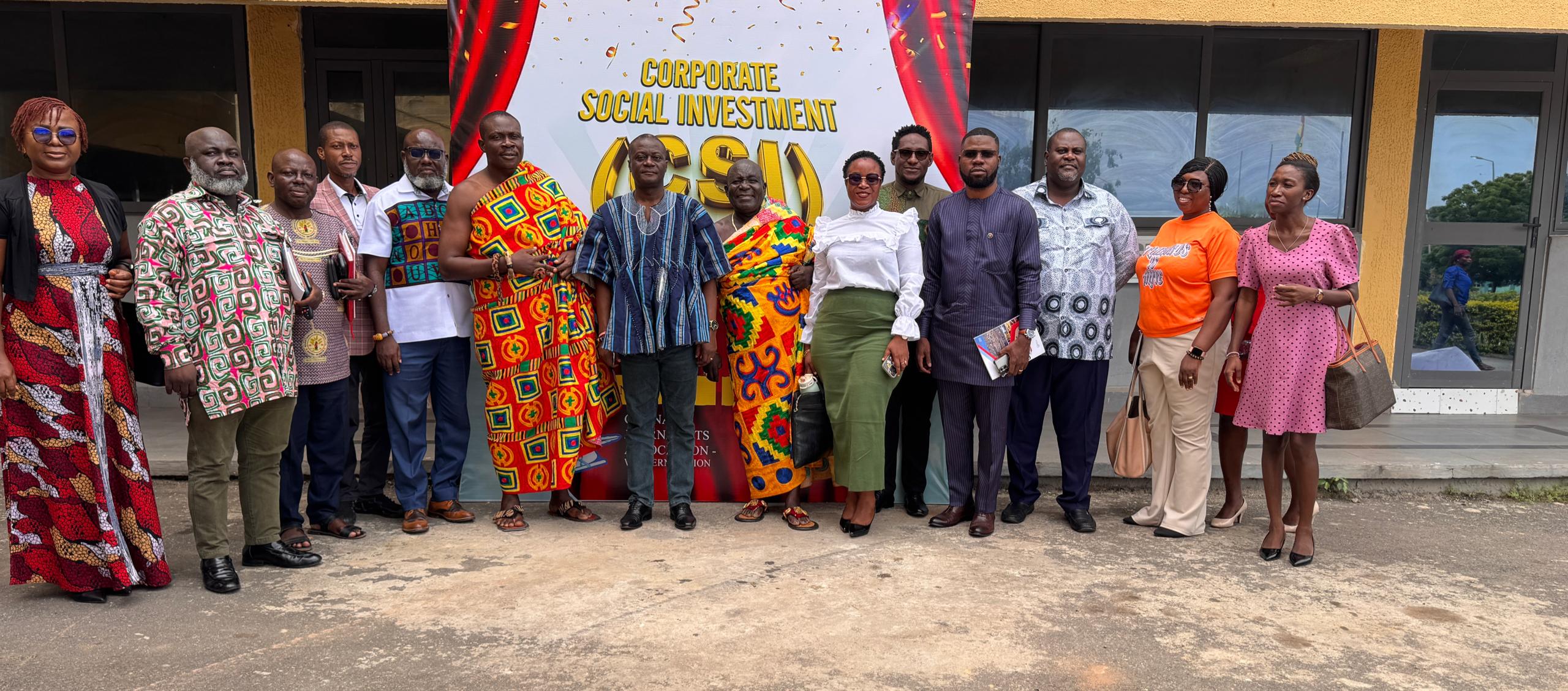
At the launch of the program which is a partnership between the Western Regional Chapter of the Ghana Journalists Association and the Western Regional Coordinating Council, on Friday 18 July 2025, Mr. Nelson challenged the status quo of corporate giving.

“As we rethink the direction of Corporate Social Responsibility in our region,” the Minister stated, “I urge all companies to design CSR packages that are transformational—not just transactional. CSR must go beyond one-off donations and ceremonial gestures. It should aim at creating generational wealth, especially by empowering local communities with the tools, skills, and opportunities to build sustainable livelihoods,” Mr Nelson said.

Emphasizing the critical role of trust and partnership, he highlighted the region’s commitment to fostering public-private collaboration.
“We must recognize that trust is built not only through words but through consistent, transparent, and responsive action. When corporations align their investments with the needs and aspirations of our communities, trust is deepened. When communities feel heard, included, and empowered, trust is strengthened,” the Minister noted.
The Minister directly addressed the region’s pressing infrastructure gaps in rural roads, water systems, schools, health centres, and ICT, stating that government alone cannot bridge them. He called for strategic corporate partnerships: “Corporate Ghana, particularly those with a footprint in our region, must partner meaningfully… CSI can be directed towards strategic infrastructure projects that will yield long-term, shared benefits.”
Joseph Nelson outlined the region’s key development priorities where transformational CSI is urgently needed:
• Expanding access to quality STEM and TVET education.
• Improving health outcomes.
• Enhancing rural and urban road connectivity.
• Promoting environmental sustainability amidst mining and coastal threats.
• Supporting local enterprise development and job creation.
Crucially, he called for formalized collaboration with local authorities: “I implore all corporate institutions to actively promote partnerships with the Metropolitan, Municipal, and District Assemblies (MMDAs)…By incorporating Corporate Social Responsibility programmes into the Medium-Term Development Plans of the Assemblies, we can ensure a more coordinated, strategic, and impactful approach to development.”
This, he argued, would eliminate duplication and enhance synergy. He then charged that “CSI must go beyond compliance. It must be rooted in corporate values and driven by genuine commitment… What we need is a culture of corporate citizenship, where companies see themselves not just as profit-makers, but as development partners.”

GJA-Western Regional Chairman, Desmond Cudjoe, underscored the initiative’s purpose: “Our region’s prosperity hinges on collaboration. While challenges persist… we gather today to celebrate a powerful truth: CSI initiatives are already driving change.”
The CSIDE project, he explained, aims to amplify this impact.
Paramount Chief and President of the Gwira Traditional Area, Awulae Angama Tu-Agyan II, offered the active partnership of traditional leaders: “We offer cultural insight, legitimacy, and continuity. We are ready to be active partners not passive observers… We invite companies to engage us early, consult us meaningfully, and work with us to ensure that no community is left behind.”
The CSIDE Project:
The Ghana Journalists Association-Western Region’s CSI Dialogue and Exhibition (CSIDE) will feature Dialogues, an Exhibition showcasing CSI projects and Social Contracting sessions, culminating in a CSI Impact Awards. The maiden event is scheduled for November 27-28, 2025, in Takoradi.
A key innovation is the “CSI Impact Nomination Portal launch in September 2025. Corporations will use this portal to submit details and evidence of their CSI projects for award consideration. Critically, the GJA-WR, guided by the Western Regional Coordinating Council (WRCC), will collaborate with Traditional Authorities (Nananom), MMDAs, and other stakeholders to rigorously verify the impact of submissions and document community success stories.
Beyond the awards, CSIDE commits to sustained accountability. The GJA-WR, WRCC, and supporting organizations will co-publish an annual “Western Region CSI Impact Report,” tracking progress and setting benchmarks for the transformational CSI championed by the Regional Minister.