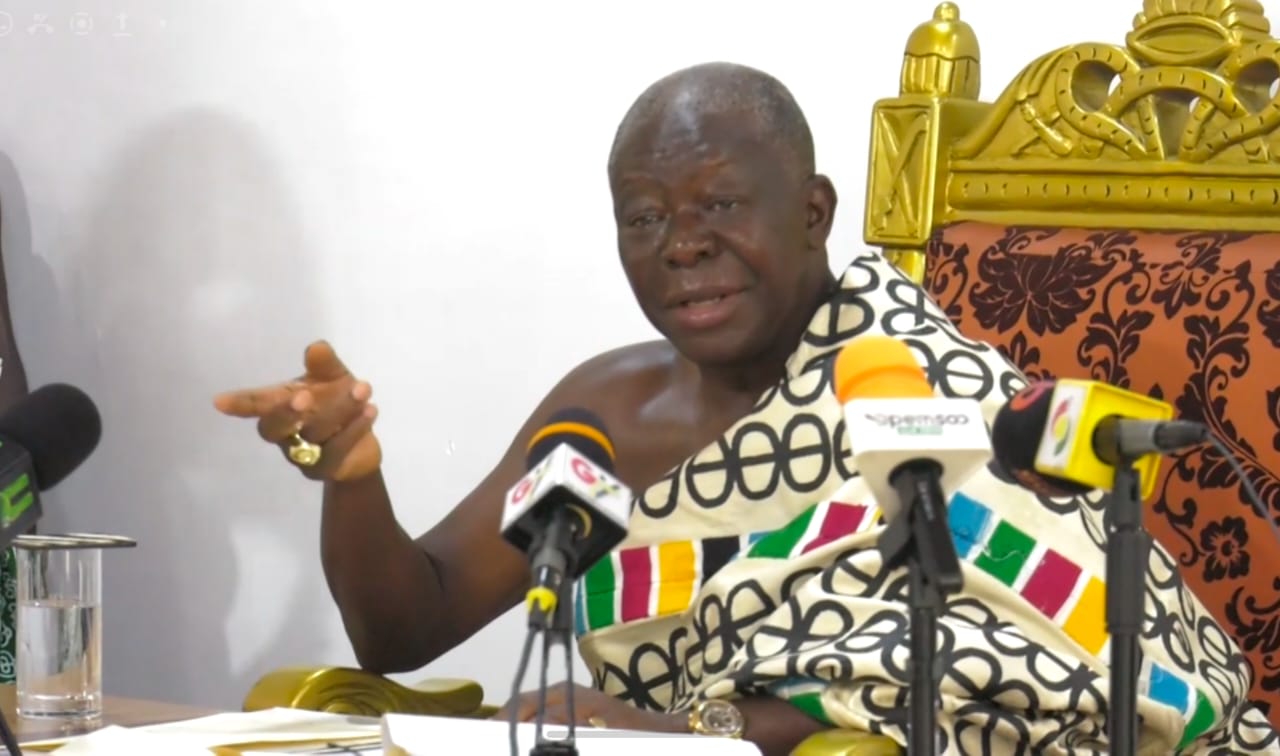

The Ashanti Regional House of Chiefs is pushing for a policy shift demanding that traditional leaders have a direct say in who gets mining concessions in their areas.
Their argument is that the current system sidelines the very custodians of the land.
This comes as the Minerals Commission reviews Ghana’s Minerals and Mining Act.
Mining concessions are often awarded without consulting traditional authorities, a practice the chiefs say fuels conflicts and deprives communities of fair benefits.
At a meeting with the Minerals Commission, the Asantehene who doubles as President of the House, Otumfuo Osei Tutu II, stressed that this must change as Ghana reviews its 2006 Mining Act.

“It is unacceptable to grant mining concessions from Accra without consulting our traditional leaders. This practice must end if we expect chiefs to effectively oversee and protect their lands. We are currently compiling our recommendations to ensure the Minerals Commission incorporates this critical input into their revised policy framework,” Otumfuo said.

Responding to these concerns, Deputy Lands Minister Yusif Sulemana assured the chiefs that their role in concession allocations will be strengthened.

“Hitherto, people just walk to Chiefs and say they’ve been given licenses to mine in their community. This time, President John Mahama says that will become a thing of the past. Chiefs would be allowed to participate in who mines in their area because the mineral resources belong to the community”, the Minister indicated.
Mr Sulemana also announced a new policy; replacing ‘community mining’ with ‘cooperative mining’, to ensure profits stay within communities rather than enriching individuals.
“Under the community mining scheme, individuals were the ones who had control over the system. And this is what we are trying to change to make sure traditional leaders and the community have supervisory role over the business,” he assured.
With the Mining Act under review, traditional leaders are hoping for a seat at the table. For communities long sidelined in Ghana’s mining boom, this could be a turning point.