
The Ghana Armed Forces (GAF) is facing a significant accommodation crisis, grappling with a housing deficit of approximately 17,000 units.
Despite numerous initiatives to address the issue over the past decade, many of the proposed housing projects remain incomplete and have been left at the mercy of the elements and now, squatters.
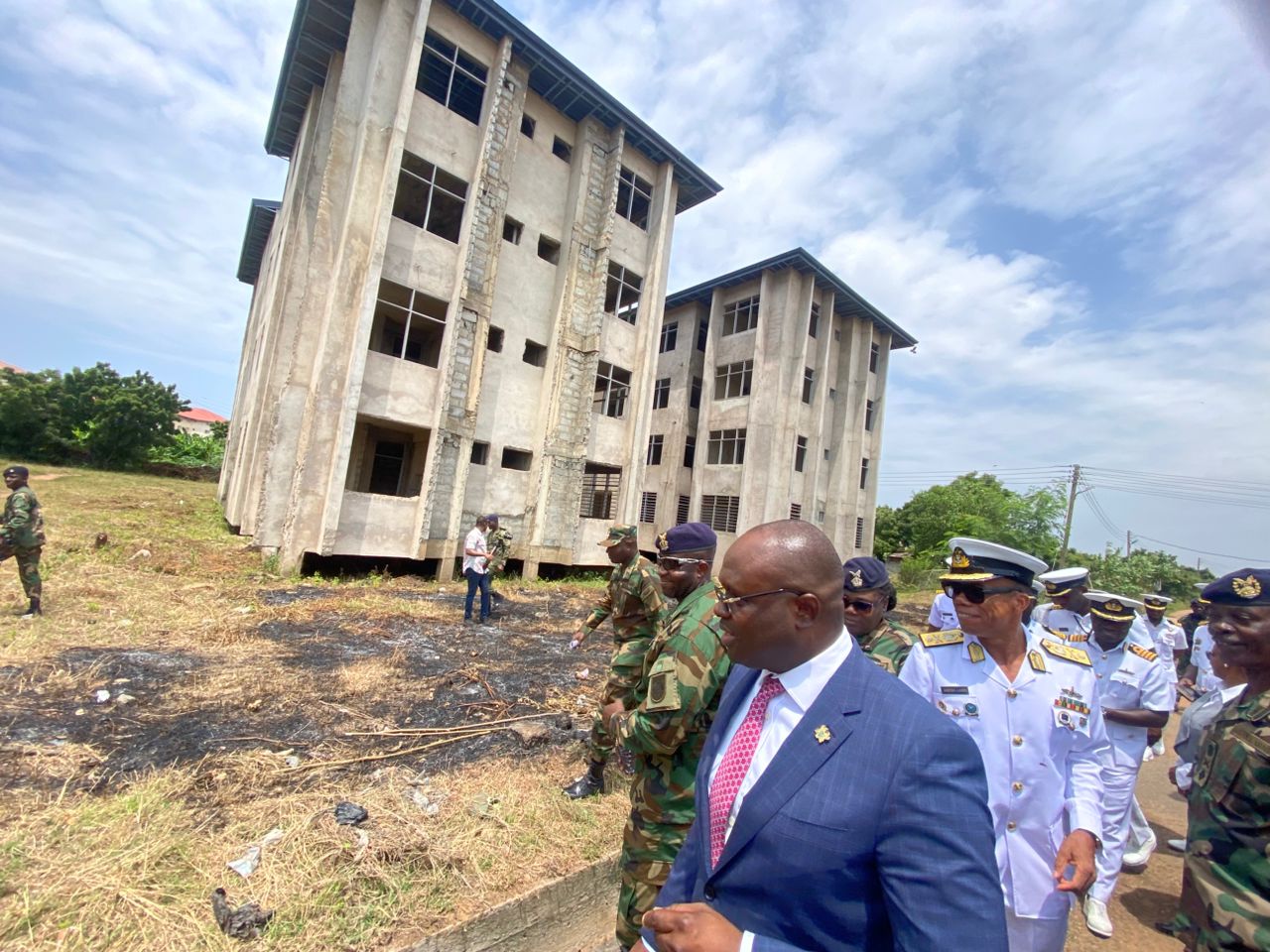
One of the most glaring examples is a 32-unit, 2-bedroom apartment block located at Biekro Barracks in Tema Manhean. Initiated in 2014 under efforts to boost military accommodation, especially for naval personnel, the project has since stalled.

More than ten years later, the site is a shadow of its intended purpose: unfinished structures, overgrown surroundings, and occupation by unauthorized individuals.

These abandoned facilities, once earmarked to house dedicated servicemen and women, now symbolize years of unfulfilled promises and systemic neglect. The lack of adequate accommodation is not just a welfare issue; according to military officials, it directly affects troop mobilization during emergency operations, compromises readiness, and undermines the overall effectiveness of the Armed Forces.

On Thursday, July 17, the Minister for Defence, Dr. Edward Omane Boamah, embarked on a tour of several stalled military infrastructure projects, including the Biekro Barracks site. Visibly concerned, Dr. Boamah pledged to make the completion of such projects a top priority of his administration.

“The current state of these buildings is unacceptable. We cannot continue to allow critical infrastructure to rot while our personnel struggle for decent accommodation,” he stated during the tour.
In a significant announcement, Dr. Boamah revealed that the government, under the leadership of President John Mahama, is set to roll out a new initiative to construct 10,000 housing units for the Ghana Armed Forces over the next three years. The proposed plan aims to alleviate the chronic housing shortfall and enhance the welfare of military personnel across the country.

“This will not just be another promise. We are committed to seeing action not just words,” the Minister emphasized.
The Defence Ministry’s renewed focus on military accommodation comes at a time when pressure is mounting from within and outside the ranks to improve conditions for the country’s security forces. Stakeholders have consistently argued that a professional and ready military force cannot function effectively without proper housing and logistical support.
While the announcement of new housing projects has been met with cautious optimism, many are calling for transparency, accountability, and expedited action to ensure the new initiatives do not suffer the same fate as their predecessors.
As Ghana continues to navigate complex security challenges both at home and within the West African subregion, equipping the Armed Forces with basic necessities such as decent housing could prove vital for national stability and operational efficiency.
For now, the Defence Ministry says it is determined to break the cycle of delays and abandonment. In the words of Dr. Boamah: “This time, action will speak louder than promises.”