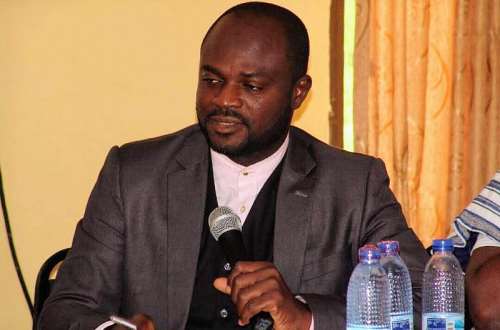

Law Lecturer at the University of Professional Studies (UPSA) Justice Abdulai has commended the Attorney-General and Minister for Justice, Dr. Dominic Ayine for being able to recover some funds in the Republic vs Dr. Kwabena Duffour’s case and 7 others rather than sticking to prosecution to delay the case.
Dr. Ayine has discontinued the case against Kwabena Duffour and 7 others after reaching an agreement with the accused persons who have agreed to pay restitution of which some monies have been recovered.
His decision has been met with fierce opposition from the Minority in Parliament who have accused the A-G of being biased particularly because he once acted as lawyer for Kwabena Duffour and UniBank.
They have urged the Attorney-General to reverse his decision within a reasonable period or they will institute legal cation to challenge the nolle prosequi entered by the A-G.
However, in an interview on TV3 New Day’s The Big Issue, Tuesday, July 29, 2025, Justice Abdulai explained that given the circumstances of the case the A-G made the right choice to discontinue the case while ensuring the state benefits through the restitution.
“We’ve been stuck with this issue for about 6 years without getting anything out of it. So, if we are getting about GHC2 billion out of it, it is far better than waiting infinitum and you are not guaranteed the recovery you seek for.
“Let’s all remember that prosecution is not persecution of a matter that you can guarantee yourself of the outcome,” he stated.
The Private Legal Practitioner argued that securing a conviction would not have necessarily brough any gains to the state, citing the case of the Beige Capital Bank to say that the state could have lost huge sums of money if the A-G had not opted for this process.
According to him, the Attorney-General “chose wisely” between the option to convict without any benefit to the state and drop all charges after a restitution agreement.
“If you relate this to the Beige Capital, we could have lost all the entire amount…if you look at the circumstances, you are obliged to take the best decision that inure to our collective rather than being egoistic and insisting on getting someone being convicted when you are not guaranteed that conviction.
“In any case the conviction would not serve us any useful purpose assuming we secured that…Most instances convictions rather end up bringing the unintended adverse effect but this is not to say that if anybody does anything wrong, we should strictly let go off the person simply because we are not getting the benefit of punishment.
“This is to say that when you have an opportunity to make so much impact as against punishing the person without getting any benefit out of it, you have to choose wisely. And under this circumstance, I think our Attorney-General chose wisely except that sometimes you need to give us the basis in doing so and without that basis, this whole thing could come crumbling,” the private legal practitioner remarked.
He further agreed with critics who have questioned the rationale behind the A-G’s decision, noting that it is part of strengthening the country’s democracy but reminded them about the shift in the accountability system under this new government.
“Legitimately, I agree with anyone who asks if 60%, why not 70%? Why not 80%? Why not 100%? I agree with all those questions; it is indeed part of our democracy that we seek these clarifications and the basis of arriving for arriving at these decisions, it is good for our democracy.
“In doing that we should also remember that in times past, we didn’t even have the benefit of knowing this information and knowing these forms of agreement and how they were even arrived at. For me, I take it as we have moved a step forward in the pursuit of accountability system and the entire processes that our governance structure but that should not be enough,”