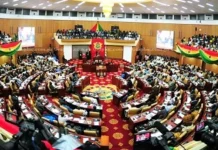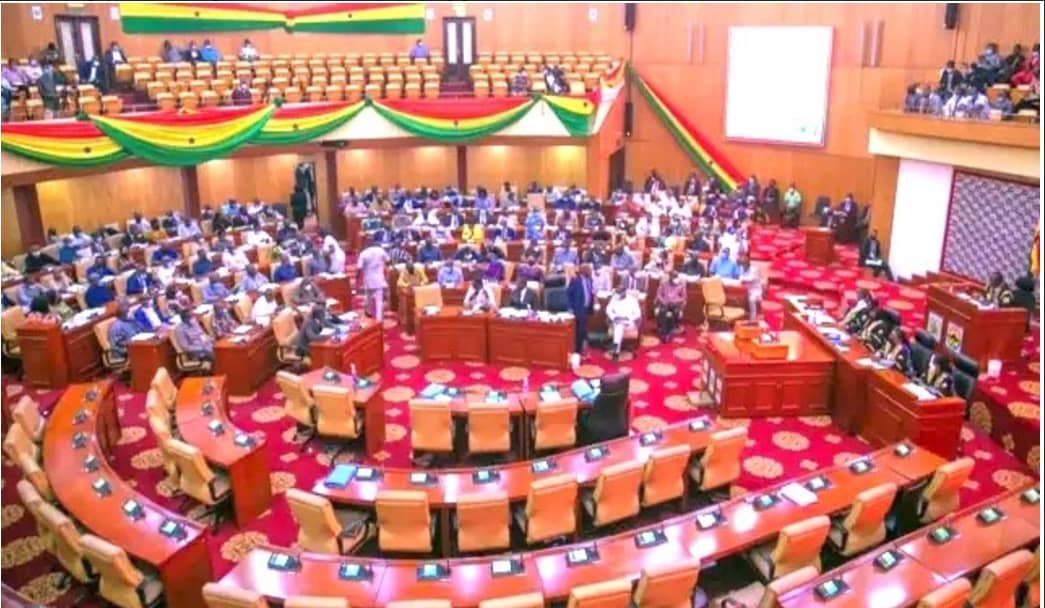

Parliament has approved a request for the multi-year commitments for selected road projects under the GH¢13.8 billion “big push” phase 1 programme contained in the mid-year budget review.
The Big Push is to be financed domestically from 2025-2028.
Government has resolved and dedicated all oil revenues & mineral royalties to the programme; therefore, the GH¢13.8bn allocation has been captured in the 2025 budget.
The joint Committee on Budget and Finance was informed by a technical team that feasibility studies and costing had been done.
The multi-year big push programme prioritises a single project each year starting with roads in 2025 and then continue with another project say hospitals in the next budget cycle in 2026.
In all, government is seeking to spend about GH¢70bn on big push by 2028.
Meanwhile, the Minister for Roads and Highways, Governs Kwame Agbodza, has dismissed claims by the Minority that the government’s ‘Big Push’ infrastructure initiative is being unfairly implemented across regions.
Speaking at the Government Accountability Series at the Jubilee House on Wednesday, July 30, Mr Agbodza stressed that every region in the country is benefitting from the programme.
According to the Minister, the ‘Big Push’ is a strategic, nationwide infrastructure drive aimed at boosting road connectivity and economic growth across all sixteen regions.
He described allegations of regional bias as unfounded and politically motivated, accusing the Minority of acting on hearsay rather than verified data.
“Every region has got a ‘Big Push’ project. No region has been left behind,” Mr Agbodza stated firmly.
“It is unfortunate that the Minority is acting on rumours and not facts. The projects are there, and the evidence is clear for anyone who cares to look.”
He further assured the public of the Ministry’s commitment to equitable development, noting that the ongoing road infrastructure efforts were guided by need, economic impact, and proper planning.
“We are building roads where they are needed most — to open up communities, support agriculture, and ease movement of goods and people,” he added.