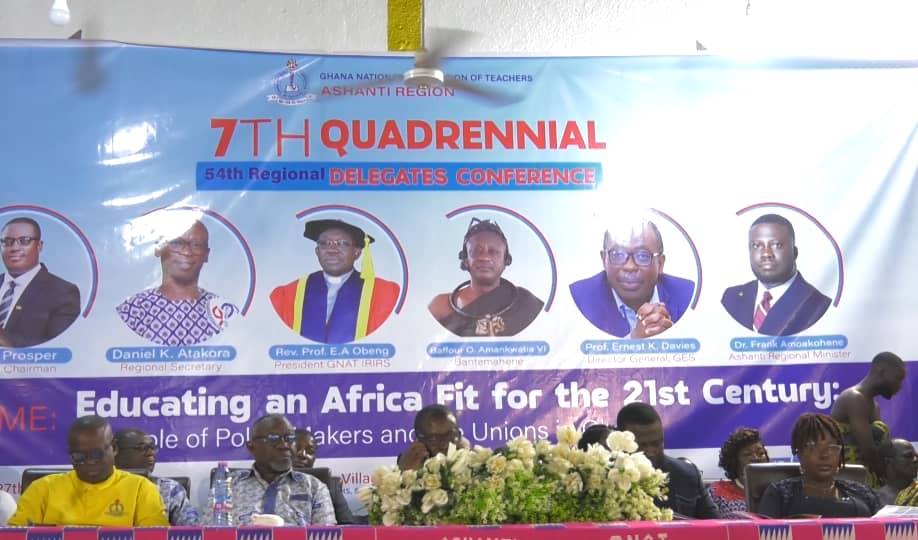

The Ghana National Association of Teachers (GNAT) in the Ashanti Region has underscored the importance of sustained dialogue between the government and teacher unions to tackle pressing challenges in the education sector.
At its 54th Regional Delegates Conference, the Association acknowledged the need to uphold teaching standards but raised concerns over the current teacher licensing renewal system, which relies heavily on Continuous Professional Development (CPD) points. The union argued that the mechanism requires urgent review to better serve educators.
Speaking at the conference, Ashanti Regional GNAT Chairman, Tachie Prosper emphasized that while the union does not outrightly reject the CPD framework, its implementation disproportionately benefits certain individuals within the education service.

“The existing system fails to support our teachers effectively. How can you conduct a workshop, then simply upload materials online in the name of CPD points? A more balanced approach is needed one that values classroom experience and demonstrated teaching competence over mere workshop attendance,” Prosper stated.
He called for a revised mechanism that recognizes practical teaching expertise rather than prioritizing bureaucratic point accumulation.
Held under the theme “Educating an Africa Fit for the 21st Century: The Role of Policy Makers and Unions in Ghana,” the conference brought together educators, union leaders, and government officials to address critical issues in Ghana’s education system.

Ashanti Regional Minister, Dr. Frank Amoakohene reaffirmed the government’s commitment to enhancing education infrastructure and teacher welfare. He commended GNAT for its advocacy and assured stakeholders of ongoing collaboration to implement policies that elevate teaching and learning standards.
“Teachers play a pivotal role in national development, and the government is dedicated to providing the necessary support for quality education,” Dr. Amoakohene said.
He also reiterated the government’s pledge to fulfill the 20% allowance incentive for teachers accepting postings in underserved communities; a measure aimed at addressing inequities in education access.

The conference concluded with a consensus on the urgent need for stronger collaboration among policymakers, unions, and educators to align Ghana’s education system with 21st-century demands.
Delegates urged the government to prioritize teacher motivation, equitable resource distribution, and meaningful professional growth opportunities.
As Ghana arrives to meet global educational standard, the synergy between teachers, unions, and policymakers will remain vital in shaping a prosperous future for generations to come.