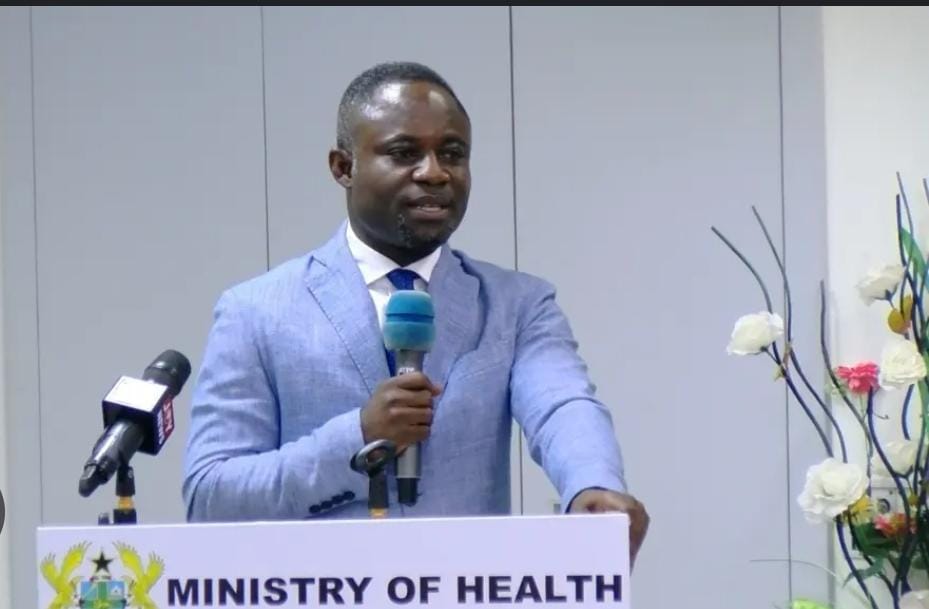

The Minister of Health Kwabena Mintah Akandoh has set up a committee to investigate circumstances leading to the assault of a health worker by relatives of a patient.
He tasked the committee to present its report in 7 days for action.
Mr Akandoh assured the general public of government’s commitment to ensure health facilities are safe for all.
The Minister’s assurance stems from an incident that led to an assault on healthcare workers at the Greater Accra Regional Hospital (Ridge).
A viral video by a relative of an accident victim clashing with health workers at the Emergency Department over alleged lack of urgency in care has sparked public concern. An incident that has been condemned by the Health Ministry.
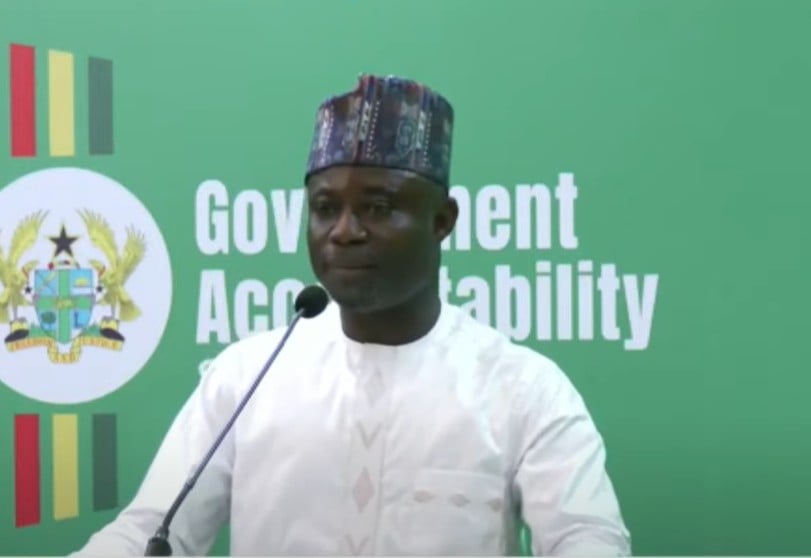
He spoke to journalists on the sidelines of a visit by officials from the German government on August 19, 2025.
“I have been to the hospital myself yesterday to see the workers. We have also constituted a committee to investigate the incident, and they have 7 days to submit their report for onward action. ” He said.
The sector minister assured of thorough investigation to unravel the facts of the matter for an action to be taken.
According to the minister, the committee is made up of a lawyer, an auditor, a human resource officer, a medical doctor, and a nurse.
In another development, Government has been commended by civil society organizations for fulfilling the 2025 Vaccine Co-Financing Obligation, urging governments continued commitment to the domestic resource mobilization drive.
Government of Ghana (GoG) has made payment of USD 24.5 million in the bid to fulfill its 2025 co-financing obligation of vaccine supply.
This decisive action secures the country’s vaccine supply for the year and demonstrates strong political will to protect the health of every child in Ghana. It also marks a significant step towards preventing vaccine shortages and safeguarding the nation’s immunization programme.
While celebrating this milestone, Hope for Future Generations (HFFG) and its partner CSO’S, call on the government to prioritize long-term domestic resource mobilisation as a strategic pathway towards vaccine sovereignty.
This includes exploring mechanisms for advance payments, the involvement of the private sector, and the provision of clear immunization lines into national budget frameworks to ensure that vaccine security is not dependent on emergency measures.
In a statement, they noted that Vaccines are one of the most cost-effective health interventions and now is the time to move from reactive financing to a sustainable and fully domestically resourced vaccine program.
HFFG reaffirms its commitment to working with government, parliament, development partners, and communities to strengthen health systems and ensure no child in Ghana dies from a vaccine-preventable disease.