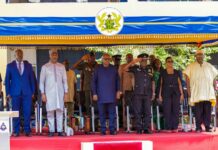

When President John Mahama on Wednesday August 20, 2025 stood in Tokyo and declared Ghana’s cedi the “best-performing currency in the world this year,” he wasn’t just boasting about exchange rates.
He was making a statement to the IMF, to global markets, and to Africa itself.
Speaking at the Ghana Presidential Investment Forum on the sidelines of TICAD IX in Japan, Mahama told investors that Ghana has restored macroeconomic stability, improved confidence, and created fresh opportunities.
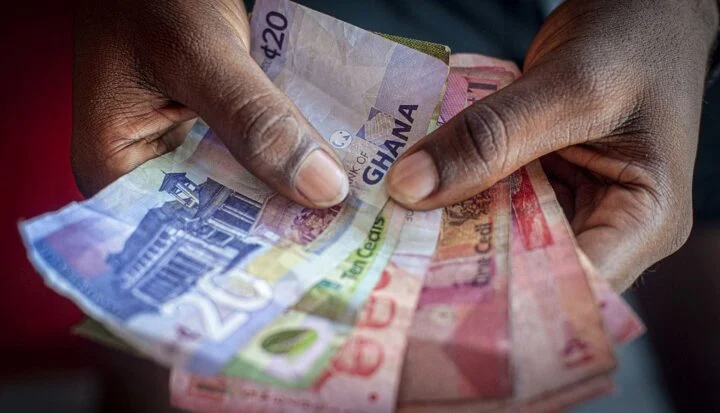
Indeed, by the numbers, he is correct. Ghana’s cedi has been the best-performing currency globally in 2025, appreciating over 40% against the US dollar since January, the strongest rally of any currency tracked globally.
For ordinary Ghanaians, the impact has been tangible. Inflation, which had eroded salaries and crippled businesses, is cooling. Imported goods cost less, transport fares have stabilized, and household budgets feel lighter.
A shopkeeper in Accra put it simply: “If my salary no longer vanishes mid-month, that’s the only policy I need.” But beneath the relief, unease is spreading. How has this miracle been achieved?
Reports from central bank insiders suggest that more than $1.2 billion in reserves have already been spent this year to defend the currency. Ghana’s gross reserves, once a sturdy buffer, are thinning rapidly.
Intervention has delivered stability, but it has also created fragility. The IMF has noticed. In a thinly veiled warning, the Fund has urged Ghana to avoid “excessive” market interventions and to allow the exchange rate to float freely.
Translation: Ghana must follow the IMF playbook, even if that playbook keeps its people in pain. And this is where Mahama’s Tokyo declaration becomes more than economics. It is about power.
For decades, IMF prescriptions austerity, floating currencies, subsidy cuts have been treated as unquestionable doctrine. The results across Africa have been mixed at best: ballooning debt, economies vulnerable to external shocks, and populations trapped in cycles of hardship.
Ghana’s refusal to simply accept IMF orthodoxy exposes a dangerous precedent in the eyes of Washington and Brussels the precedent of independence. Critics are not blind to the risks. If reserves run out, today’s gains could collapse overnight, plunging the cedi back into freefall and vindicating IMF orthodoxy.
Intervention without structural reform, they argue, is a band-aid. And yet, others see something deeper happening. Across West Africa, eyes are fixed on Ghana, From Mali to Côte d’Ivoire, leaders frustrated with external dependence are watching closely.
If Ghana succeeds in stabilizing its economy without IMF micromanagement, it could inspire a shift in Africa’s financial future, if it fails, it will be held up as proof that IMF discipline is indispensable.
That is why this cedi recovery is about more than currency boards and inflation graphs. It is about dignity. It is about whether African nations can chart their own course, even at the risk of falling. Mahama’s Tokyo words may be less an economic report than a defiant call: Ghana can stand on its own feet.
The coming months will test whether this defiance is sustainable. Will the cedi hold when reserves run lower? Can investor confidence last without IMF approval? And most importantly, can ordinary Ghanaians feel the benefits long enough to believe in this vision of sovereignty?
One thing is certain: for the first time in years, Africa is not just reacting to global finance it is challenging it. Whether the IMF is right about fragility or Mahama is right about resilience, the outcome will echo far beyond Ghana’s borders.
Because in the end, the question is not just whether the cedi is the world’s best-performing currency. The question is: at what cost and for whose independence?
By Lois Dogbe