
The Peasant Farmers Association of Ghana (PFAG) says it is optimistic about the government’s newly launched Feed Ghana Programme, describing it as a potential turning point for the country’s agricultural sector and food security.
The Association attributes its confidence to commitments made so far by the Ministry of Food and Agriculture, marking a departure from previous initiatives that lacked sustained support.
Launched in April 2025, the Feed Ghana Programme aims to revamp the agricultural sector, increase domestic food production, and reduce Ghana’s dependence on imports.
The initiative has been widely welcomed by stakeholders, who see it as a strategic move to strengthen the economy and improve livelihoods.
Speaking at a stakeholder engagement, President of the Peasant Farmers Association of Ghana, Wepia Awal Adugwala, commended the government’s efforts so far.
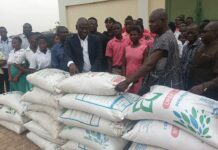
“Just two months ago, the Minister promised and delivered 15,000 bags of fertiliser to the Association for Nationwide Distribution to its members.
The fertiliser has since been received and distribution is in its final stages. This promise and fulfilled attitude demonstrated by the Minister at this early stage is a clear indication of his willingness and ability to transform the sector as envisioned in the Feed Ghana programme. We use this platform to assure him of our unflagging support in achieving his vision.”
He, however, expressed concern over the low budgetary allocation to the agriculture sector, stressing that the narrative must change if the programme is to deliver meaningful results.
“Smallholder farmers’ inability to access formal credit traps them in a cycle of low productivity. Most critically, Ghana loses an estimated $1.9 billion annually to post-harvest losses, according to the World Food Programme.”
PFAG has therefore urged government to match its commitments under the Feed Ghana Programme with higher budgetary allocations to agriculture, to secure meaningful and lasting results.
Data from the 2023 ECOWAS Agriculture Joint Sector Report shows a declining trend in government allocation to agriculture, 6.2% in 2019, 5.7% in 2020, and 4.5% in 2021, averaging 5.5% over the period.
In 2023 and 2024, the allocation further dropped to 1.95%, and in the 2025 budget, it fell to an all-time low of less than 1%.