
Development and Natural Resource Governance Consultant Richard Kojo Ellimah has described the bold demands by African leaders at the 80th United Nations General Assembly as an “audacious diplomatic posture” that must be sustained.
He argues that the renewed assertiveness should be reflected in home-grown policies that will enhance Africa’s bargaining power, which will inevitably secure the continent’s long-overdue permanent seat on the United Nations Security Council.
“A seat will guarantee the continent’s authoritative presence at all critical, destiny-shaping tables of international discourse. Now, the message is clear that Africa is not only ready to be heard but also prepared to govern,” he said in an interview with 3news on September 27.
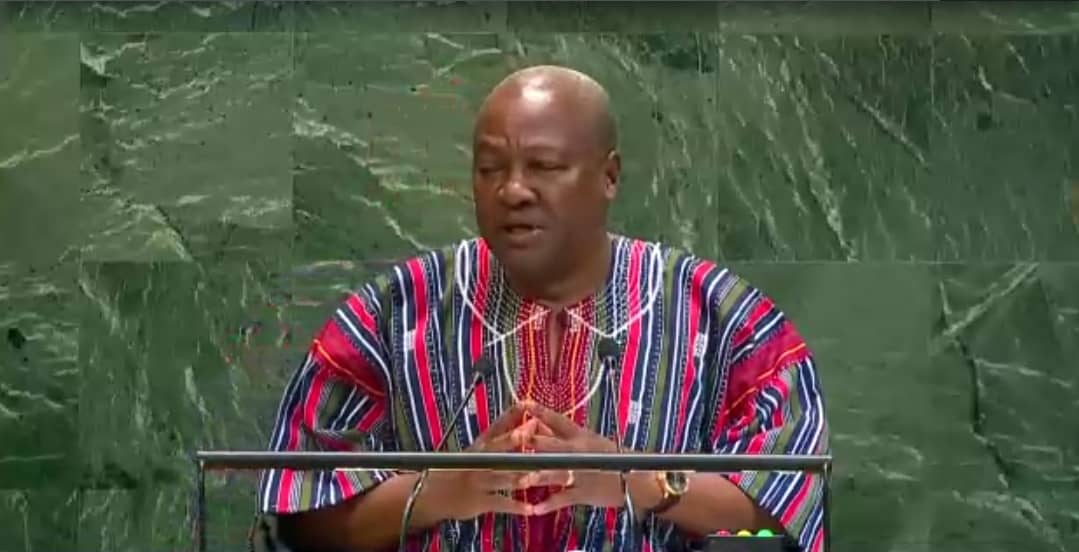
African leaders used this year’s UN gathering to challenge the dominance of the world’s traditional powers, demanding a permanent seat at the Security Council and, in some cases, calling for reparations.
Mr Ellimah notes the posture marks a clear departure from earlier eras. “Some African leaders once went to the General Assembly to stroke the egos of the superpowers,” he says. “Not anymore. They are now speaking out, publicly disagreeing with Europe and America on key international policy issues.”
Calls for reform are not new. From Nelson Mandela’s appeals in the 1990s to lobbying by former Nigerian President Olusegun Obasanjo and South Africa’s Thabo Mbeki, African leaders have long argued that the continent’s exclusion from the Council’s permanent membership undermines the UN’s credibility.
Africa makes up more than a quarter of the UN’s members and hosts most of its peacekeeping operations, yet it has no veto at the table. At UNGA80, African leaders reframed this “long-standing anomaly” as a question not just of fairness but of effectiveness, citing ongoing crises in Sudan, the Sahel, and the Horn of Africa.
Yet, Mr Ellimah warns that international rhetoric must be matched by domestic credibility. “They cannot go onto the world stage to demand what they are demanding when back home the representation is corruption, squalor, and abjection,” he cautions. “What has Africa got to offer at the high table? Why will the world listen? And what will be the use of Africa being on the Security Council, beyond symbolism?”
For some analysts, the answer is that Africa’s permanent membership on the UNSC might lend legitimacy to Council decisions, accelerate responses to conflicts, and give the African Union greater leverage in securing resources for peace operations.
However, the obstacles are formidable: the permanent five—China, Russia, the United States, the United Kingdom, and France—appear reluctant to dilute their privileges. Moreover, Africa itself remains divided over which nations should represent the continent.
Even so, Mr Ellimah insists the bolder stance at this year’s Assembly is significant. “At least,” he says, “it puts the superpowers on high alert.