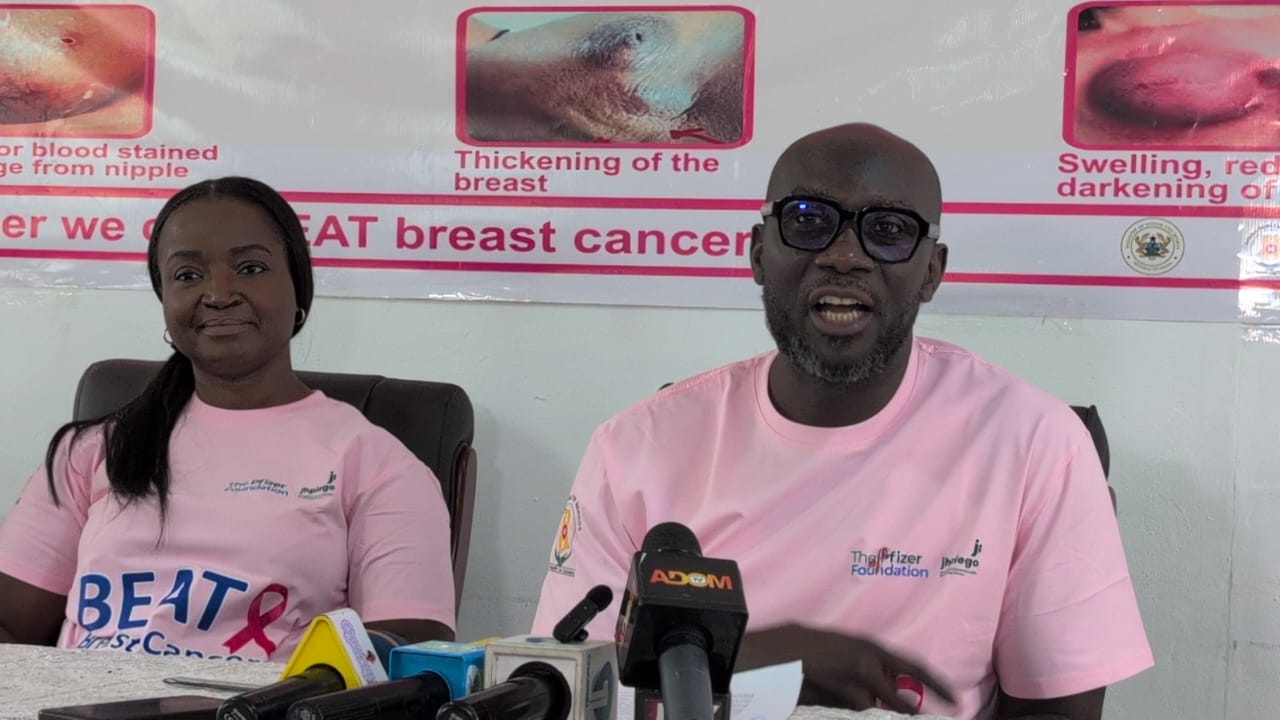

The Ashanti Regional Director of Health Services, Dr. Fred Adomako Boateng, has described breast cancer as more than a medical condition; calling it a public health crisis, a social burden, and a national call to action.
Speaking to the media during the launch of the 2025 Breast Cancer Awareness Month, Dr. Adomako Boateng highlighted the alarming rate of breast cancer cases and deaths across Ghana and sub-Saharan Africa.
“Low and middle-income countries, including those in sub-Saharan Africa, face disproportionately high mortality rates due to late-stage diagnosis and limited healthcare infrastructure,” he said on October 7.
According to him, breast cancer remains the most prevalent cancer in sub-Saharan Africa, with 133,520 new cases and 68,036 deaths recorded in 2022; a mortality rate of about 51%.

Ghana alone, he added, accounts for 31.1% of all female cancers, reporting around 4,500 new cases annually, half of which end in death.
Dr. Boateng revealed that “Ashanti Region alone recorded 5,024 new cases and 2,369 deaths in 2022, contributing to 47.15% of all female cancer-related deaths in the country”.
He expressed concern that over 80% of breast cancer cases in Ghana are diagnosed at advanced stages (Stages III and IV); far from the WHO Global Breast Cancer Initiative’s early detection target.
“Too many women are diagnosed late, when treatment options are limited and survival uncertain. Yet breast cancer can be treated, and lives can be saved if detected early,” he emphasized.
Dr. Boateng urged women to perform regular self-breast examinations and seek prompt medical attention when they notice any changes, stressing that early detection remains the most effective way to reduce mortality and improve outcomes.
He also commended Jhpiego and the Pfizer Foundation for their continued support to the Ghana Health Service, particularly through their Breast Cancer Project, which focuses on awareness creation, screening, and capacity building within the healthcare system.
As the region embarks on a month-long series of awareness activities, Dr. Boateng called on all Ghanaians to become advocates for early detection and treatment.
“Let’s spread the message of hope that breast cancer is not a death sentence,” he said.
The Ghana Health Service reaffirmed its commitment to strengthening health systems, expanding access to screening, and ensuring that no woman is left behind in the fight.