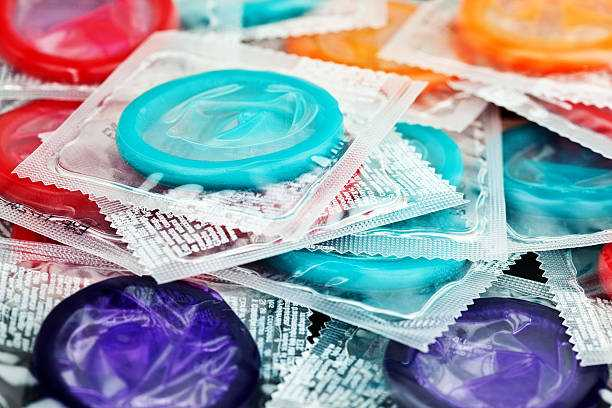

The Ghana AIDS Commission is to rollout condom dispensing machines at strategic locations, particularly during events where young people gather.
This follows a concerning trend of a decline in condom use among the youth.
This worrying development comes as the country grapples with a significant number of new HIV infections, with 15,290 cases recorded in 2024 alone.
Alarmingly, 60% of those infected know their status, highlighting the need for targeted interventions.
Condom use is an essential aspect of sexual health and well-being, and it’s crucial to use correctly and consistently to maximize its effectiveness in preventing the transmission of sexually transmitted infections (STIs) and unintended pregnancy during sexual intercourse.
However, as advocacy increases on reproductive health, findings by health authorities reveal a decline in its use among the youth, and the National Aids Commission is worried.
Especially as new HIV infections are disproportionately affecting the youth, making it seem like current efforts are not enough, and new approaches are needed.
To combat this trend, the Ghana AIDS Commission is exploring innovative solutions. One such initiative is the rollout of condom dispensing machines at strategic locations. These machines aim to provide easy access to condoms, reducing barriers to use and promoting a culture of safe sex.

In addition to the condom dispensing machines, the Commission is also reviewing the National Condoms and Lubricant use Strategy. This review seeks to identify gaps in the current approach and develop new strategies to increase condom use among the populace, particularly among young people.
The concept, according to the Director General of the Commission, Dr Kharmacelle Prosper Akanbong, is currently before the National Security.
He made this known during the launch of the 2025 World AIDS Day in Accra on November 4, 2025.

‘‘By increasing access to condoms and promoting safe sex practices, we hope to reduce the number of new HIV infections and empower young people to take control of their health. It’s very important. Condom accessibility is a big problem, and most often, people don’t just buy condoms. Because you go to pharmacy, you say, Can I get a condom?
They look at you from hair to toes, and that is a part of stigma of condom use. But if we make it just accessible, I mean, in a very vantage place, at a drinking bar, the sports stadium, lorry station, night clubs. I mean, you just go and drop your coin there and three packs come to you, and it’s in your pocket you’re ready to use it discretely, it’s exclusive, and you don’t have to face that stigma,” he said.
Dr Akanbong noted that the Commission “started it some time ago, but these machines are all broken now, and with what is happening right now, we need to have innovative machines that can easily distribute that because it should come with, a message. As you pick your condoms, you get a message that this exposure prophylaxis is available to you.’’
Currently, there are over 334 thousand persons living with HIV in the country. This year’s World Aids Day will be held under the theme: Overcoming disruption, transforming the AIDS response.”