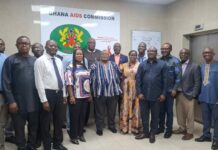

The Ghana AIDS Commission has clarified concerns arising from comments about HIV test results during the recent security services recruitment exercise, urging the public to rely on scientific facts and avoid actions that could fuel stigma.
The Commission in a release says reports that about 1,300 out of nearly 100,000 applicants recorded reactive HIV test results should not be viewed as alarming.
It explains that the figure represents about 1.3 percent of those screened, which is consistent with Ghana’s estimated adult HIV prevalence of 1.49 percent at the end of 2024.
‘‘First, the reported figure of approximately 1,300 reactive HIV test results out of about 100,000 applicants represents approximately 1.3 percent of those screened. This is broadly consistent with Ghana’s estimated national HIV prevalence of 1.49 percent among adults at the end of 2024. The reported figures should therefore not be interpreted as unusual or indicative of an emerging public health concern.’’
According to the Commission, an initial reactive HIV test does not mean a person has been diagnosed with HIV.
“Under Ghana’s national HIV testing guidelines, every reactive result must undergo the approved three-test serial testing process before an HIV-positive diagnosis can be confirmed,” the Commission said.
It also reminded all institutions that HIV testing must be conducted with informed consent, confidentiality and professional counselling.
“Individuals with reactive results should be supported to complete confirmatory testing and, where necessary, be linked to treatment and care,” it said.
The Commission further stresses that under the Ghana AIDS Commission Act, 2016 (Act 938), discrimination against people living with HIV in employment and other areas of public life is prohibited. It says HIV status alone should not be used to deny anyone employment, adding that fitness for work should be determined through established medical and occupational standards rather than stigma or misconceptions.
‘‘The Ghana AIDS Commission also reiterates that the AIDS Commission Act, counselling. Screening results should receive 2016 (Act 938) prohibits discrimination against persons living with HIV in employment and other areas of public life. HIV status alone should not constitute grounds for denying employment or otherwise limiting an individual’s opportunities.’’
The Ghana AIDS Commission warns that inaccurate public communication about HIV can discourage people from testing and seeking treatment, potentially undermining the country’s progress in the fight against the disease.
The Commission says it will continue working with government institutions to ensure HIV testing, counselling and public communication are guided by scientific evidence, national policy and respect for human rights as Ghana works towards ending AIDS as a public health threat by 2030.
By Sarah Apenkroh