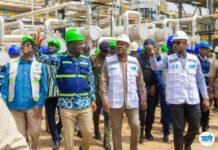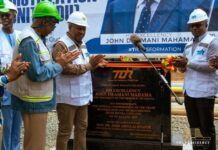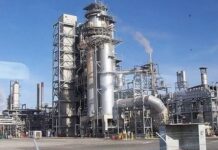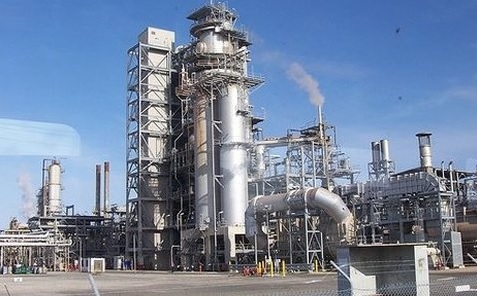

The story of the Tema Oil Refinery in 2025 is being framed as a comeback, a national triumph waiting to happen, but the data shows something far more complicated. After six years of inactivity, the refinery was expected to resume operations in October 2025.

Management insists that turnaround maintenance is 98 percent complete. Government spokespeople have repeated the figure of 25 million dollars as the sum needed to restart the crude distillation unit. Investors are said to be circling with hundreds of millions in new capital.
The message is that TOR is alive again.

But beneath that optimism sits a difficult and uncomfortable truth. TOR is not simply a refinery that needs maintenance. It is a refinery weakened by decades of technical mismatch, financial collapse, political interference and consistent neglect. Its problems are deeper, older and more structural than the public announcements suggest.
TOR was built in the early 1960s as a hydro skimming refinery engineered specifically for heavy and sour crude oil. Its early crude distillation capacity was 28000 barrels per stream day. Expansion efforts between 1977 and 1991 extended the plant’s life. In 1997 the crude distillation unit was revamped to 45000 barrels per stream day.
In 2002 a catalytic cracking unit was added. These were meaningful but limited advances. The refinery remained designed for a crude type that was common at the time but no longer represents the crude Ghana produces.

When Ghana discovered oil offshore, its reservoirs produced light sweet crude. Jubilee for example has an API gravity of about 37.6 degrees and sulfur content around 0.25 percent. TOR was never retrofitted to process such crude. That required new heaters, new catalysts, different distillation profiles and changes in the entire cracking and residue system.
Without those upgrades TOR was left structurally incapable of refining Ghana’s own oil.
Engineers flagged this technical mismatch repeatedly. Political leaders dismissed it. And instead of investing in a retrofit, Ghana exported its light crude and imported heavy crude that TOR could process. It was an expensive contradiction that guaranteed long term inefficiency.

The decline accelerated between 2000 and 2020. In 2015 the essential Tema to Akosombo pipeline was vandalised and abandoned. This removed a major inland distribution advantage and increased product transport costs. In 2017 a furnace explosion damaged critical equipment.
It should have triggered a plant wide overhaul but instead triggered a patchwork of temporary fixes. The catalytic cracker stopped functioning in 2019. The crude distillation unit, TOR’s heart, went silent in 2021. By 2023 the refinery was producing only shadows of its former capacity. Ghana’s only refinery had effectively collapsed.
The financial collapse was just as severe. TOR accumulated massive liabilities from unpaid crude suppliers, operational debts and reclassified government grants. Between 2018 and 2022 the refinery lost more than 100 million dollars each year. Audited accounts were not submitted for six straight years.
By the end of 2024 TOR owed about 517 million dollars. This was not the result of a single bad year. It was the predictable outcome of sustained neglect, poor financial controls and a subsidy system that punished the refinery instead of protecting it.

Ghana spent more than 50 billion cedis on fuel imports in 2024 alone. All of that money left the country while TOR sat idle. And yet the subsidy systems that should have supported domestic refining failed to deliver relief. The premix subsidy drained hundreds of millions each year but never strengthened TOR.
Price stabilization funds and energy levies were inconsistently allocated. TOR sold products below cost without compensation, accumulating losses it could not absorb.
With refining operations dead, TOR survived only because of its tank farm. Its storage facilities and land became its primary source of revenue. The refinery became a storage company, not a refining company.
Now in 2025, Ghana again speaks of revival. Management says the plant will return to refining soon. The target is to revive the crude distillation unit first and the catalytic cracker by late 2025 or early 2026.
Officials point out that Ghana consumes roughly 100000 barrels of petroleum per day and claim that a restored TOR could meet 45 to 60 percent of national demand.
In theory that would reduce the import bill by as much as 400 million dollars every month.
But these projections depend on conditions that have not yet been addressed. TOR remains technically incompatible with Ghana’s light crude. There is no publicly presented plan for the comprehensive retrofit needed to fix that.
The refinery’s 517-million-dollar debt remains unresolved.
No investor will commit hundreds of millions unless that liability is cleared or converted into another form. The refinery has not published audited accounts since 2019. Governance risks remain high, with political actors frequently interfering in management and operational decisions.
And there is the additional challenge that Ghana’s crude production is declining. According to PIAC’s mid-2025 report there is a 26 percent year on year drop in output, raising questions about long term feedstock availability.

This is why analysts have proposed a new strategy for TOR. The most widely discussed is a tolling model.
Under tolling TOR does not buy crude or sell refined products. Private firms supply the crude and TOR processes it for a fee.
The investor then handles marketing and distribution. This reduces TOR’s exposure to commodity risk and removes the burden of crude procurement. Investment offers valued at over 214 million dollars have already been discussed under this model.
But even this model requires serious reforms. TOR would need guaranteed feedstock, protected governance and an upgraded facility. Without those, tolling is not a solution. It is a temporary delay of the next collapse.
So can TOR rise again? The answer is yes, but only if Ghana confronts the full truth of TOR’s decline. The refinery cannot survive on political promises or partial fixes. It needs structural reconfiguration, large scale capital investment, complete financial restructuring, and governance reform that shields it from political interference.
Without those, the current revival attempt will be another brief chapter in a long story of failure.
TOR’s future will depend on whether Ghana is finally ready to learn from history or repeat it. The refinery stands today as a symbol of both potential and neglect. Whether it rises again or remains a monument to lost opportunity will depend on what choices the country makes now.
By Wisdom Sarfo