
Poor students’ attendance is undermining the National School Feeding Programme in the North East region despite a recent increase in funding aimed at improving the program’s impact.
Announced on March 9, 2025, by Finance Minister, Dr. Cassiel Ato Forson, the allocation per child was raised from GHC1.50 to GHC2.00.
However, this investment is being undermined by absenteeism and parental involvement in farm activities, prompting the National Coordinator for school feeding to call for urgent sensitization efforts.
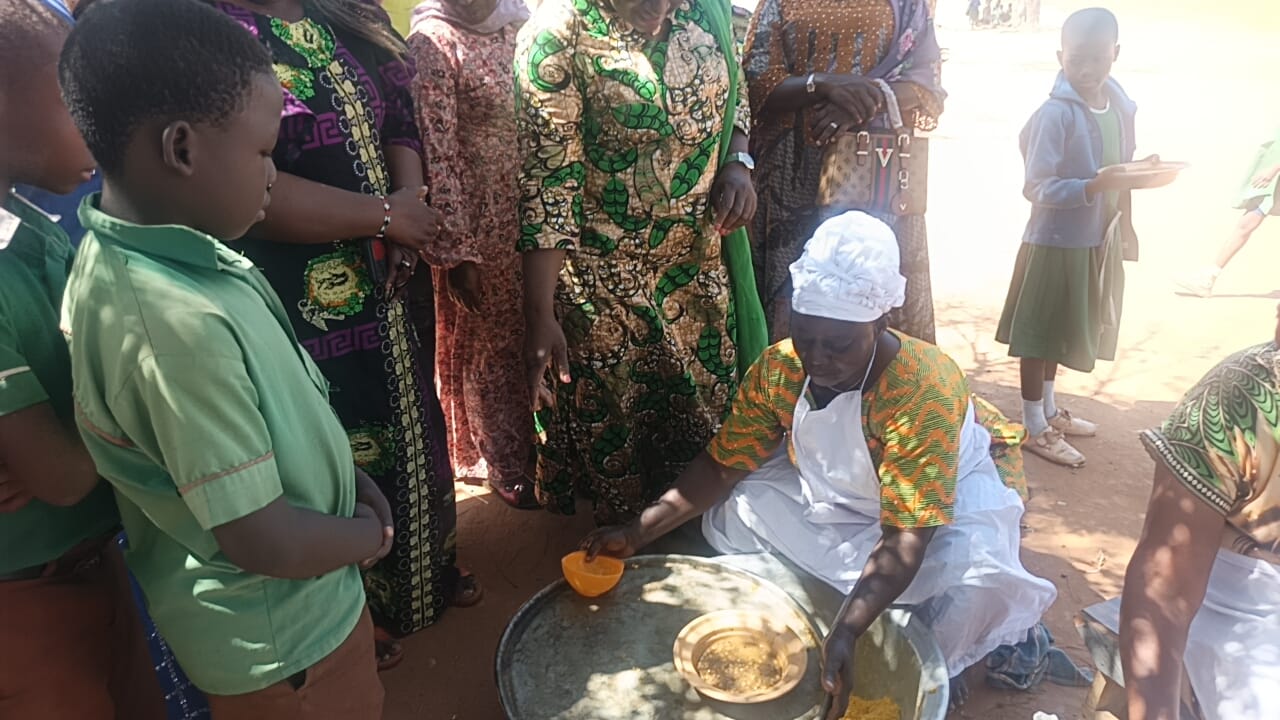
During an unannounced visit to schools in the North East region, National Coordinator for the School Feeding Programme, Hajia Fati Forgo, lauded the quality and quantity of food being provided to students.

Despite this positive assessment, she emphasized the critical need for a comprehensive sensitization engagement with parents to address the issue of student absenteeism, particularly after meals, and the practice of parents prioritizing farm labour during harvest season over their children’s education.
Hajia Fati underscored that these factors hinder the program’s intended benefits and the government’s investment in enhancing student attendance and educational outcomes.
Hajia Fati also engaged with key stakeholders and paid courtesy calls on Municipal Chief Executives (MCEs) in the region and the North East Regional Minister, Ibrahim Tia.
The Regional Minister expressed his appreciation for Hajia’s unexpected visits to monitor the effectiveness of the meals being served, demonstrating a commitment to ensuring the program’s success.
Interactions with caterers focused on maintaining high hygiene standards and incorporating local dishes into the menu, promoting both health and cultural relevance.

Hajia Fati also engaged directly with students, distributing biscuits and soft drinks as a gesture of encouragement.
The headmistress of Nasheriga Primary School in Nalerigu commended the program’s quality and quantity of food, urging its continuation. However, Hajia Fati expressed dissatisfaction upon observing poor student enrollment in some schools, despite the government’s efforts to increase participation.
She condemned the practice of parents prioritizing farm work over education, emphasizing the need for greater parental sensitization. Furthermore, she noted that some students leave school immediately after eating, which undermines the program’s long-term goals.
The North East Regional Director of Education, Simon Amokase, in an interaction with Hajia Fati Forgor, advocated for the inclusion of all schools in the Chereponi, Yunyoo-Nansua, and Moaduri districts to the School Feeding Programme.
He argued that these deprived areas are in dire need of the program to alleviate the financial burdens on parents and improve educational access for children in these vulnerable communities.
By Solomon Kwame Kanawule