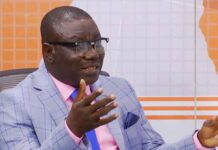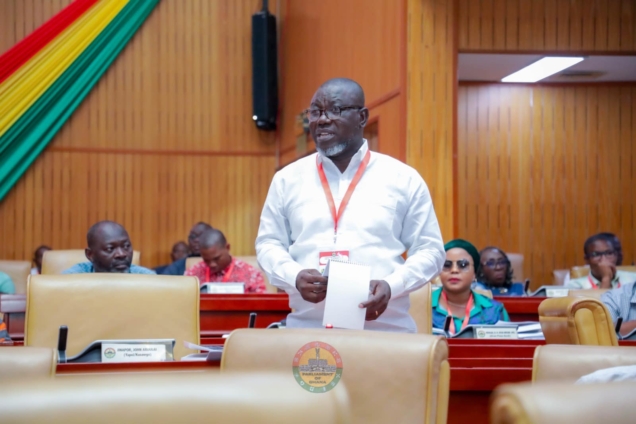

Chairman of Parliament’s Finance Committee, Isaac Adongo, has attributed Ghana’s economic challenges to mismanagement by the previous administration, stating that the country was facing a severe monetary crisis prior to the current government’s takeover.
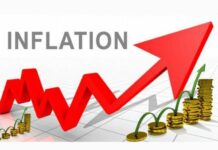
Speaking during the debate on the 2026 Budget Statement and Economic Policy in Parliament on Friday, November 28, 2025, Adongo highlighted the high inflation rate, which peaked at 54%, as a major contributor to the economic woes the country faced at the time.
“Mr. Speaker, we were also facing a serious monetary crisis. Inflation was all over the place,” Adongo said.
He explained that the high inflation rate made it difficult for businesses to borrow money, with interest rates soaring above 60%.
“If anybody was to give you money, he needed to get a return that is slightly above inflation. So if inflation was 54%, it means that for somebody to give you money, you must give him 54% plus the margin to cater for a real return,” he added.
The Member of Parliament emphasised that the economic situation inherited by the current administration was dire, with businesses struggling to survive due to high borrowing costs.
The Bolgatanga Central lawmaker’s comments highlights the challenges faced by the government in addressing the economic legacy of the previous administration, lauding the current government’s efforts in working assiduously to stabilise the economy.
Adongo expressed optimism that the 2026 budget will bring relief to businesses, considering the fiscal and monetary measures in place aimed at boosting economic growth.
He cited the Bank of Ghana’s reduction in the policy rate and Fitch’s projection of a further drop in inflation as positive indicators.
READ ALSO: Ghana to be one of the fastest-growing emerging markets in 2026 – Fitch Solutions
The lawmaker is hopeful that these developments will help revive the economy, which was left in a dire state by the previous Akufo-Addo/Bawumia administration, and put it on a path of sustained growth.