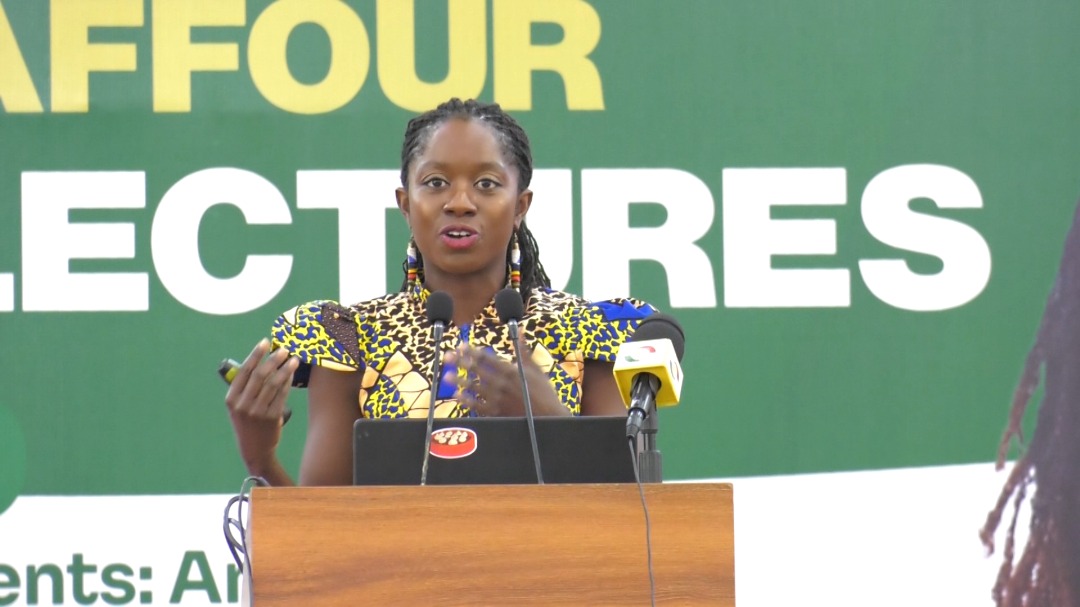

A US-based Biomedical Engineer, Dr. Mercy Nyamewaa Asiedu has called for awareness and preparedness as the world races toward increasingly powerful Artificial Intelligence (AI) systems.
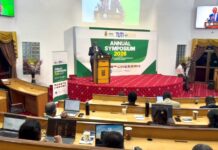
Delivering the 13th R.P. Baffour Memorial Lecture at the Kwame Nkrumah University of Science and Technology (KNUST), she explored the theme “Super-Intelligent AI Agents: An Existential Threat to the Human Race?”; a question she said is no longer theoretical.
Dr. Asiedu highlighted the rapid pace of advancement, noting that several AI models already score above average human IQ on standardized tests, with tech leaders predicting the arrival of Artificial General Intelligence (AGI) as early as the 2030s.

But alongside the promise, the Senior Research Scientist at Google Research warned of serious risks: bias in AI systems, job displacement, misinformation, deepfakes, privacy breaches, and the enormous environmental cost of training large models.
“We are standing at the edge of a technological frontier where machines may soon learn and act beyond our control.”
She stressed the need for strong regulation, public education on fake content, and urgent investment in green energy to support safe AI development.
Dr. Asiedu reminded the audience that while super-intelligent AI remains hypothetical, its trajectory is clear and societies that prepare early will be the safest and most competitive.

To navigate the coming era safely, Dr. Asiedu urged integration of AI education across all levels, strong global frameworks for AI safety and regulation, investment in energy-efficient AI systems, collaboration to detect and label synthetic media, sustained innovation grounded in ethics, fairness, and human oversight
“The bottom line,” she said, “is that AI is coming fast. Whether it becomes humanity’s greatest tool or its biggest threat depends entirely on the choices we make today.”
The Chairman of the University Council of the Kwame Nkrumah University of Science and Technology (KNUST), Akyamfuor Asafo Boakye Agyemang-Bonsu, issued a strong call for Ghana to confront its infrastructural deficits if it intends to participate meaningfully in the era of super-intelligent artificial intelligence.

“As Ghana, we want to be part of this super-intelligent world. But to do that, we need infrastructure. Without infrastructure, we cannot participate in AI,” he emphasized.
He referenced the national AI Strategy (2023–2030), developed under KNUST’s leadership, which envisions positioning the country as an AI hub. That vision, he argued, requires realistic assessments of Ghana’s current limitations.
“AI is energy hungry. Reliability is essential for an AI economy,” he noted.