
President John Mahama’s government has been cautioned to approach commendations from the International Monetary Fund (IMF) with restraint, amid concerns that such praise often masks deeper structural weaknesses in the economy.
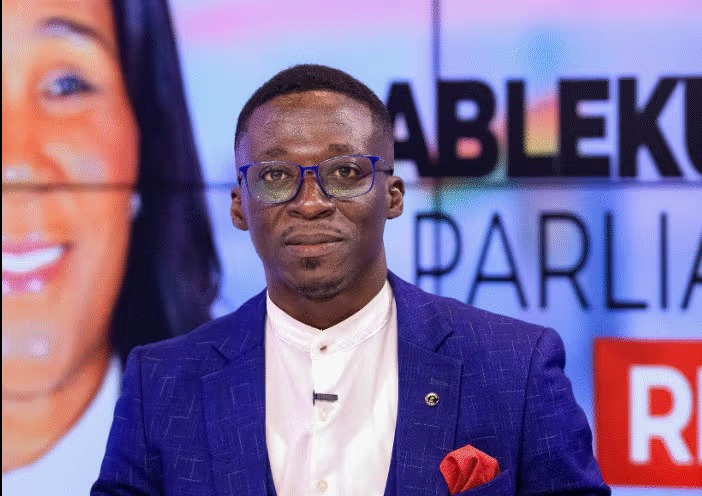
Speaking on the state of Ghana’s IMF programme on TV3’s Big Issues on December 26, 2025, private legal practitioner and policy analyst, Austin Kwabena Brako-Powers, warned that the IMF’s “politics of praise” could lull government into a false sense of economic security if not carefully interrogated.
According to him, Ghana’s long and chequered history with the IMF makes the current moment familiar rather than surprising. He noted that IMF reports over the years have often painted optimistic pictures that later unravel once programmes end.
Mr Brako-Powers recalled that between 2017 and 2020, IMF assessments repeatedly praised the government of the day, even as the then-opposition National Democratic Congress (NDC) raised concerns about underlying macroeconomic vulnerabilities. He said those vulnerabilities only became evident after Ghana exited the IMF programme.
“If you read repeatedly their reports, particularly from 2017, they were praising the government then, at a point when the NDC was in opposition – the NDC was saying the macroeconomic stability is vulnerable, the IMF was saying that the government was on track and quickly, when the government exited the IMF, it started revealing some of the underlying vulnerabilities,” he observed.
He further argued that improvements seen after elections and changes in government are not always the product of sound policy alone. Rather, he said, a change of government itself can act as an economic shock that temporarily boosts confidence.
According to Mr Brako-Powers, renewed confidence from international partners and domestic actors often follows a political transition, especially where the outgoing government has lost credibility. He said this dynamic partly explains recent positive economic signals, beyond the policies rolled out by the new administration.
“To attribute everything we are seeing now solely to policy would be misleading,” he cautioned, adding that confidence effects play a significant role in short-term macroeconomic stability.
On the broader issue of IMF dependence, Mr Brako-Powers said Ghana’s repeated return to the Bretton Woods institution reflects deep-seated policy weaknesses. He noted that Ghana has spent nearly 40 of its 68 years under IMF programmes, a statistic he described as “staggering.”
He said this pattern points to chronic policy incoherence, weak fiscal discipline, and structural fragilities that successive governments have failed to address decisively.
While agreeing that fiscal discipline is essential to weaning Ghana off IMF support, Mr Brako-Powers stressed that it is not sufficient on its own. He argued that sustainable economic resilience requires deliberate diversification of the economy.
“… to deliver a sustainable economy, fiscal discipline alone is not enough. We must take steps to diversify the economy itself, focus on matters like industrialisation, [and] cutting down import dependency,” he told TV3’s Roland Walker.
He called for renewed focus on industrialisation, reduced import dependency, and the expansion of productive sectors capable of creating jobs and broadening the tax base.
Mr Brako-Powers likened Ghana’s engagement with the IMF to a “game of chess,” where timing and strategy matter as much as immediate gains. He said governments must be clear about their long-term objectives when negotiating programme extensions.
In that regard, he warned that if the Mahama administration believes it has laid a solid economic foundation, agreeing to an extension of the IMF programme may send the wrong signal about policy confidence and independence. “If this government is convinced that it has laid a solid foundation, it should not agree to an extension because it does not augur well,” Mr Brako-Powers said.
However, he acknowledged that Ghana is currently enjoying some benefits under the programme, including relative macroeconomic stability, but insisted that these gains must not obscure the deeper reforms needed to break the cycle of IMF dependence.