
2025 data points to escalating fuel smuggling in Ghana, driven by high taxes and weak governance, promoting tougher regulatory action amidst concerns of over organized crime and economic leakage, particularly in the North.
Ghana faces potential fiscal losses of GHC 7.2 billion from fuel import issues, including missing documentation and unchecked exemptions as highlighted by IMANI Africa.
According to Cross-Border Conflict Evidence Policy Trends, XCEPT, fuel smuggling through Ghana into Burkina Faso and the Sahel is well-coordinated, long-established enterprise.
The illicit fuel trade is intricately linked to powerful stakeholders in Ghana, including political elites, local entrepreneurs and business owners, and government and security officials, who all benefit from the trade including those who are directly or indirectly involved in the trade, as well as borderland communities that have irregular access to the formal fuel trade, therefore relying on purchasing fuel from illicit traders that set up shops on the side of roads.
The illicit fuel trade is also highly profitable, and it is difficult to promote alternative trade in less lucrative commodities. High-level patronage of these activities further entrenches the trade and makes tackling it more complex. The once thriving, high volume fuel smuggling trade has been declining since 2021-2022.
This is primarily due to increased insecurity linked to VEO violence in the Sahel, government crack-downs, and rising fuel prices in Ghana due to inflation, which have made cross-border trade less profitable.
Although many local people are still involved, many young people in Ghana who once relied on smuggling for easy income have found themselves disenfranchised, facing an uncertain economic future, and vulnerable to the socio-economic draws towards participating in armed group activity with VEOs.
The report by XCEPT further states “The fuel smuggling economy provides livelihoods for many people, making it a critical yet controversial aspect of the socio-economic landscape in Ghana. It is currently difficult to procure fuel cheaply in northern Ghana due to the current economic downturn and Burkina Faso’s restrictions on fuel exports.
As a result, fuel smuggling has become an impactful livelihood for many people across rural areas in northern Ghana and southern Burkina Faso including those who are directly or indirectly involved in the trade, as well as borderland communities that have irregular access to the formal fuel trade, therefore relying on purchasing fuel from illicit traders that set up shops on the side of roads.
The illicit fuel trade is also highly profitable, and it is difficult to promote alternative trade in less lucrative commodities. High-level patronage of these activities further entrenches the trade and makes tackling it more complex”.
The introduction of the GH¢1 per litre “D-Levy” in July 2025 significantly increased fuel prices, creating a stronger economic incentive for smuggling and diversion, notes Firmus Advisory.
Reports from GI-TOC identify Northern Ghana’s border areas (Burkina Faso–Ghana–Côte d’Ivoire triangle) as high-risk corridors for fuel smuggling, funding armed groups like JNIM.
A reconciliation of official national stocks movement data revealed that 54.36mn litres, 168.48mn litres and 794.75 million litres could not be accounted for in 2015, 2016 and 2017 respectively.
Also, the associated petroleum tax revenue evasion to these stocks stood at GH¢1.4 billion while the associated evaded regulatory margins amounted to GH¢238.96 million.
According to the report, the National Petroleum Authority,NPA, For the period 2015 to 2018, total taxes evaded based on official unaccounted stocks stood at GH¢1.3 billion while total under-reported taxes based on official accounted sale volume after adjustments for exemptions stands at GH¢1.2 billion.
A reconciliation of official national stocks movement data revealed that 54.36mn litres, 168.48mn litres and 794.75 million litres could not be accounted for in 2015, 2016 and 2017 respectively. Also, the associated petroleum tax revenue evasion to these stocks stood at GH¢1.4 billion while the associated evaded regulatory margins amounted to GH¢238.96 million.
The report showed that GH¢952 million was saved from blocking the sale of illicit sale of petroleum products in the country in 2018.This was a reversal from the losses made in the last three years – 2015 to 2017- through unaccounted stock and evasion of taxes.
The savings was as a result of interventions by the National Petroleum Authority (NPA) to curb the illicit trade of petroleum products and ensure that it was sold through official channels, the annual report of the Chamber of Bulk Oil Distributors (CBOD) has said.
The Burkina Faso-Ghana-Côte d’Ivoire tri-border area, including Tamale, is a major hub for illicit activities, including fuel diversion, linked to funding armed groups, notes the GI-TOC report. Estimates suggest over $31 billion lost through illicit financial flows at Ghana’s ports between 2020-2025, with fuel import leaks (missing documentation, exemptions) costing billions in fiscal losses (e.g., GHS 7.2 billion).
The NPA launched intensified campaigns and secured prosecutorial powers to directly prosecute fuel smuggling defaulters in 2025 under a fiat which is the appointment of public prosecutor instrument (E.I 378) and is the vision of the chief Executive Officer Mr. Godwin Kudzo Tameklo resolve to sanitize the downstream petroleum industry, indicating a serious crackdown.
Fuel smuggling is part of a wider network including arms, go gld smuggling, and drug flows, often facilitated by local elites and the g to officials, eroding governance mostly through the porous borders without the supervision of Ghanaian authorities. These activities are usually in done during the dark hours with both community and other stakeholders who have help the smugglers to deep fetch the revenue coffers of the state.
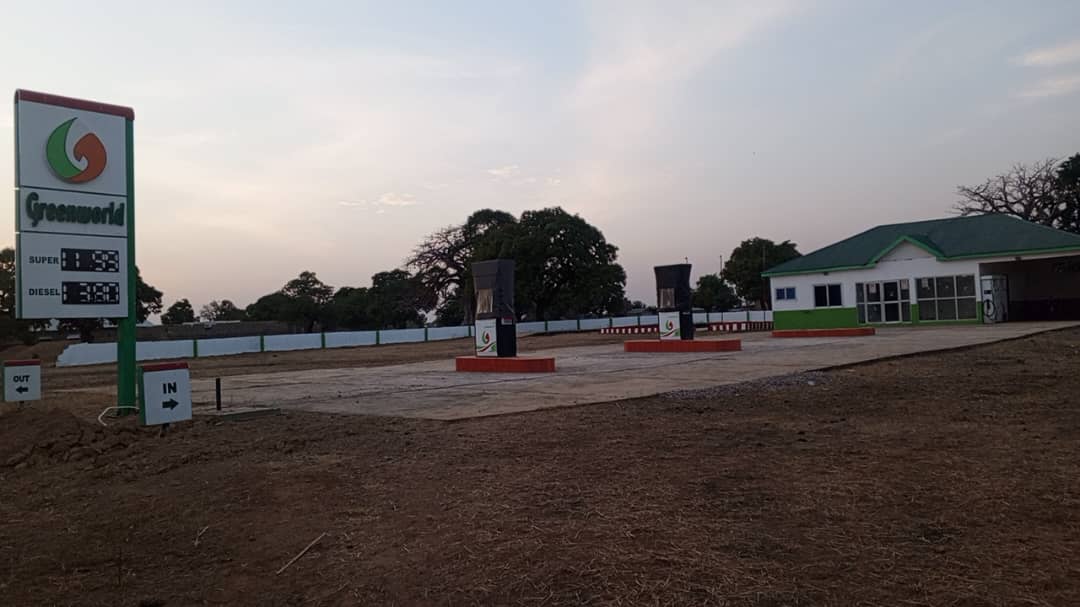
In Upper East Region of Ghana, where Ghana shares borders with Burkina Faso and Togo, illicit fuel smuggling strives for over two decades through the porous borders and these petroleum products are usually main for export to the Sahel countries but end up at ‘bush fuel stations’ which serves as a point of smuggling.
There are a lot of these ‘Bush fuel stations’ dotted close to the communities along these porous borders with few vehicles passing through and one will wonder the profitability of situating a fuel station in an area with less vehicle traffic.
But in many parts of Upper East Region, the illicit fuel smuggling is gradually reducing with the introduction of border security, BOSEC, where ten member task force have been established in most of the border communities in ensuring the illicit fuel trade minimizes or eliminated.
With the existence of BOSEC, many of the ‘bush fuel stations’ are now out of business with some of them fully abandoning the fuel stations with animals and weeds taken over. A visit to Mayoro community in the Kassena Nankana Municipal in the western part of Upper East Region, our news team discovered four ‘bush fuel stations’ in less than a kilometer used in the illicit fuel trade but are now dormant.
In an interview with the Upper East Regional Security liaison officer, Mr. Paul Duncan on the border security initiative, he described the fuel smuggling as unfortunate and a national security issue which must be addressed to avoid the infiltration of extremist groups who used these trade to fund their activities.
“As we stand here, Mayoro, Katiu and the rest all have this porous border that they share with the people there. I’m being sincere that since I came to office, almost every constituency has 10 operatives each and these are people that we have actually trained and they are on the ground taking most of the surveillance information for us to actually caution whoever that intends to actually smuggle fuel across that the flow would definitely not be spared.
“Look at it, we pay the taxes here, we pay everything, it is actually added up and then governments have done some of these things and then we would then come and hide and go up there and then go and sell at a cheaper rate.
“So seriously, it is a good observation that you have observed and its part of our priority. Going forward, we intend to actually sustain that surveillance to ensure that no fuel crosses the border again without any proper or without it being properly imported as it’s supposed to be done. While we look at other areas too or other communities too that we feel and think that if they smuggle it across, it will go a long way to actually affect us.
“So yes, it is true that your observation is true that a lot of work has gone into the smuggling which has really kept since we took office and those 10 per each constituency at various communities actually doing a great job hence what you’ve seen,” he stated
“The economy is actually rebounding back but they have a lot of business that people can do. Look, whether you like it or not, Upper East Region is now full of Chinese companies and subcontractors because of the mining companies that have come here.
How many of us have made up our mind that, this is a business that we should look at and see how we can serve the Chinese needs. You know, business is all about looking at where there are problems to see how we can solve those problems. So the border is made up of a lot of business, genuine business that you can do.
Fuel smuggling or smuggling of goods and services and then denying the state of the taxes that they would have gotten to pay those who have found themselves in government institutions or to actually do what we call developments. It’s not going to help us. So if you go and smuggle fuel because you are a party member, we should allow you to smuggle fuel?
“You deny your own government or your own party that is in power the opportunity to get revenue to build that school that’s in the manifesto to build that road that’s in the manifesto and you go and do your smuggling and you come back. What have you done to the state? Your own government will say that it’s not performing but the issue is that there are a whole lot of businesses, genuine businesses at the border there”, Mr. Paul Duncan on alternative livelihood for fuel smugglers.”
According to Paul Duncan, on two occasions, the border security, BOSEC have done what is called joint education to all these porous borders and educating people as far as they see something, say something. The educating is to look out for and letting residents appreciate the reality on the ground and what is expected of them to do and not to do.
In conclusion, although there are some activities of illicit fuel trade in the Upper East region and parts of the five regions of northern Ghana, government through the regulatory agencies like NPA, security agencies, the regional coordinating councils, traditional leaders, community members and the youth must collaborate well in ensuring full enforcement of laws guiding the protection of territorial borders for economic transformation of Ghana and the ECOWAS states including the three sahel block.
By Mohammed Rabiu Tanko