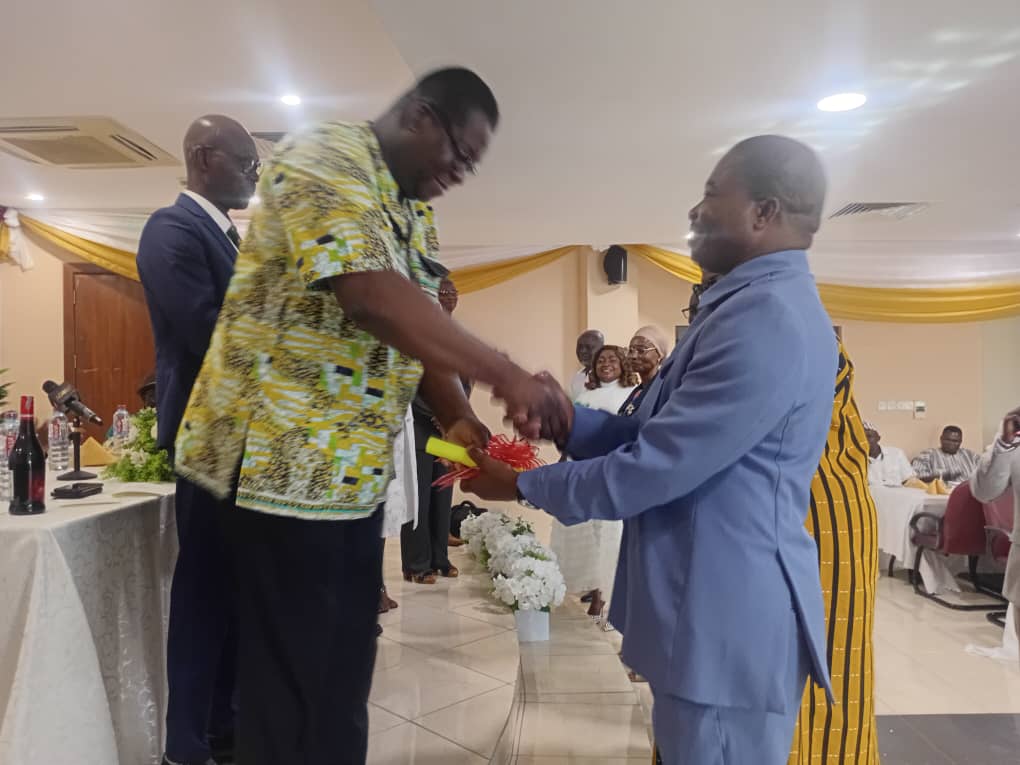

Mr Angel Carbonu has officially stepped down as President of the National Association of Graduate Teachers (NAGRAT), ending a long journey in union leadership with a strong call on organised labour to rethink its approach in dealing with what he described as increasingly “sophisticated governments.”
Speaking at a handing-over ceremony to mark the transition on January 8, Mr Carbonu urged labour leaders to move beyond traditional agitation and embrace research-based, data-driven engagement when negotiating with governments on salaries and conditions of service.
“We are now having more critical members, and we are having more sophisticated governments to deal with,” he said. “Governments do not come to negotiations with rough edges anymore; they come with research-based data. The question is: what strategies are we adopting to accommodate these changes? Because if we don’t, we will be swept away by the realities.”
Mr Carbonu rose through the ranks of NAGRAT from the Greater Accra Region, where he served as Regional Chairman, before ascending to the highest office as National President. Reflecting on his journey, he recounted the difficult and often hostile circumstances that surrounded the formation of the union in its early days.
“I joined this union from its inception, from the days when the structures were not well formed,” he recalled. “In those days in Greater Accra, when there was an announcement that all teachers were meeting at PRESEC, some teachers would come, but many were afraid.”
He revealed that some teachers who attempted to join the union faced serious repercussions, including setbacks in their professional advancement.
“Those who became members and even attended promotion interviews were failed because they attempted to join the formation of the union,” Mr Carbonu said. “We were also prevented from deducting dues of members from the Controller and Accountant-General, but today the union has come to stay.”
Despite these challenges, he said the resilience, courage and fighting spirit of NAGRAT’s founding members ensured the union’s survival and growth into a formidable force within Ghana’s education sector.
Mr Carbonu noted that Ghana’s labour and industrial relations landscape has evolved significantly over the years, with emerging demands around equity, parity and equality, particularly from women within organised labour. He stressed that union leadership must adapt to these changing dynamics through sound research and policy analysis.
“We are facing changes on the labour front,” he said. “If we do not adjust our strategies to reflect these realities, we risk being left behind.”
Taking over the mantle of leadership, the new President of NAGRAT, Jacob Anaba, pledged to build on the legacy of his predecessor while prioritising the welfare of members. He announced plans to roll out new initiatives aimed at strengthening the union and making it more responsive to the needs of teachers.

Mr Anaba also called on government to prioritise dialogue over confrontation in resolving labour disputes, particularly in relation to the transfer of teachers.
“Attempts to demonstrate authority through mass transfer and release letters undermine industrial harmony,” he warned. “Such practices do not build trust, and as a union, we will always resist them.”
He further highlighted persistent challenges facing teachers across the country, including inadequate accommodation and poor pension arrangements, urging government to give these issues urgent attention.
Addressing NAGRAT members directly, Mr Anaba reminded teachers of their professional responsibilities even as they push for improved conditions of service.
“Dear colleague teachers, as we demand better conditions of service, let us be reminded of our sacred duty,” he said. “We chose to be in this profession; let us discharge our duty with professionalism, integrity and strict adherence to the laid-down rules and regulations.”
By Daniel Opoku