
In the Northern Region, motorcycles are more than a means of transport. They are the lifeblood of the city.
By midmorning in Tamale, the sun is already unforgiving.
Motorcycles weave through traffic, horns blaring, engines humming carrying traders to the market, parents to work, and children to school. In this city, motorcycles are not a luxury; they are survival. Fast, affordable, and ever present, they keep Tamale in motion.
Yet despite their popularity, one simple but crucial safety measure is often ignored.

Across the city’s highways and inner streets, riders and passengers move freely without crash helmets, their heads exposed to danger. The reasons are familiar: the heat is unbearable, the journey is short, an experience many believe is protection enough.

“It’s too hot to wear a helmet,” Mohammed says, wiping sweat from his face as he prepares to ride off. “And I’m not going far.”
In Tamale, that confidence is common. But the road does not measure distance, skill, or intention. It only reacts to impact.

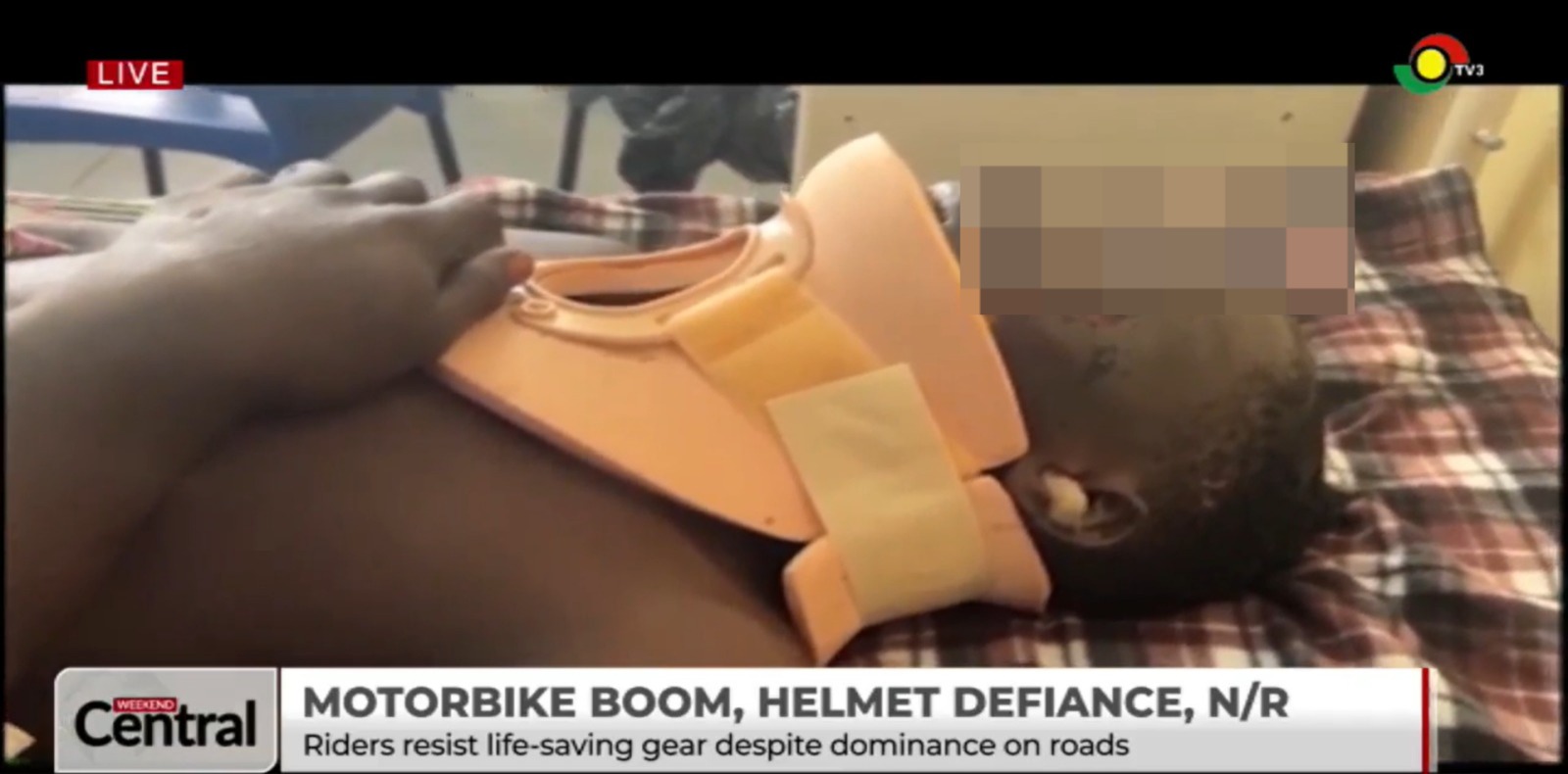
At the Tamale Teaching Hospital, the cost of that confidence is written in bandages, silence, and anxious faces pacing hospital corridors.
Masawudu Joseph is one of them.

The young man from Daboya lies on a hospital bed awaiting skull surgery after a motorbike crash. He was not wearing a helmet when the accident happened. His injuries are severe, and time is not on his side.

For his family, the pain is doubled by fear and money.
“We have been asked to raise about 70,900 for the surgery,” his father says quietly. “It is far beyond what we can afford.”
Masawudu’s story is not unusual.
Dr. Abdul Aziz Mahama, a neurosurgeon at the Tamale Teaching Hospital, says cases like this fill the neurosurgery unit almost daily.
“More than 60 percent of our head injury cases from motorcycle accidents involve riders who were not wearing helmets,” he explains. “These are injuries that could have been prevented.”

According to Dr. Mahama, head injuries are among the most dangerous consequences of road crashes. Some patients never fully recover. Others are left with lifelong disabilities that change not only their lives, but the futures of their families.
“No journey is too short,” he warns. “The discomfort of a helmet cannot be compared to the damage a single fall can cause.”
In Ghana, the wearing of protective crush helmets for both motorcycle riders and pillion passengers is mandatory under the Road Traffic Regulations, 2012 (L.I. 2180).
Non-compliance is a serious offense frequently linked to the high number of head injuries and fatalities in motorcycle crashes.
Superintendent Richard Odartey, Commander of the Northern Regional Motor Traffic and Transport Department (MTTD), admits that sustaining compliance is difficult.
“We face resistance,” he says. “Sometimes even interference, including from traditional authorities, which makes enforcement challenging.”
While he believes enforcement is necessary, he says it alone is not enough.
“People must understand the risk,” he adds. “When one person is injured, the impact spreads to families, communities, and the health system.”

The University for Development Studies, the Northern Regional Health Directorate, and Tamale Technical University have adopted a strict “no helmet, no entry” policy. Even so, compliance has been slow and resistance remains.
The continued refusal to wear helmets raises troubling questions. Is it ignorance? Indiscipline? Or a deep misunderstanding of risk?
As motorcycles continue to shape daily life in Tamale, and other parts of the country experts say changing attitudes toward helmet use is no longer optional.

For families like Masawudu’s, that lesson has come too late.
On Tamale’s streets, motorcycles will continue to dominate carrying hope, hustle, and daily life on two wheels.
But each ride presents a choice: helmet or heartbreak.
A helmet may be uncomfortable under the northern sun, but the discomfort lasts only minutes. The consequences of riding without one can last a lifetime.
With the passage of the Road Traffic Amendment Bill 2025 which seeks to legalise the use of motorcycles, tricycles, and quadricycles for commercial purposes, it is hoped its eventual implementation will curb these practices.