
Alleged wire fraud and romance scam suspect Frederick Kumi, also known as Abu Trica, has filed a suit against the Interior Ministry, Economic and Organised Crime Office, Narcotics Control Commission and the US Federal Bureau of Investigation (FBI) over allegations of unlawful arrest, detention and interrogation.
Abu Trica was recently rearrested after an Accra High Court discharged him following the withdrawal of charges against him by the state.
In the suit filed against state security agencies and the Federal Bureau of Investigation (FBI), Kumi contends that his arrest on 11 December 2025 was carried out under conditions that amounted to torture and cruel, inhuman and degrading treatment, contrary to Article 15 of the Constitution.
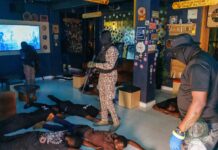
He avers that he was restrained in handcuffs from morning until late evening, denied food, water, rest and other basic necessities, and subjected to severe physical and psychological distress while in the custody of officers of the Narcotics Control Commission, EOCO and the Attorney General (state security).
Abu Trica further alleges that he was interrogated while handcuffed, surrounded by armed officers, threatened and intimidated, and crucially, denied access to a lawyer of his choice, despite repeated requests. He argues that these actions violated his rights to dignity, legal representation and a fair trial under Articles 15 and 19 of the Constitution.
At the heart of the case is the involvement of agents of the United States Federal Bureau of Investigation (FBI). Abu Trica argues that foreign law enforcement officers were allowed to question him on Ghanaian soil, while he was in custody and without legal representation. He insists that this should never have happened, saying the FBI has no independent powers to arrest or interrogate suspects in Ghana.
The Applicant is also challenging the search of his Swedru residence, popularly known as “Abu Trica’s Mansion.” He says the search was carried out while he was already in custody, without giving him or a representative the chance to be present—an action he believes violated his rights to privacy and fair treatment.
Beyond the interrogation itself, Abu Trica is raising concerns about what happened after his arrest. He says he was recorded while in custody, and that the footage later found its way onto social media. He is also protesting a public statement issued by one of the state agencies, which described him as a “notorious cyber-criminal” before any court had determined his guilt.
According to him, that description damaged his reputation and undermined his right to be presumed innocent.
Based on these claims, Abu Trica is asking the court to throw out any statements, passwords, electronic data or devices obtained from him while he was in custody without access to a lawyer, as well as any items retrieved from the search of his home.
He is further asking the court to stop the FBI or any foreign agents from exercising investigative powers over him in Ghana, and to grant an interim injunction preventing his extradition or transfer to any foreign country until the case is fully resolved.
In addition, he is seeking GH₵10 million in compensation, arguing that the alleged violations have caused him serious emotional distress, reputational damage and lasting psychological harm.
Below are the reliefs being sought by Frederick Kumi:
a. The prolonged detention of the Applicant by officers of the 2nd. 4th and 5th Respondents from the morning until late evening during his arrest on 11 December 2025 whilst continuously restrained in handcuffs, deprived of food, water, rest, and basic human necessities, and subjected to physical and psychological distress, constitutes torture and cruel, inhuman and degrading treatment contrary to Article 15 of the 1992 Constitution and is therefore unlawful and unconstitutional
b. The questioning and interrogation of the Applicant at the time of his arrest, by officers of the 2nd, 4th and 5th Respondents, whilst he was restrained in handcuffs, surrounded by armed officers, and subjected to threats and intimidation, and in denial of his request for access to Counsel of his choice, violated his constitutional rights to legal representation, dignity, and a fair trial under Articles 15 and 19 of the 1992 Constitution and is unlawful and unconstitutional.
c. The detention, coercive interrogation, and subsequent arraignment of the Applicant without access to Counsel violated his right to Counsel which amounted to a violation of his right to fair trial.
d. The detention and interrogation of the Applicant by the 2nd, 4th and 5th Respondents, and his presentation before a court of law, without first affording him access to Counsel of his choice, violated his constitutional right to legal representation and deprived him of a fair trial, contrary to Article 19 of the 1992 Constitution.
e. The decision and conduct of officers of the 2nd Respondent in permitting agents of the Federal Bureau of Investigation of the United States of America the 3rd Respondent herein – as foreign law enforcement personnel to interrogate the Applicant without access to Counsel, was unlawful and in violation of Articles 14 and 19 of the 1992 Constitution
f. The decision and conduct of officers and agents of the 3rd Respondent, being foreign law enforcement personnel, in directly interrogating and questioning the Applicant whilst he was under arrest and in custody and without access to or the presence of Counsel of his choice, constituted an unlawful interference with his liberty and a violation of his rights to legal representation and a fair trial guaranteed under Articles 14 and 19 of the 1992 Constitution and is unlawful and unconstitutional
g. Officers and agents of the 3rd Respondent, being foreign law enforcement personnel, possess no independent police, investigative, arrest, detention, or interrogation powers within the territory of the Republic of Ghana, and that any interrogation or questioning of the Applicant conducted by them in custody without lawful authority was ultra vires, unlawful, and unconstitutional.
h. Statements, signature, password, electronic access credential, or other information obtained from the Applicant by officers of the 2nd, 4th and 5th Respondents while the Applicant was in custody, without access to or the presence of Counsel and under conditions of compulsion or coercion, is involuntary, unlawfully procured, unconstitutional, and of no legal effect.
The search of the Applicant’s residence known as “Abu Trica’s Mansion” at CP-0969.1943, Swedru by officers of the 2nd, 4th and 5th Respondents, conducted whilst the Applicant was already in their custody and without affording him the opportunity to be present or represented during the said search, violated his constitutional rights to privacy, property, and fair process under Articles 18 and 23 of the 1992 Constitution and is unlawful and unconstitutional.
j. The recording of the Applicant whilst under arrest and in custody and the publication, dissemination, or circulation of such recording on social media by officers of the 2nd, 4th and 5th Respondents or their agents without lawful justification violated the Applicant’s rights to dignity, privacy, and reputation guaranteed under Articles 15 and 18 of the 1992 Constitution and is unlawful and unconstitutional
k. The publication and dissemination by the 4th Respondent of a news release describing the Applicant as a “notorious cyber-criminal” and asserting his involvement in criminal activities prior to any judicial determination of guilt violated the Applicant’s constitutional rights to dignity, reputation, and the presumption of innocence guaranteed under Articles 15 and 19 of the 1992 Constitution and is unlawful and unconstitutional.