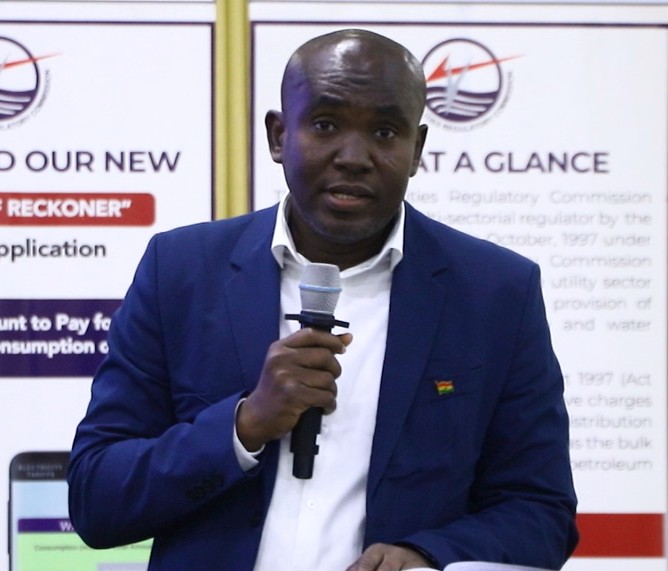

The Chairman of the Food and Beverage Association of Ghana, John Awuni, says high electricity tariffs are hurting businesses in Ghana.
He said improving revenue collection rather raising prices is the solution, as the energy regulator faces growing pressure to reduce tariffs
Speaking on TV’3’s Business Focus on Monday, 23 February 2026, Mr John Awuni said high utility tariffs are hurting businesses and warned that further increases are not the solution.
He argued that improving efficiency within the power distribution system, rather than raising tariffs, would better address revenue shortfalls.
“High utility tariffs are hurting businesses. The way out is not tariff increments. The way out is to improve efficiency in revenue collection and not only efficiency in revenue collection, but also efficiency in the attitude of the workers, particularly ECG staff themselves.” he said
Mr Awuni further alleged that, “Apparently, each time you go to the ECG to report a faulty meter, unless you are ready to pay, they are not ready to fix it. There are too many faulty prepaid meters in the system that are operating and giving out power but not recording anything.”
Meanwhile, the Public Utilities Regulatory Commission (PURC) is facing mounting pressure to cut electricity tariffs by at least 11% for the first quarter of 2026.
The calls follow a policy review alleging that consumers overpaid approximately GH¢1.5bn in the final quarter of 2025 due to what it described as overstated economic assumptions.
According to the findings, the 1.14% tariff increase in the fourth quarter of 2025 was based on a projected exchange rate of GH¢12.37 to the US dollar, including under-recovery adjustments. The actual average rate for the period was GH¢10.87.
A similar discrepancy was identified in inflation data. The PURC applied a projected rate of 12.43%, while the recorded average inflation for the quarter was 6.6%.
The report, issued by the Centre for Environmental Management and Sustainable Energy (CEMSE), argues that the credibility of the Quarterly Tariff Review Mechanism could be undermined if savings from improving macroeconomic conditions are not passed on to consumers.