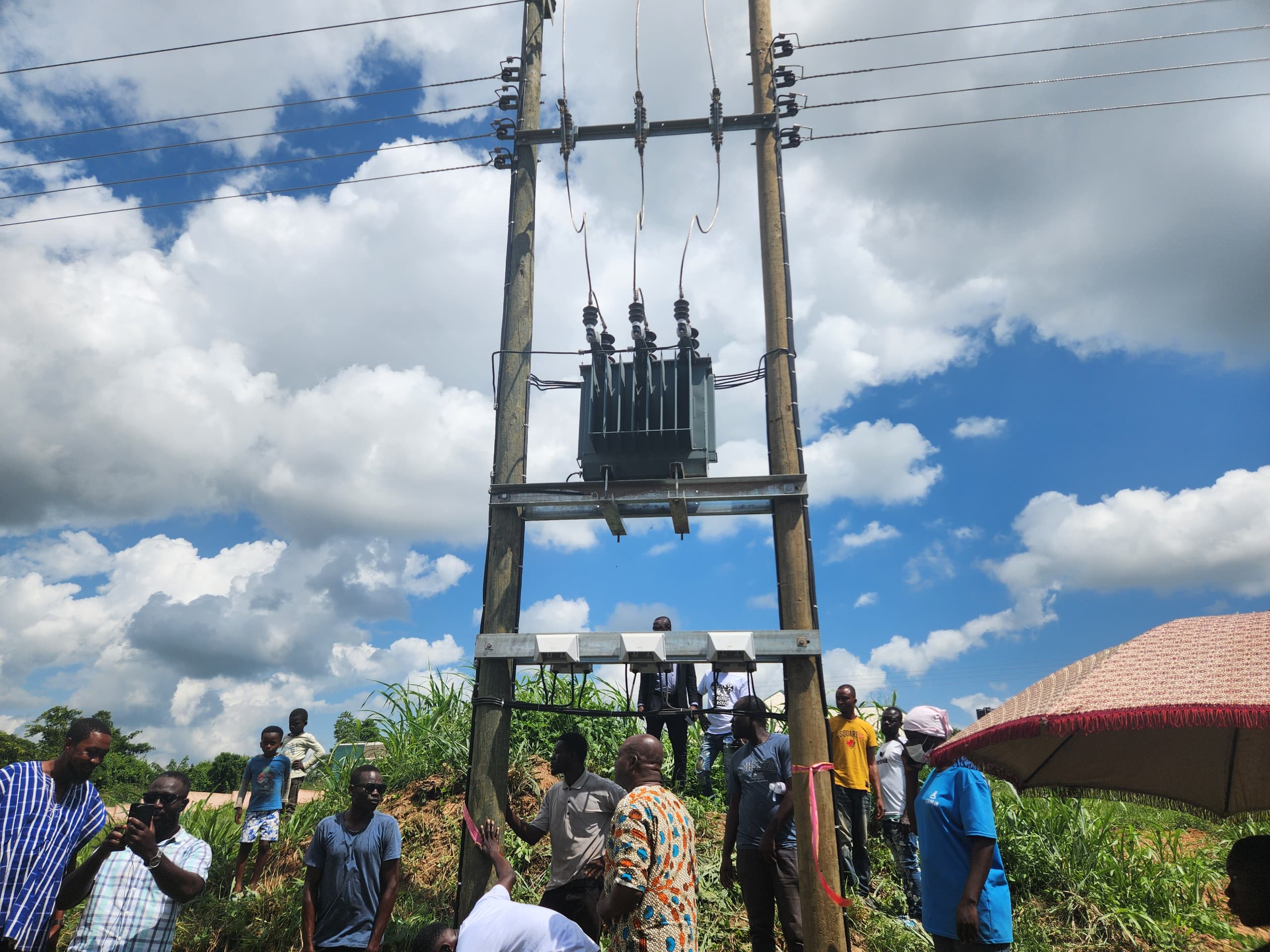

Several communities within the Atwima Nwabiagya Municipality in the Ashanti Region are celebrating a major development milestone following the extension of electricity to additional communities under the national electrification programme.
The Municipal Chief Executive (MCE) for the area, Wisdom Osei Boamah, has disclosed that more communities in the municipality have now been successfully connected to the National Electricity Grid, a move expected to improve livelihoods, stimulate economic growth, and enhance social development in the area.
Speaking on Ghanakoma morning show on Akoma 87.9 FM in Kumasi with Sir John, on Monday, March, 2026, Mr Boamah said that the initiative forms part of government’s broader commitment to expanding electricity access to underserved and newly developing communities across the Municipality.
He was of the view that, access to reliable electricity remains a critical factor in the socio-economic transformation of rural and peri-urban areas.
He stressed that the newly connected communities had long awaited the intervention, and the completion of the project represents a significant step toward bridging the development gap within the municipality.
“Electricity is one of the most essential social amenities required to accelerate development. By connecting these communities to the national grid, we are opening doors for business growth, educational improvement, healthcare delivery, and overall community development,” he observed.
He explained that the electrification project was implemented in collaboration with relevant state agencies responsible for power distribution, with the goal of ensuring that every community in the municipality benefits from modern energy services.
He added that the availability of electricity will support small-scale enterprises such as welding, hairdressing, cold storage operations, and agro-processing activities, which are expected to generate employment opportunities for the youth and improve household incomes.
Mr Boamah also emphasized that access to electricity would greatly enhance educational outcomes in the beneficiary communities. Students will now be able to study at night under proper lighting, while schools can integrate digital learning tools that require reliable power supply.
In addition, health facilities within these communities are expected to benefit from improved service delivery as medical equipment that relies on electricity can now be effectively utilized. Refrigeration of vaccines and medicines, as well as the operation of essential health equipment, will become easier and more efficient.
He commended the government and all stakeholders involved in the project for their commitment to improving infrastructure in the municipality. He assured residents that the Assembly remains dedicated to ensuring equitable distribution of development projects across all communities within the district.
He further called on residents of the beneficiary communities to make good use of the electricity and safeguard the infrastructure against vandalism.
“We must all take responsibility to protect these facilities. Electricity infrastructure is expensive, and it is our collective duty to ensure it serves the community for many years,” he appealed.
The electrification project forms part of ongoing efforts by government to extend electricity to every corner of the country, particularly rural communities that have historically lacked access to reliable power.
By Benjamin Aidoo