
The Health Minister Kwabena Mintah Akandoh has assured the general public that government remains committed to eradicating the “no bed syndrome” menace.
This follows his visit to the Korle Bu Teaching Hospital following a viral video that showed five patients being treated on the floor at the hospital’s Accident and Emergency Centre.
Management of the hospital in a recent release has debunked the claims while explaining that the facility has over the past two weeks recorded an unprecedented surge in emergency cases, putting pressure on available bed space.
The release further noted that no patient received care on the floor.
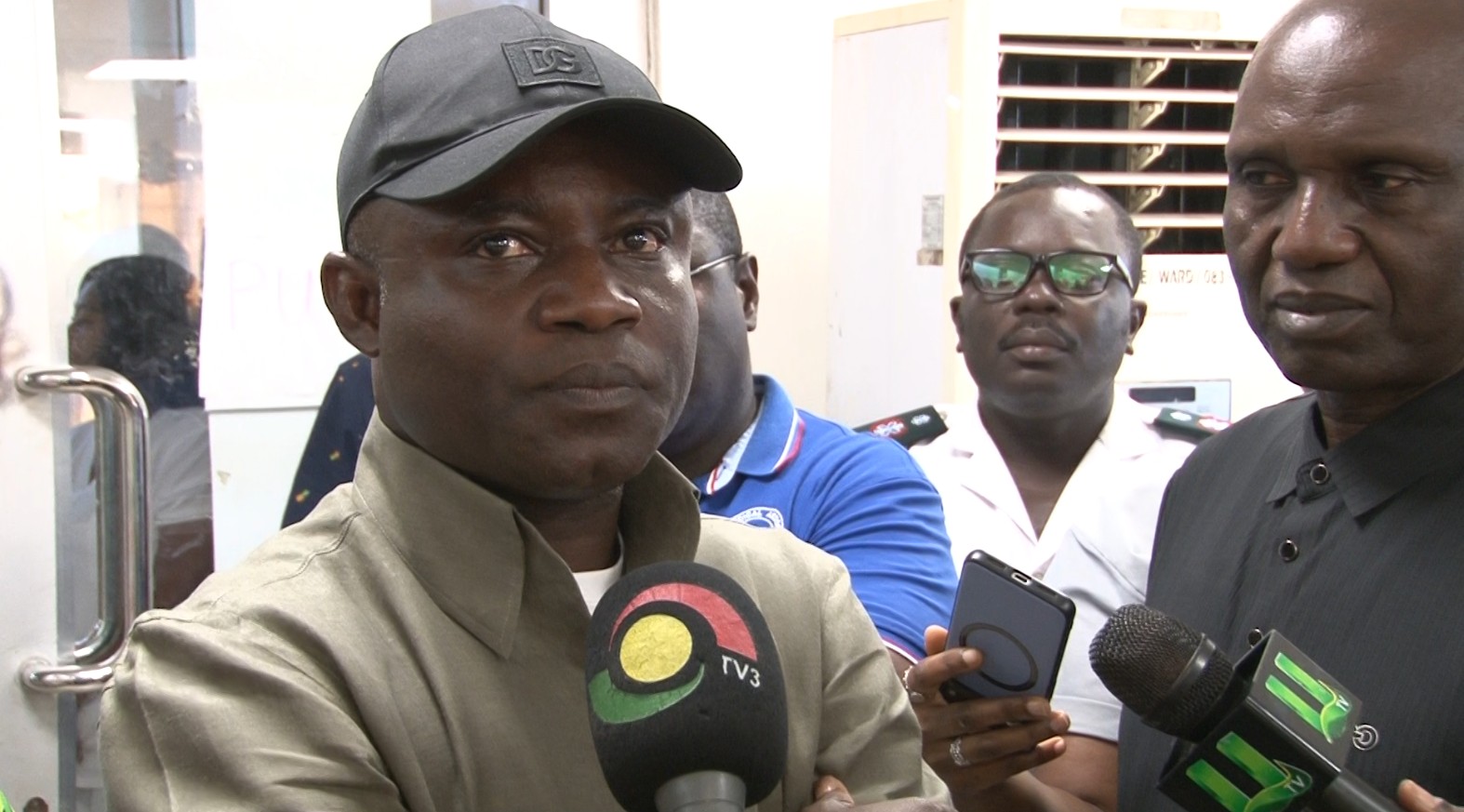
Assessing the situation himself after being updated by the Management of the hospital, the Minister explained that government remain committed to ending the “no bed syndrome” issue.

“I think that we have to revise that one and make sure that the person doesn’t stay more than 24 hours after stabilizing it. And I will also, I mean, appeal to all the health facilities who do refer patients to this place to try to stabilize the patients before they get here. You don’t just push the people and say there’s no bed here, so go to Korle Bu. And so that’s something we have to look at,”the Minister said.
He further explained that “there are ongoing expansion projects at the Medical/Surgical Ward and the Maternity Ward all aimed at easing congestion in the hospital.”

The Chief Executive Officer of the Korle Bu Teaching Hospital (KBTH), Dr. Yakubu Seidu Adam explained that Management is taking urgent steps to address the issue of limited bed capacity.
“There was a directive that we should start 24-hour services. That the same directives I have given to the Director of Medical Affairs, and that is exactly what we are implementing. When it comes to decongestion of the Accident and Emergency Center, we have made available Ward G, to absorb the neurosurgical cases. They form like 10-20% of the cases that’s emergency. We are also resourcing the medical department with more beds,” he explained.
For the Head of Department, Accident & Emergency Centre, even though the Centre suffers a deficit in some medical equipment, they remain fully committed to upholding the highest standards of patient care, safety, and dignity at all times.

He said, “The best thing now would be to be able to get beds on the wards and be able to move the patients there. Other hospitals should be ready to also work. And when you are sending a patient from one hospital to the other, at least you should call. I’m sending a patient like this, you have space for the patient, then we communicate.”
Management said they are intensifying collaboration with key stakeholders to improve referral coordination and ensure that patients are directed to appropriate facilities without compromising their safety, dignity, or quality of care.