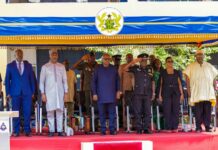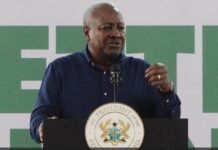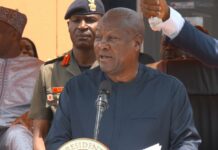

President John Dramani Mahama has renewed calls for reparatory justice for Africa and the global African diaspora, urging the international community to support his impending UN Resolution on slavery.
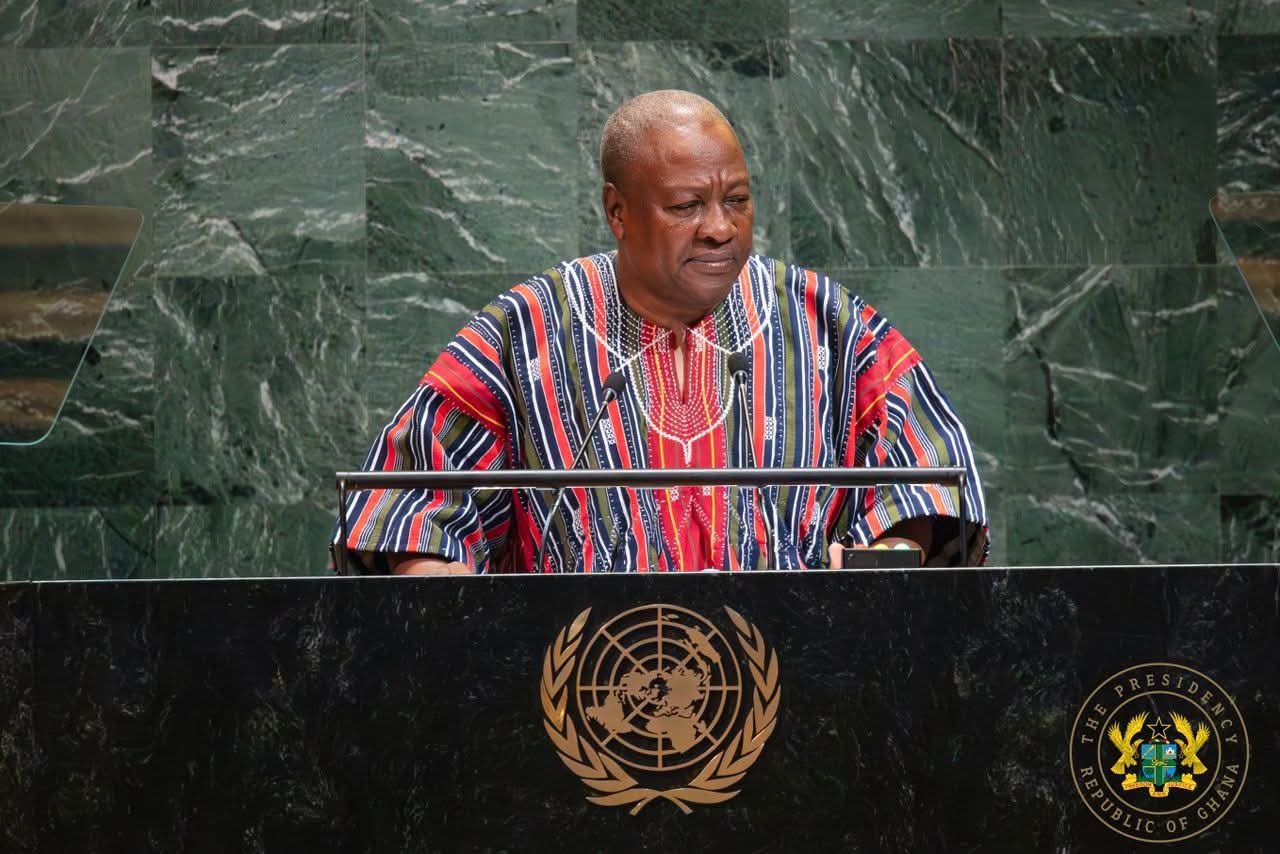
Speaking at the high-level special event on reparatory justice at the United Nations Headquarters under the theme: “Reparatory Justice for the Trafficking of Enslaved Africans and the Racialised Chattel Enslavement of Africans,” on Tuesday, March 24, President Mahama stressed that historical injustices continue to shape present-day inequalities and underdevelopment across African nations.
He argued that reparatory justice must go beyond symbolic gestures and translate into concrete actions, including economic restitution, institutional reforms, and fair global partnerships that support sustainable development.
The President is expected to present a resolution declaring the Transatlantic Slave Trade the gravest crime against humanity at the UN on March 25.
He called on the global community to support the resolution on Slave trade against humanity which will be presented at the UN.
“I hope all of you will vote tomorrow to speak truth to power so that together we can pass this historic resolution and finally acknowledge the full horror of these transgressions against the
humanity of the 18 million human beings who were enslaved,” he noted.
He underscored the importance of such resolution, noting it is “is a pathway to healing and reparative justice. This resolution is a safeguard against forgetting.”
President Mahama noted that the resolution acknowledges the suffering of 18 million men, women, and children who were enslaved over the course of four centuries.
“This resolution allows us, as a global community, to collectively bear witness to the plight of the 18 million men, women, and children whose homes, communities, names, families, hopes,
dreams, futures, and lives were stolen from them over the course of four centuries.
“I speak these words today not only for Ghana, but also in solidarity with the rest of Africa, the Caribbean, Latin America, the wider Diaspora and, indeed, all people of good conscience
throughout the world,” he stated.
President Mahama called for a unified global framework that acknowledges these historical wrongs while promoting accountability and healing. He emphasised that reparations should not be viewed as charity, but as a moral and legal obligation grounded in justice.
He also highlighted the importance of education, historical recognition, and dialogue in advancing the reparations agenda, urging world leaders to demonstrate political will in addressing the issue.
The President further advocated stronger collaboration between African states and the diaspora to amplify calls for justice and ensure that reparatory efforts are impactful.