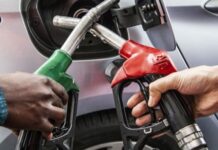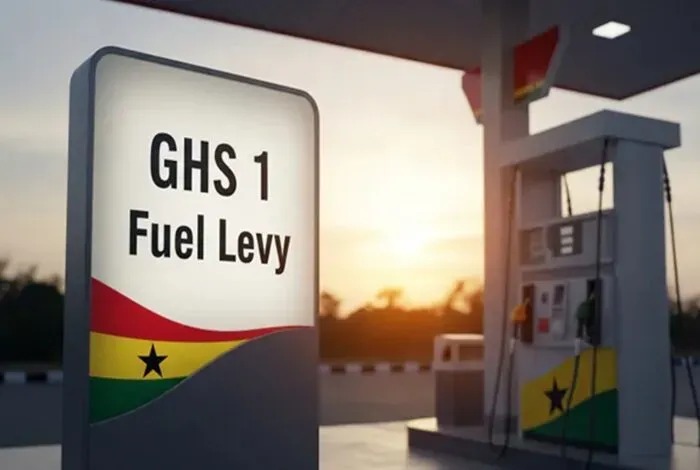

The CEO of the Chamber of Oil Marketing Companies (COMAC), Dr Riverson Oppong is demanding that the government accounts for how the funds generated from the GHS1 fuel levy that it instituted in 2025 have been used.
He says Ghanaians deserve to know how the funds have been utilised.
“The government must explain how much has accrued from the fuel levy and what it has been used for,” he said on the KeyPoints on TV3 Saturday, April 11.
Dr Riverson Oppong further said that the measures introduced by the government to cushion Ghanaians in view of the Middle East crisis will likely affect fuel prices in the next two pricing windows.
He says that the quantum of the taxes to be suspended will determine the level of reduction in fuel prices.
He said, “at least for the next window, we might see a plateau or just a little increase in prices of petrol.
“We don’t know which taxes they are taking out now. The quantum of the taxes to be suspended will determine the reduction.
“The decrease we expect should be the next two pricing windows.”
Meanwhile, CEO of the Chamber of Petroleum Consumers Ghana (COPEC), Duncun Amoah, has told the Government to revamp the Tema Oil Refinery (TOR) and the Bulk Oil Storage and Transportation (BOST) as part of the efforts to build resilience against exogenous shocks.
For him, although tax suspension is good, it is only a short-term measure to bring relief to Ghanaians.
“Suspending the taxes is very good, but make provisions for further resilience because the war, even if it ends today, will still have pressure on finished products globally because refining has been compressed as we speak, and it is not likely they will be able to fix whatever has been broken down in the next three to four weeks,” Duncun Amoah, said on the News Central on TV3 Friday.
He added “At this point, our very crucial national assets, we will need to see how they also contribute to our net national demand or supply so that even if Europe cannot be able to provide the products we require, we can fall on our own resilience. The tax conversation is very good but it is only a temporary relief that it can offer. I think that BOST and TOR would have to be looked at again.”
On Thursday, April 9, the Minister of Government Communications, Felix Kwakye Ofosu disclosed that Cabinet had directed the Finance and Energy ministers, Cassiel Ato Forson and John Jinapor, to remove taxes and margins on fuel prices.
This is to take effect from the next pricing window.
The Government Spokesperson made this known after an emergency Cabinet meeting on April 9.
“The Finance and Energy Ministers have been tasked to remove taxes and margins on petroleum prices in the next pricing window,” he said.
Mr Ofosu explained that, “The reduction or removal of some taxes and margins, as I’ve indicated, which should lead to a reduction in fuel prices, effective the next pricing window, is supposed to last for an initial period of four weeks from the next pricing window. After the four weeks, the situation will be reviewed and as and when it is deemed necessary, appropriate actions will be taken.”
He further explained that these measures are meant to cushion the traveling public from the effects of increasing fuel prices due to the US-Israel-Iran war.
Mr Ofosu said this became necessary because despite the cushioning effect of the economic gains, there is still fuel price increase.
He also mentioned that the Transport Minister is to expedite the deployment of the newly imported 100 buses in high traffic areas.
“You recall that over the weekend, I announced the arrival of 100 Metro mass busses. Another batch of 100 buses are expected in August, and then the last batch of 100 are expected in November to make up 300. Currently, we have 100 available and the Transport Minister has been instructed by cabinet to ensure expedited deployment of these busses in high traffic corridors, to ensure that it alleviates any difficulties that may have arisen out of the fuel price increases,” Mr Kwakye Ofosu said.
He added that, “the Transport Minister is also being charged with ensuring that these Metro mass busses, in addition to the existing ones, charge or maintain transport fares which are lower than what private sector operators charge. This is to ensure that Ghanaians are cushioned, especially when we reach peak periods at the rush hour.”
“In addition to this, the President took the opportunity at the Cabinet meeting to remind all ministers and senior government officials and appointees to adhere strictly to his ban on fuel allowances and allocation of fuel. This applies to all ministers and senior government officials,” the Government Spokesperson stated.