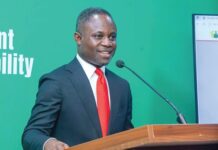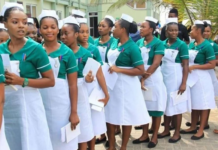

The Minister for Health, Kwabena Mintah Akandoh has announced a major recruitment drive aimed at employing between 16,000 and 20,000 health professionals this year.
According to the Minister, priority will be given to the 2021 batch of trained health workers, noting that the previous administration’s recruitment exercise covered only up to the 2020 cohort.
“Government is taking deliberate effort to absorb some health professionals into the health system in the country. This year we are looking at employing between 16-20,000 health professionals.
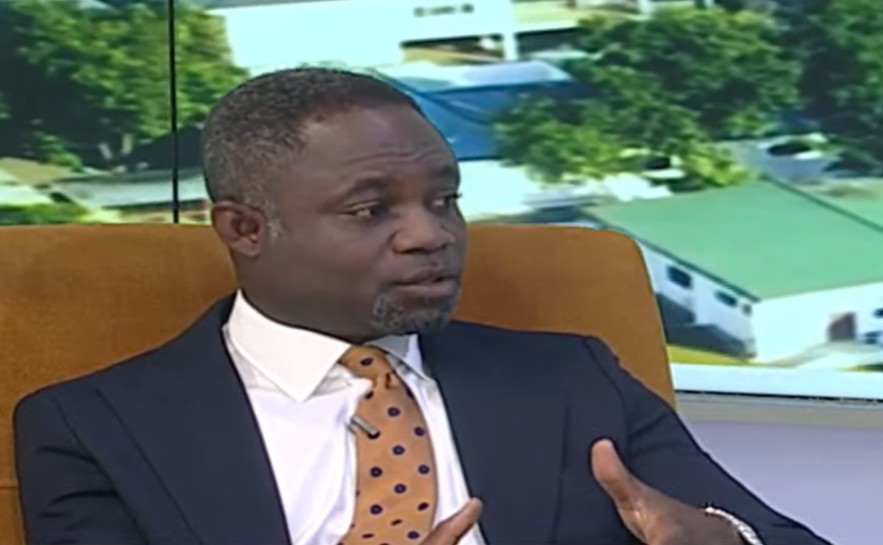
“This one priority will be given to the 2021 batch because the 11,500 that were employed by the previous government ended at the 2020 batch. So, we will give priority to the 2021 batch,” he stated in an interview on TV3 New Day, Tuesday, April 14, 2026.
He explained that the recruitment will be carried out in phases to ensure that all newly employed personnel are properly integrated into the government payroll before assuming duties, in order to avoid past challenges that led to industrial unrest.
“We are not going to allow any health worker to go to any facility to work when we have not been able to prepare him or her on the payroll,” the Minister emphasised.
Under the plan, an initial batch of about 6,000 health workers is expected to be recruited and enrolled between June and July this year, with the remaining personnel to be absorbed later in the year, likely by December.
“So, for the 16000 if we finish vetting and we are ready to enroll say 6000, we will allow the 6000 to enroll. And we are going to do that by June-July. Then the rest, we will stagger them maybe December we will enroll the rest. We will never allow any of them to go to any health facility to go and work whiles we are not ready to enroll the person on the payroll,” he noted.
The Minister also announced sweeping reforms to the placement and recruitment process within Ghana’s health sector.
In a significant shift from previous practices, the Minister revealed that the government will introduce a decentralised recruitment model that allows health professionals to apply directly to districts with declared vacancies, particularly in underserved areas.
“We are going to change the system a bit for the recruitment. Nobody is going to sit at the Ministry and post a health professional. You are going to post yourself right from the beginning. You won’t come and tell me that I have posted you to a place that you won’t go,” he explained.
The new approach will enable applicants to select preferred districts, attend interviews at the local level, and decide whether they are willing to work in those communities before final validation by the Ministry.
The Minister added that recruitment will be strictly tied to available vacancies, with automated limits to prevent over-selection. For instance, if a district requires 10 workers, the system will stop accepting applications once that number is reached.
“We are not going to have a situation to choose from a certain number for people to influence the process,” he noted.
He added: “So, we will declare vacancies where we have vacancies. We will start from the Northern Region and the under-served communities will be our priority areas. We will be guided by the free primary healthcare. You will choose which district you will want to go and go for an interview in that District and go there to see the district whether you want to work there.”
“If you go through the interview and you pass then they will get back to us for us to validate you at our end and you will go and start work,” the Minster said.
He further indicated that the Northern Region and other underserved communities will be prioritised in line with the government’s broader free primary healthcare agenda.
The reforms are expected to enhance transparency, improve equitable distribution of health workers, and ensure a more efficient and sustainable recruitment process across the country.