
UNICEF Ghana, in collaboration with the Ministry of Gender, Children and Social Protection (MoGCSP), successfully facilitated a four-day TRANSFORM Shock-Responsive Social Protection (SRSP) training in Koforidua.
Held at the Capital View Hotel from 24–27 March 2026, the training brought together selected stakeholders from government institutions and civil society organizations to strengthen Ghana’s capacity to anticipate, prepare for, and respond effectively to shocks through a more resilient and coordinated social protection system.
Participants were taken through the TRANSFORM SRSP module, which introduces core concepts, system-building approaches, and decision-making processes required to enhance shock-responsiveness within social protection frameworks.
The training emphasized why traditional “business-as-usual” approaches are insufficient in shock-prone contexts and explored practical measures for strengthening systems across key social protection building blocks.
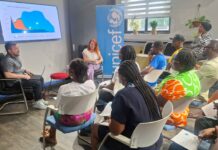
Through interactive sessions, peer learning, and scenario-based exercises, participants gained practical tools to integrate shock-responsiveness into national and district-level planning. The training also promoted systems thinking, leadership, and stronger coordination across institutions.
Participants were drawn from key institutions, including the National Disaster Management Organization (NADMO), Ministry of Finance, National Development Planning Commission (NDPC), Ministry of Food and Agriculture, Ministry of Local Government, Chieftaincy and Religious Affairs, Ministry of Health, the National Health Insurance Authority, Ghana Education Service, Department of Social Welfare, National Council on Persons with Disability, and civil society organizations in the social protection sector.
Aligned with UNICEF’s broader guidance on strengthening shock-responsive systems, the training responds to the increasing frequency and severity of crises, from climate-related shocks to public health emergencies, highlighting the need for adaptive systems that can protect vulnerable households without reversing development gains.
Over the four days, participants strengthened their leadership, coordination, and technical capacities while fostering collaboration across sectors. The TRANSFORM approach, combining guided discussions, practical application, and real-world scenarios, enabled stakeholders to translate policy into actionable, system-level responses.
This initiative marks another important step in ensuring Ghana is better prepared to respond to future shocks, with inclusive and resilient social protection systems that protect the most vulnerable.
This training was made possible with support from the UK Government’s Foreign, Commonwealth & Development Office (FCDO).