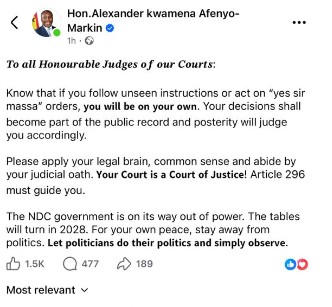

The Minority Leader, Alexander Afenyo-Markin, has urged Judges to remain independent and resist any form of external or political influence in the discharge of their duties.
In a Facebook post on Friday, April 17, 2026, Afenyo-Markin warned against Judges acting on what he described as “unseen instructions” or undue directives, stressing that judicial decisions carry long-term consequences and will ultimately be subject to public scrutiny and historical judgment.
He emphasised that judges must rely on their legal expertise, sound judgment, and the principles enshrined in their judicial oath when handling cases, reminding them that the courts exist to serve justice above all else.
The Effutu MP further referenced Article 296 of the Constitution, urging judges to be guided by its provisions in the exercise of discretionary powers to ensure fairness and accountability.
“Know that if you follow unseen instructions or act on “yes sir massa” orders, 𝘆𝗼𝘂 𝘄𝗶𝗹𝗹 𝗯𝗲 𝗼𝗻 𝘆𝗼𝘂𝗿 𝗼𝘄𝗻. Your decisions shall become part of the public record and posterity will judge you accordingly.
“Please apply your legal brain, common sense and abide by your judicial oath. 𝗬𝗼𝘂𝗿 𝗖𝗼𝘂𝗿𝘁 𝗶𝘀 𝗮 𝗖𝗼𝘂𝗿𝘁 𝗼𝗳 𝗝𝘂𝘀𝘁𝗶𝗰𝗲! Article 296 must guide you,” he wrote.
Afenyo-Markin further noted that political power is transient and subject to change.
He stressed that Judges remaining neutral would safeguard the integrity and independence of the courts regardless of which political party is in government.
“The NDC government is on its way out of power. The tables will turn in 2028. For your own peace, stay away from politics. 𝗟𝗲𝘁 𝗽𝗼𝗹𝗶𝘁𝗶𝗰𝗶𝗮𝗻𝘀 𝗱𝗼 𝘁𝗵𝗲𝗶𝗿 𝗽𝗼𝗹𝗶𝘁𝗶𝗰𝘀 𝗮𝗻𝗱 𝘀𝗶𝗺𝗽𝗹𝘆 𝗼𝗯𝘀𝗲𝗿𝘃𝗲,” he added.
His remarks follow his criticism of the way an Accra Circuit Court handled a case involving New Patriotic Party spokesperson Abubakar Yakubu, popularly known as Baba Amando, who was placed under two-week remand.
Afenyo-Markin commended the Ghana Police Service for what he described as a competent approach to the arrest and inquiry, but questioned the presiding judge’s judgment, calling it improper.
The comments contribute to the continuing public discussion about the independence and behavior of judges in high-profile cases.