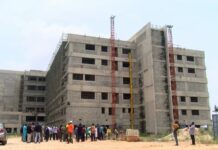

Long-standing abandoned projects and persistent bed shortages are taking a toll on healthcare delivery at the Komfo Anokye Teaching Hospital (KATH), as the facility grapples with rising patient numbers and limited infrastructure.
At the hospital’s 2025 performance review, Chief Executive Officer, Dr Paa Kwasi Baidoo, revealed that several critical but stalled projects including a sickle cell and blood centre and a psychiatry facility, continue to hinder efficient service delivery.
According to him, the lack of adequate space has severely constrained operations, forcing essential units to function in cramped conditions, limiting the number of patients that can be attended to and the scope of research activities.
The situation is further compounded by what is widely known as the “no-bed syndrome,” where patients struggle to secure admission due to overwhelming demand.
“KATH is the only tertiary facility serving this region and 12 others. When patients are referred here, turning them away is not an option. So we are forced to manage with the limited space available, and that puts enormous pressure on both infrastructure and staff,” Dr Baidoo explained.
He described scenes where patients are kept on stretchers for extended periods, often leading to frustration and, in some cases, verbal or physical abuse directed at health workers.
The strain, he noted, is contributing to burnout among staff and affecting overall quality of care.

Despite these challenges, KATH management says efforts are underway to revive abandoned projects, some of which date back decades.
The hospital is appealing to government, corporate bodies, and development partners to support the completion of these facilities.
The CEO emphasized that completing these projects is critical to easing congestion, improving patient outcomes, and enhancing the hospital’s capacity to deliver specialized care.

The 2025 review, held under the theme “KATH at 70: Advancing Tertiary Healthcare on the Pillars of Research, Customer-Centric Care and Clinical Mentorship,” also highlighted broader systemic challenges faced during the year.
Dr Baidoo described 2025 as a “transitioning year,” marked by disruptions including a nationwide nurses’ strike and a breakdown of the hospital’s electronic medical records system, which forced a return to manual operations for months and led to significant data and revenue losses.
However, he noted that the setbacks have driven innovation, with a new digital system now being implemented in collaboration with the Ministry of Health.
Meanwhile, Ashanti Regional Director of Health Services, Dr Fred Adomako Boateng, stressed the need for data-driven assessments to guide improvements in healthcare delivery.
He commended KATH’s focus on research, patient-centred care, and clinical mentorship, noting that these pillars are essential for improving outcomes in high-pressure environments.
As KATH marks 70 years of service, management remains hopeful that renewed investment in infrastructure and human resources will help address longstanding challenges and position the hospital to deliver more responsive and efficient care.