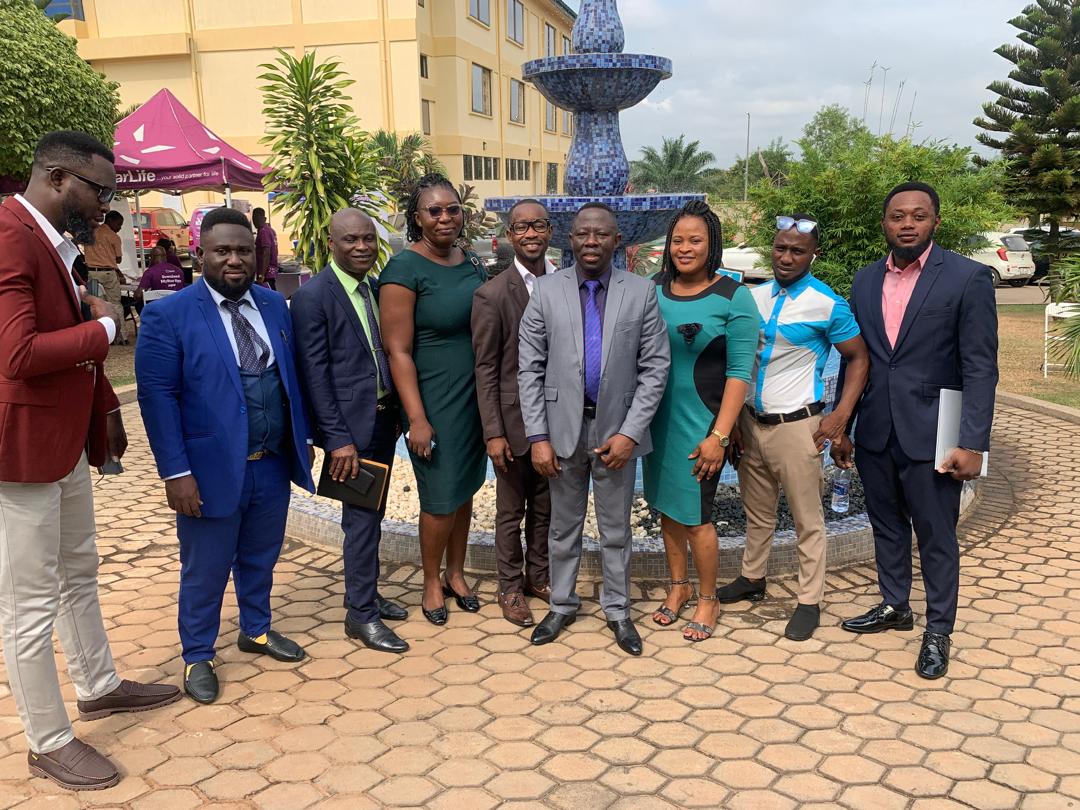

Human Resource Managers and practitioners across the Oti Region have marked this year’s International Human Resources Day with a passionate call for stronger leadership, workforce development, and employee wellbeing to support the delivery of quality Free Primary Healthcare services in Ghana.
The celebration, held virtually via Zoom, brought together HR professionals from various health institutions across the region in a powerful reflection on the growing importance of people management in strengthening the healthcare system.
Against the backdrop of increasing healthcare demands and the government’s push toward accessible primary healthcare, participants used the occasion to examine how strategic human resource management can help improve service delivery, staff motivation, and patient care outcomes.
One of the highlights of the conference was a presentation by Human Resource practitioner, Mabel Duvor, who challenged participants to rethink leadership within the healthcare environment through the lens of Situational Leadership Theory.
Using the symbolic example of the chicken and the duck, she explained that effective leadership is not about dominance or hierarchy, but about knowing when to lead and when to adapt.
“The best leader is not always the one at the front or the one at the back, but the one who knows when to switch positions,” she stated.
Her message resonated strongly with participants, many of whom acknowledged the enormous pressure facing healthcare workers and administrators in delivering efficient services under difficult conditions.
Mabel Duvor stressed that flexibility, emotional intelligence, and adaptability remain critical traits for leaders within the health sector, especially at a time when healthcare systems continue to evolve rapidly.
Discussions during the conference also focused heavily on workforce planning, with participants emphasizing that achieving effective Free Primary Healthcare requires placing “the right people with the right skills in the right positions.”
According to participants, shortages in skilled personnel, uneven staff distribution, and increasing workloads continue to affect healthcare delivery in many communities, making strategic HR planning more important than ever.
The conference further underscored the urgent need for continuous professional development and regular training programmes to sharpen the competencies of healthcare workers and improve community health services across the region.
HR practitioners also reaffirmed their commitment to promoting employee wellbeing and staff retention, stressing that healthcare workers can only give their best when they feel safe, motivated, appreciated, and supported.
Many participants described frontline health workers as the “heartbeat” of Ghana’s healthcare system and called for stronger institutional support to prevent burnout and low morale.
The event also offered participants the opportunity to reflect on the global significance of International Human Resources Day and the evolving role of HR professionals in shaping modern workplaces.
Presenters traced the history of the celebration to 2016, when it was first introduced by the European Association for People Management in Lithuania. In 2018, a dedicated committee was established to help promote the observance globally.
The vision behind International HR Day, participants learned, is to champion people, promote ethical and inclusive workplace cultures, and help organizations navigate periods of rapid transformation and change.
For many HR professionals in the Oti Region, the celebration was more than just an annual observance — it was a moment of reflection, renewed purpose, and collective commitment to strengthening Ghana’s healthcare sector through effective people management.
By Daniel Opoku