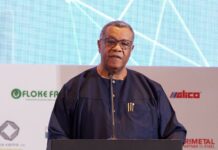

The President of the Republic, H.E John Dramani Mahama, in a diaspora town hall meeting organized by the Ghana High Commission in London, made some important remarks about his vision to create sustainable jobs for the youths particularly within the energy sector.
The President bemoaned the Country’s continuous export of raw materials specifically crude oil in exchange for expensive petroleum products. This he acknowledged has been the status quo which he intends to upend through the Revival of the Tema Oil Refinery.
The President announced plans to deliver parcels of Ghanaian crude oil from the Country’s Oil fields to the Tema Oil Refinery for processing into petroleum products. This arrangement highlighted by the President will ensure constant supply of crude oil to the refinery.
This will require the state wholly owned refinery to prioritize 24-hour operations to maintain optimal output and increase production reliability. A successful implementation of this collaboration will guarantee jobs, ensure petroleum products availability and ease pressure on the Cedi.
Institutional Readiness:
The Tema Oil Refinery has embarked on an aggressive maintenance work coupled with a wholistic restructuring that puts the state-owned refinery in a position for investment and development.
A week earlier, the Tema Oil Refinery, received 1million barrels of Bonga Crude for refinery purposes. This signaled a shift from a hitherto moribund situation to a promising and revitalized refinery. The receipt of Bonga Crude reinforced the State refinery’s operational and production readiness.
The statement by the President, highlights his vision towards a sustainable downstream petroleum sector and an overall energy future for the Country.
He has equally reposed utmost confidence in the Minister for Energy and Green Transition as well as the leadership at the Tema Oil Refinery to carry through with this project for the downstream petroleum sector.
The Administrative and Financial reengineering spearheaded by the Management of Tema Oil Refinery puts the institution strategically to attract investment. The heightened internal Accountability measures as well as prudent financial management by the institution is worth acknowledging and encouraging.
A successful implementation of the collaboration between the country’s oil fields and Tema Oil Refinery will achieve the following:
1.The availability of Crude for processing by the Tema Oil Refinery (TOR) will provide decent jobs and develop requisite expertise for the downstream petroleum industry. Constant flow of crude to the 45,000 barrels per day refinery will require the expertise of additional Engineers, Technicians, Safety and Maintenance officers and a host of skilled workers to power the refinery 24-hours.
This will increase the current workforce to accommodate additional staff to meet the demands of the refinery. Regular In- service training will equip workers with relevant expertise to function efficiently to increase productivity.
2. It will reduce pressure on the Ghanaian currency. The 400million Dollars monthly bill for importing refined petroleum products will decrease substantially when the State refines petroleum products to augment the imported ones.
With the refinery’s current capacity which could see future expansion, the country can half the import bill for petroleum products and that will reduce the demand for Dollars which will significantly strengthen the Cedi.
3. It will guarantee petroleum products availability and reduce cost. This arrangement promises to ensure petroleum products availability as well as reduce cost. The domestic refinery output and the complementary imports will ensure supply meets demand, creating equilibrium and stability in prices.
The Bulk Import, Distribution and Export Companies (BIDECs) can source petroleum products locally to augment their imports which could reduce freight cost and influence their overall pricing..
4. A hub for training and the provision of refined petroleum products to neighboring countries. An operational refinery will provide regular training to its staff, foster academic and industrial collaboration with TVET institutions and universities.
This will equip young people with the expertise and skill to function in any refinery, within and outside the country. Some of these skilled professionals could be employed across the African sub region where their expertise and experience are needed.
Also, a country which is self-sufficient in the production, refinery and supply of petroleum products could serve other neighboring countries where the need arises. This will generate foreign exchange for the country and create opportunities for the citizens.
In conclusion, a successful implementation of the collaboration between the upstream petroleum sector and the Tema Oil Refinery could further advance the flagship 24-hour economic policy championed by the government.
The arrangement as highlighted by the President of the Republic, H.E John Dramani Mahama is a call to duty; a call to add value and an opportunity for the state owned refinery to rise to the occasion, to deliver around the clock service in order to ensure petroleum products availability, ease pressure on the currency and guarantee decent jobs for young people in the country.
Author: Prince Lumor, Energy and Policy Analyst-Institute for Energy Security (IES)