
Ghana’s inland waterways remain a critical transportation network for thousands of communities, particularly those located along the Volta Basin.
However, recurring boat accidents continue to expose significant safety challenges, resulting in dozens of preventable deaths each year.
Between 2023 and 2026, the country recorded more than 20 major boat and canoe accidents, claiming nearly 80 lives. Investigations into many of these incidents have consistently pointed to overloading, failure to wear life jackets, poor safety compliance, and weak enforcement of maritime regulations as the leading causes.
The recent boat disaster on the Volta Lake, which claimed the lives of 15 people, including 11 children, has once again brought the issue of inland water transport safety into sharp focus.
Ghana’s extensive network of rivers, lakes and estuaries serves as a vital transportation corridor for many communities. For residents living on islands and in remote lakeside settlements, water transport is often the fastest and, in some cases, the only means of accessing schools, healthcare facilities, markets and other essential services.
Most of the vessels operating on these waterways are wooden artisanal boats that transport both passengers and cargo over considerable distances.
Although Ghana has more than 125 inland water transport entry points, the Volta Lake remains the country’s busiest inland waterway and the primary focus of maritime safety operations.
Created in 1965 following the construction of the Akosombo Dam, the Volta Lake transformed transportation and economic activities for communities along the basin. Yet the increased dependence on water transport has also been accompanied by persistent safety concerns.
The latest Volta Lake accident is only one in a long list of tragedies that have occurred on Ghana’s inland waters.
Preliminary investigations by the Ghana Maritime Authority (GMA) revealed that the vessel involved in the recent disaster was grossly overloaded and that many passengers were not wearing life jackets at the time of the incident.
The accident mirrors several others recorded in recent years.
In January 2023, eight people died when a boat capsized at Atigagome on the Volta Lake.
Two months later, at least five people lost their lives in a boat accident at Azizakpe in the North Tongu District. Investigators attributed the incident to overloading and the absence of life jackets.
In May 2023, nine schoolchildren drowned after a boat capsized at Faanaa in the Weija-Gbawe Municipality along the Densu River estuary, sending shockwaves across the country.
Maritime safety experts argue that many of these accidents could have been avoided through stricter compliance with safety regulations and greater public awareness.
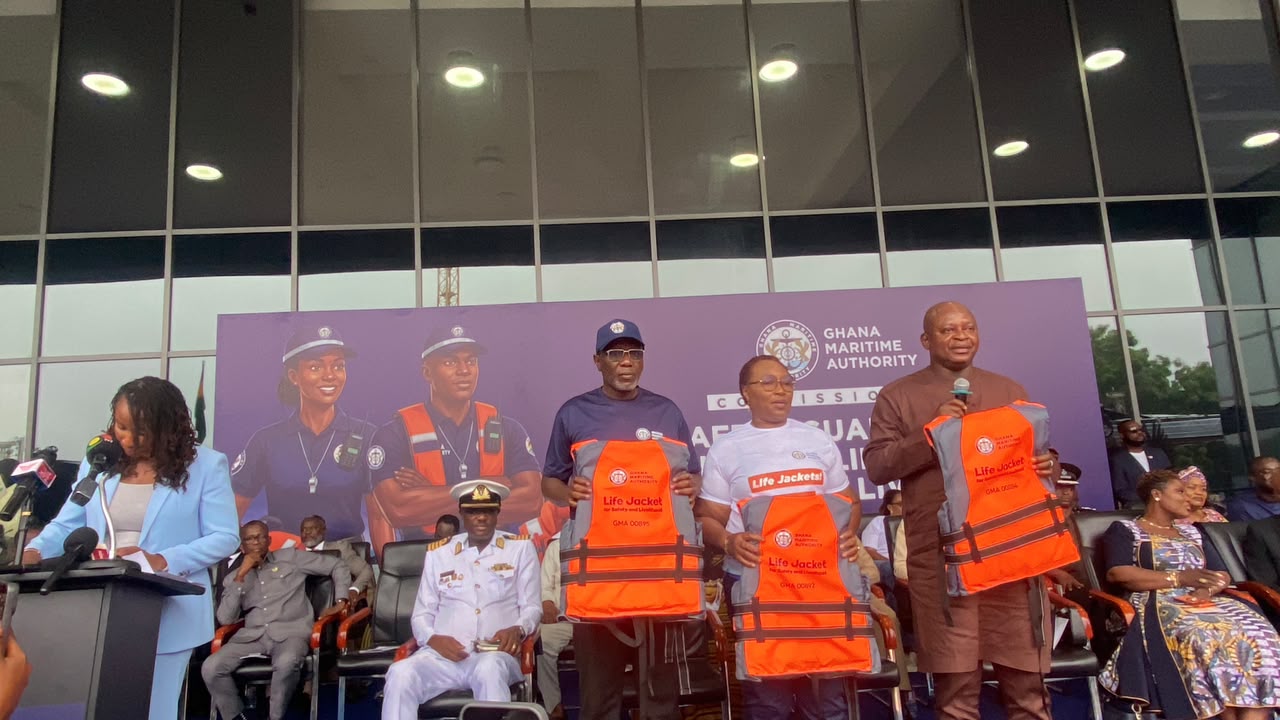
In response to the increasing number of fatalities, the Ministry of Transport and the Ghana Maritime Authority have deployed 200 trained Water Safety Guards to strategic inland water transport routes across the country.
The initiative forms part of a broader effort to improve safety compliance, prevent boat overloading, and ensure the consistent use of life jackets by passengers.
According to the Ghana Maritime Authority, the guards have been tasked with monitoring operations at key landing sites, conducting inspections, educating passengers and boat operators, and enforcing safety regulations.
Transport Minister Joseph Bukari Nikpe has urged the officers to remain firm in carrying out their responsibilities, emphasizing that safety regulations must be enforced without compromise.
The Authority believes the deployment represents a significant step toward reducing preventable deaths on Ghana’s waterways.
Beyond the deployment of Water Safety Guards, the Ghana Maritime Authority has implemented several measures over the years to improve safety on inland waterways.
The Authority has developed and distributed an Inland Waterway Safety Code, which provides guidance to boat operators and passengers on safe practices while travelling on lakes and rivers.
Weather forecasts generated by the Ghana Meteorological Agency are also shared with district assemblies and communities to assist boat operators in planning safe journeys and avoiding adverse weather conditions.
Safety enforcement on the Volta Lake is undertaken jointly by the Ghana Maritime Authority and the Ghana Navy through a dedicated Naval Task Force.
The task force conducts routine patrols and inspections aimed at preventing overloading, operating boats under the influence of alcohol, and travelling during unsafe weather conditions.
Currently, six naval detachments are stationed along the Volta Lake at Kpando-Torkor, Yeji, Tapa-Abotoase, Dambai, Kete-Krachi and Akosombo.
The Ghana Maritime Authority also conducts regular surveys and inspections of transport boats operating on the Volta Lake to ensure they are seaworthy and equipped with essential safety devices.
These include life jackets, fire extinguishers, navigation lights and other emergency equipment.
To prevent overloading, boats are marked with maximum load lines indicating the number of passengers and amount of cargo they can safely carry.
Public education remains another key component of the Authority’s safety strategy.
Regular sensitization programmes are held at landing sites across the Volta Lake, where passengers and boat operators receive training on basic seamanship, emergency preparedness and the proper use of life-saving equipment.
The Authority also organizes competency training programmes for boat operators and outboard motor mechanics to improve professionalism and operational safety.
Apart from human error, physical hazards within the Volta Lake continue to pose risks to navigation.
One of the Authority’s major priorities is the removal of submerged tree stumps, which have long been identified as navigation hazards capable of damaging boats and causing accidents.
To support this effort, the Ghana Maritime Authority contracted Kete-Krachi Timber Recovery Limited to remove tree stumps from designated fairways on the lake.
The Authority believes that continued clearing and charting of navigational routes will significantly enhance safety for water transport users.
When accidents occur, investigations are conducted under provisions of the Ghana Shipping Act and other internal regulatory frameworks.
These investigations seek to determine the causes of accidents and identify measures to prevent future occurrences.
To further strengthen accident investigations, the Ghana Maritime Authority has developed a framework for establishing a Marine Accident Investigation Board.
The proposed board will comprise experts responsible for investigating accidents occurring on Ghana’s inland waterways, ports and coastline and providing recommendations aimed at improving safety standards nationwide.
While the deployment of Water Safety Guards and other interventions represents progress, maritime authorities acknowledge that lasting improvements will require the active participation of boat operators, passengers, community leaders and local authorities.
For families who have lost loved ones in boat accidents, every life jacket worn, every overloaded vessel prevented from sailing and every safety rule enforced could mean the difference between life and death.
As Ghana continues to depend on its inland waterways for transportation and economic activity, ensuring safer travel on lakes and rivers remains both a national priority and a shared responsibility.
By Joseph Armstrong Gold-Alorgbey