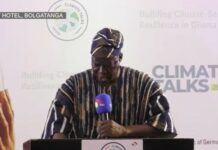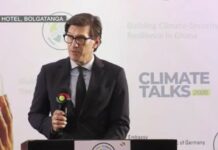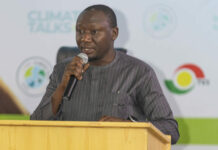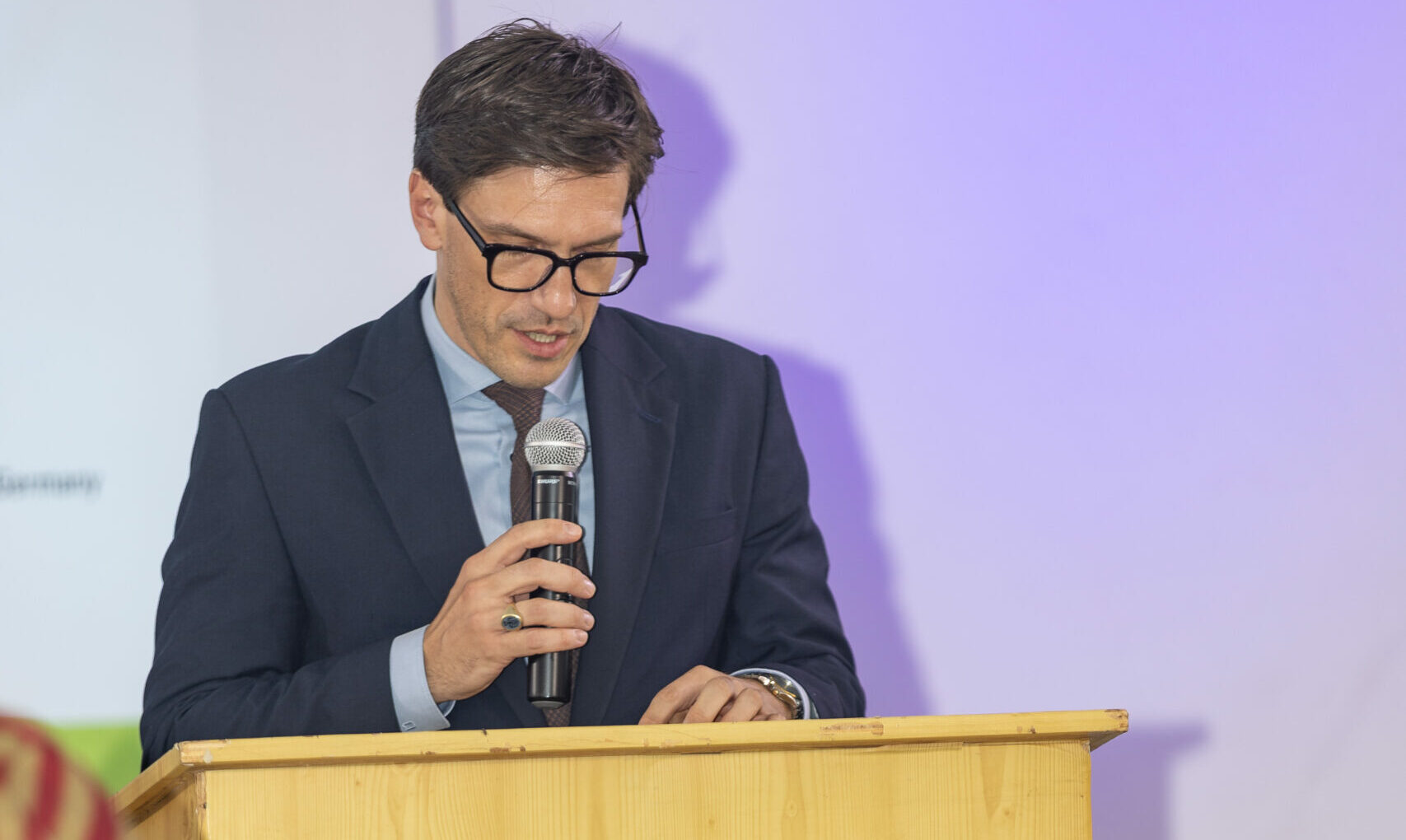

German Ambassador to Ghana, Frederik Landshöft, has averred that northern Ghana’s resilience inspired the launch of Climate Talks 2026 in the region.
According to him, Climate Talks is an initiative of the German Federal Foreign Office aimed at raising awareness, fostering dialogue, and creating space for people to share experiences and offer solutions.
In his opening remarks at the maiden edition of the event in the Northern regional capital, Tamale, on Wednesday, June 9, 2026, on the theme; ‘Building climate security resilience in Ghana’, the Ambassador gave reasons why the issue must be taken seriously.
With the changes in climate affecting the overall livelihoods of humanity, he noted that “changes in climate are increasingly affecting how people live, work and provide for their families. When livelihoods come under pressure, communities come under pressure too.”
He draws a link between climate change and conflict, noting that the crisis does not directly create violence but rather exacerbates tensions due to the limited resources it creates.
Ambassador Landshöft explained that limited resources fuel competition, heightening conflict risks in vulnerable areas.
“Climate change does not automatically create conflict, but the resources become scarcer, where economic opportunities are limited and where vulnerabilities already exist, tensions can become harder to manage.”
According to him, the development is usually evident in “farmer-herder disputes, conflicts linked to land and natural resources” as well as when “communities face increasing environmental pressure.”
The dialogue however, Landshöft revealed, was “not primarily about risks; it is about resilience and northern Ghana has much to teach us about resilience.”
“The story of Northern Ghana is therefore not only a story of challenges. It is also a story of strength. That is why it is the perfect place to begin this year’s Climate Talks series,” he stated.
The climate change conversation has become critical following the global rise in temperatures, with Ghana experiencing some related risks.
Experts have warned of the devastating impacts on the country’s agriculture, water resources, and economy.
The Ghana Meteorological Agency (GMet), has projected that the country is set to face more frequent and intense droughts, floods, and heatwaves, threatening food security and livelihoods.
Rising temperatures and changing rainfall patterns are altering the growing seasons, affecting crop yields, and impacting the livelihoods of farmers.
The Ambassador explained that the conversation will continue in the coming months across other parts of the region.
“Over the coming months, we will continue these conversations across Ghana. We will bring together security institutions, traditional authorities, researchers, civil society rganisations, community leaders and young people.”