
Ghana National Gas Company (Ghana Gas), has intensified efforts to attract international investment partners for major gas infrastructure projects aimed at strengthening the country’s energy security, expanding gas processing capacity and supporting future industrial growth.
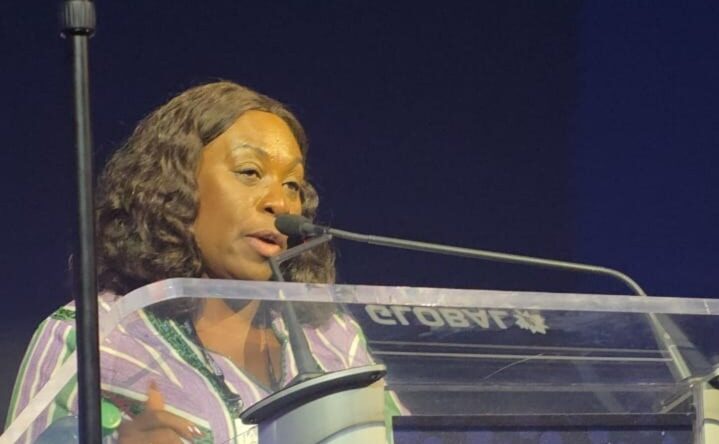
Speaking at the Global Energy Show Canada 2026 in Calgary, Chief Executive Officer of Ghana Gas, Judith Adjobah Blay, presented a compelling investment case for the company, highlighting plans to construct a second gas processing plant and a new cross-country natural gas transmission pipeline to meet the country’s growing energy demand.
The Global Energy Show is regarded as one of North America’s largest business-to-business energy conferences and exhibitions, bringing together more than 30,000 industry professionals, investors, project developers, financiers, policymakers and energy executives from over 100 countries.
The platform is widely recognized as a marketplace where governments and energy companies showcase investment-ready projects, build strategic partnerships and mobilize capital for infrastructure development.
Against that backdrop, the CEO used the international stage to position Ghana Gas as a key investment destination within West Africa’s evolving natural gas value chain.
“We are open for business,” she declared, inviting global investors and strategic partners to participate in the company’s next phase of infrastructure expansion.
According to her, the country’s electricity demand has risen to approximately 4,600 megawatts, reinforcing the critical role of natural gas as the country’s primary fuel for thermal power generation.
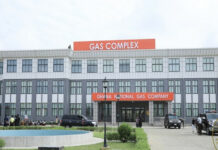
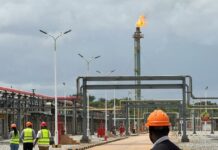
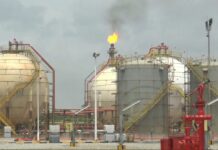
She explained that Ghana Gas currently processes approximately 120 million standard cubic feet per day (MMscfd) of raw natural gas at its Atuabo Gas Processing Plant, which has an installed processing capacity of 150 MMscfd.
Beyond its processing activities, the company also transports an additional 270 MMscfd of gas from other producers through its transmission network to power plants and industrial consumers across the country.
Mrs. Blay noted that as upstream gas production continues to expand, additional midstream infrastructure will be required to monetize new gas resources, improve energy reliability and support industrial development.
To address the anticipated increase in gas supply, Ghana Gas plans to construct a second gas processing plant with a capacity of 150 MMscfd, effectively doubling the company’s processing capability.
“The growth of Ghana’s upstream sector presents significant opportunities for gas infrastructure development. We are therefore seeking strategic partners and investors to join us in developing our second gas processing plant,” she said.
She further disclosed plans to develop a 278-kilometre bi-directional natural gas transmission pipeline linking western and eastern parts of the country.
The proposed pipeline would traverse four regions and provide an alternative route for transporting processed gas from the country’s western production hub to power generation centres and industrial zones in the east.
According to the Ghana Gas CEO, the project would complement existing transmission arrangements involving the West African Gas Pipeline system, which interconnects Nigeria, Benin, Togo and Ghana.
She considers the planned investments strategically important as they would improve transmission flexibility, reduce supply bottlenecks, enhance energy security and create additional capacity to accommodate future gas discoveries.
The projects are expected to support the country’s industrialisation agenda by ensuring a stable and affordable supply of natural gas to power plants, manufacturing facilities, petrochemical industries and other energy-intensive sectors.
By showcasing these opportunities at the Global Energy Show, she is confident that Ghana Gas is positioning itself to tap into growing international interest in natural gas infrastructure investments at a time when global energy markets are increasingly focused on energy security, reliable supply chains and strategic infrastructure development.
The event itself has become a major platform for connecting project developers with capital providers and facilitating large-scale energy investments across the global energy sector.
For her, successful partnerships on the proposed projects could unlock billions of dollars in infrastructure investment, create jobs, deepen local participation in the energy sector and strengthen the country’s position as a regional natural gas hub within West Africa.
As Ghana seeks to expand its gas-to-power and industrialisation agenda, Ghana Gas believes the next phase of growth will depend on strategic partnerships capable of transforming the country’s abundant natural gas resources into long-term economic value.
By Eric Yaw Adjei