
In an era of economic turbulence, one state-owned enterprise is proving that prudent financial management combined with worker dedication can still deliver results.
The Chief Executive Officer of the Ghana National Gas Company, Ms. Judith Adjobah Blay, has credited her workforce’s resilience and strict cost controls for the company’s operational growth and healthy profit, despite persistent economic challenges.
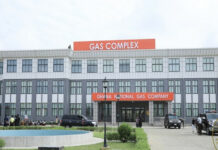
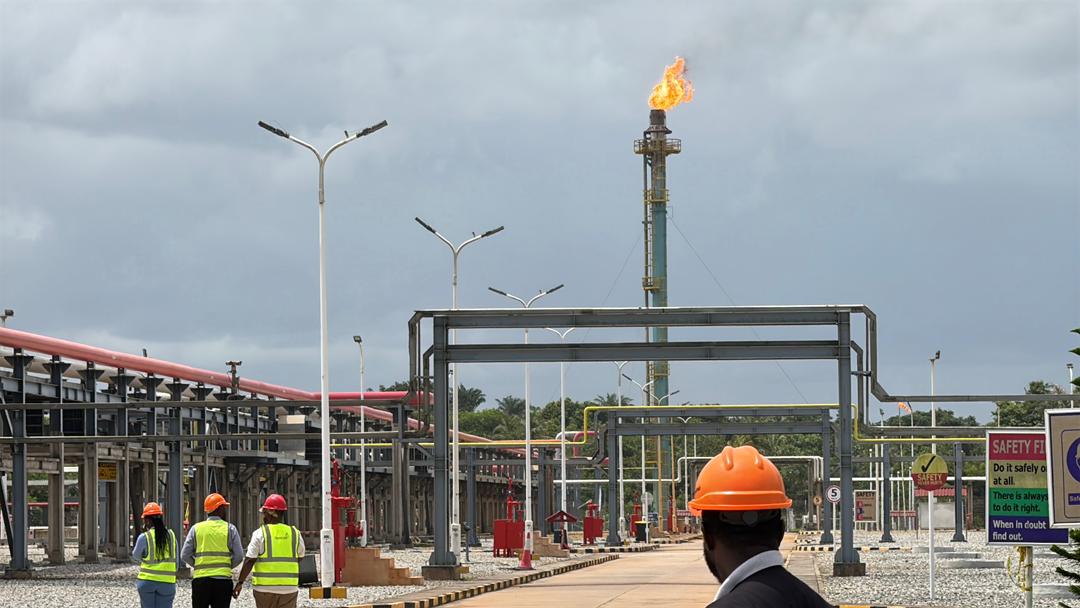
Speaking on Friday, April 24, 2026, during a visit by the Parliamentary Select Committee on Energy to the Atuabo Gas Processing Plant, Ms. Blay painted a clear picture of a company that has learned to do more with less.
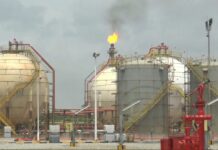
Ms. Blay revealed that following a meticulously executed shutdown exercise last year, the plant has significantly ramped up its processing capacity. Output has risen from an average of 100 million standard cubic feet per day (MMSCFD) to about 120 MMSCFD, with the facility now fully capable of processing up to 140 MMSCFD.
She noted that this preparedness aligns perfectly with the Gas Sales Agreement (GSA) signed with the Jubilee partners, who have committed to supplying 130 MMSCFD of gas.
“The Atuabo plant is ready to handle this volume,” the CEO stated, praising the collective efforts of both engineers and non-engineers within the company.
While celebrating operational wins, Ms. Blay candidly addressed the company’s financial hurdles. Ghana Gas recorded a profit of approximately GH₵250 million, but revenue challenges persist largely driven by external factors beyond management’s control.
The core issue, she explained, is a currency mismatch. Ghana Gas invoices for its product in US dollars, but operates and reports in Ghana cedis. The recent strengthening of the local currency generally a boom for the broader economy has paradoxically trimmed the company’s revenue when converted into cedis.
“We budgeted with an exchange rate of GH₵15.5 to one dollar, but current rates have led to losses of about GH₵4 to GH₵5 per dollar,” Ms. Blay explained.
She cautioned that any further appreciation of the cedi could worsen the situation, noting that the company’s revenue stream remains highly sensitive to exchange rate movements.
The CEO also identified regulatory tariffs as another major concern. Ghana Gas had proposed a tariff of about $2.4 per unit of gas, but regulators approved a significantly lower rate of approximately $1.3 – a gap that has heavily impacted projected revenue.
Drawing a sharp contrast between her management’s approach and that of previous administrations, she was unequivocal.
“Ghana Gas made a healthy profit last year because we spent within our means. We did not engage in the kind of overspending seen under the previous administration. Controlling expenditure has been my main focus as CEO. If we had not changed our way of spending, we would not have achieved this result.”
She further disclosed that the company has now built sufficient reserves to sustain operations and support broader national development. Accountability, she stressed, is not just a slogan but the operating principle guiding every financial decision.
“We will continue to put things right and make sure every expenditure is accounted for. That is the only way Ghana Gas can run efficiently and deliver for the country,” she added.
Ms. Blay returned repeatedly to one theme: gratitude for the workforce. She described the staff as vigilant stewards whose collective discipline made the difference.
“I thank the hardworking staff of Ghana Gas. This cost-optimized approach has really yielded results. If we had not been conscious about our spending, we would not have achieved this milestone.”
In her closing remarks, she added: “Their discipline and commitment have ensured the company remains financially stable even in the face of reduced revenue.”
Leading the Parliamentary Select Committee on Energy, the Chairman, Hon. Emmanuel Kwasi Bedzrah – Member of Parliament for Ho West – described the visit as timely.
He noted that the engagement gives Parliament a clear understanding of Ghana Gas’ operations, achievements, and challenges as the country seeks to strengthen its energy security.
“This visit gives Parliament a clear understanding of Ghana Gas’ operations, achievements, and challenges as we seek to strengthen our energy security.”
The Atuabo Gas Processing Plant remains a strategic national asset. It processes natural gas for power generation and industrial use, directly influencing electricity stability and industrial productivity.