
The United Nations has highlighted significant progress made by Ghana in economic recovery and human development over the past year, while cautioning that climate change, unemployment, inequality and funding constraints remain major obstacles to sustainable development.
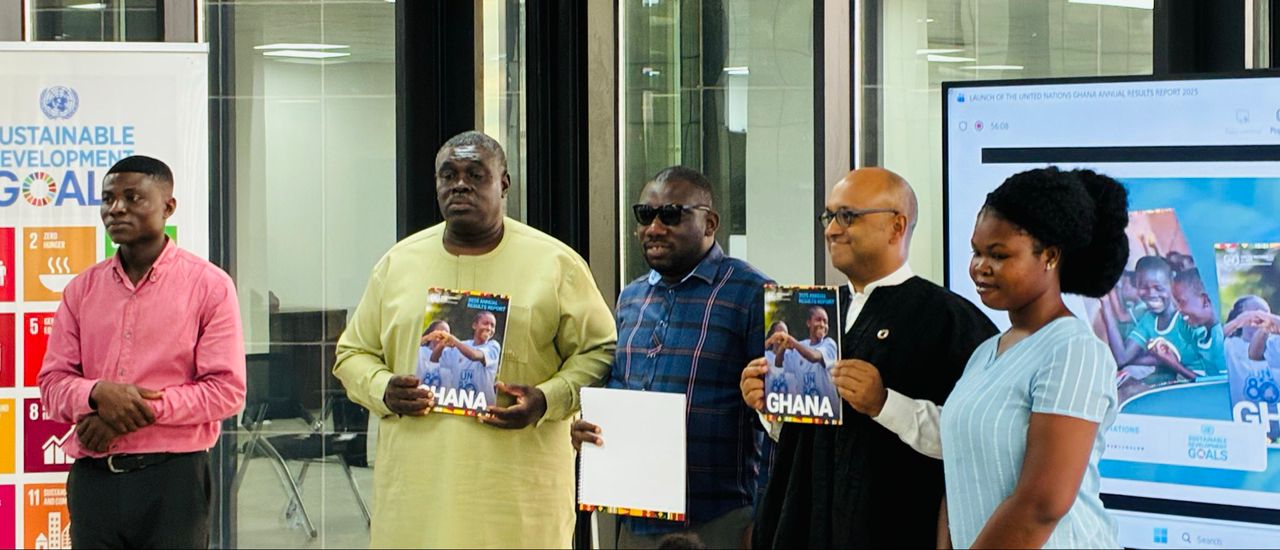
The observations were contained in the UN Ghana Annual Results Report 2025, launched on Tuesday in Accra.
Speaking at the event, UN Resident Coordinator Zia Choudhury described the report as the United Nations Country Team’s account to the people of Ghana, outlining what the organisation set out to achieve, what was delivered and areas where further work is needed.
He noted that 2025 was a year of transition for Ghana, with a new government taking office amid changing global development priorities and increasing pressure on international development financing.
Despite these challenges, Choudhury said Ghana recorded important gains across key sectors of the economy.
“Inflation declined significantly, and progress continued across health, education and livelihoods,” he stated.
However, he stressed that the effects of climate change continue to disrupt livelihoods, particularly in northern Ghana, while youth unemployment remains a pressing concern.
According to him, learning outcomes remain a challenge, while inequality, social exclusion and growing pressure on essential public services continue to affect many communities across the country.
The UN Resident Coordinator said the UN system in Ghana delivered programmes worth US$113.3 million in 2025 and achieved an 80 per cent delivery rate against available resources, representing a significant improvement from the 64.6 per cent delivery rate recorded in 2024.
He attributed the improvement to stronger coordination, accountability and collaboration among the 34 UN agencies, funds and programmes operating in Ghana.
Choudhury said the impact of the interventions could be seen in the lives of ordinary Ghanaians.
He cited examples including children receiving quality education and nutrition support, farmers gaining access to improved seeds, climate-smart agricultural techniques and market opportunities, women and girls expanding their economic opportunities and exercising their rights, and persons with disabilities becoming more included in national development processes.
He further noted that communities are becoming better prepared to deal with floods, droughts and other climate-related disasters, while citizens are increasingly engaging with stronger and more responsive institutions.
The UN official emphasized that the achievements were made possible through partnerships with the Government of Ghana, civil society organisations, organisations of persons with disabilities, the private sector and development partners.
He said one of the most significant developments captured in the report was the increasing shift towards a more coordinated UN system in Ghana through joint programming, joint planning and shared accountability.
“This is what UN reform looks like in practice. It is what Member States asked for, and it is what the people of Ghana deserve — a more coordinated UN that is better able to support countries in delivering results at scale,” he said.
Choudhury also raised concerns about the future of development financing, noting that official development assistance is declining globally as resources are stretched across multiple crises.
He warned that these funding pressures could affect the delivery of critical development programmes.
The Resident Coordinator revealed that funding reductions, including cuts in support from USAID, are already creating challenges for some interventions, particularly programmes focused on HIV prevention and treatment.
He noted that while Ghana’s fiscal situation is improving, financing constraints remain and new approaches will be required to close the funding gap needed to achieve the Sustainable Development Goals.
According to him, the UN is committed to supporting Ghana to mobilise domestic resources, attract private investment and explore innovative financing mechanisms to support development efforts.
Looking ahead, Choudhury said the development of the next UN Sustainable Development Cooperation Framework presents an opportunity to further align UN support with Ghana’s national priorities and strengthen partnerships for greater impact.
He reaffirmed the UN’s commitment to supporting Ghana’s development agenda and advancing the Sustainable Development Goals.
“The progress documented in this report is encouraging. The challenges ahead are real. And our commitment to working alongside the Government and people of Ghana remains unwavering,” he said.
By Wisdom Sarfo