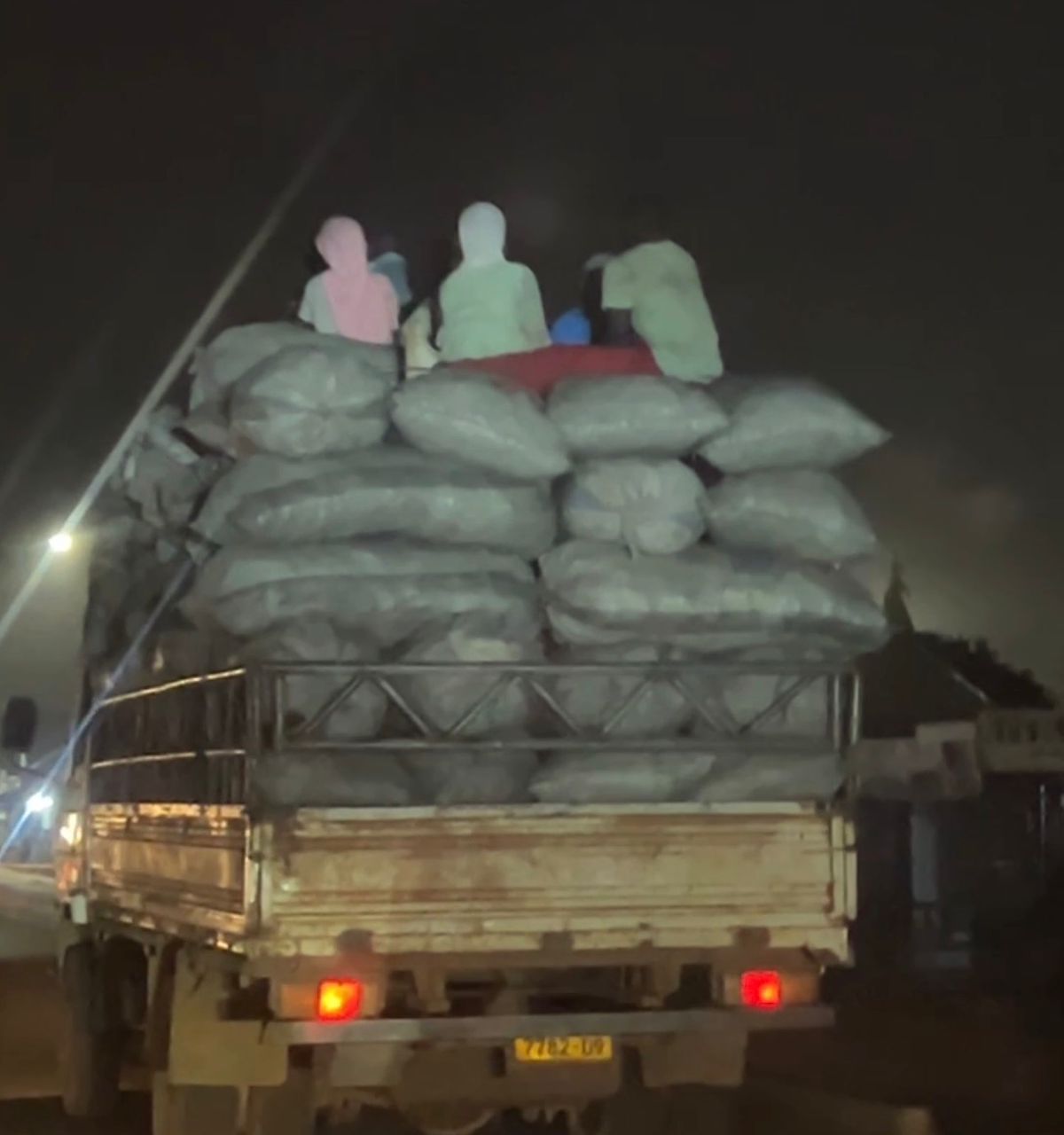

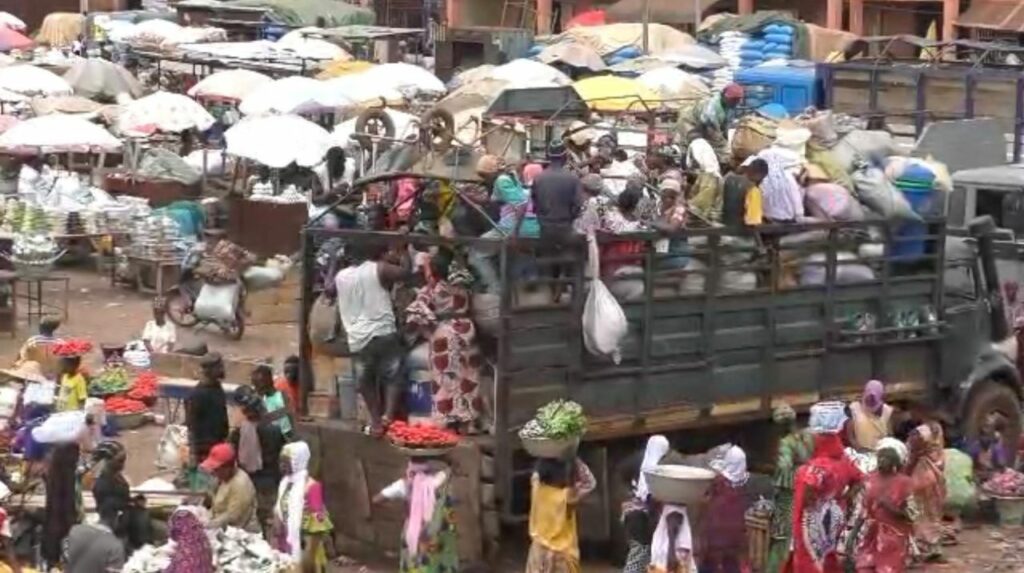
Before sunrise, the quiet roads leading to Katinga begin to stir. One by one, trucks rumble into town, their cargo beds soon piled high with sacks of maize, yams, vegetables, livestock and household goods destined for market.
Then come the people.
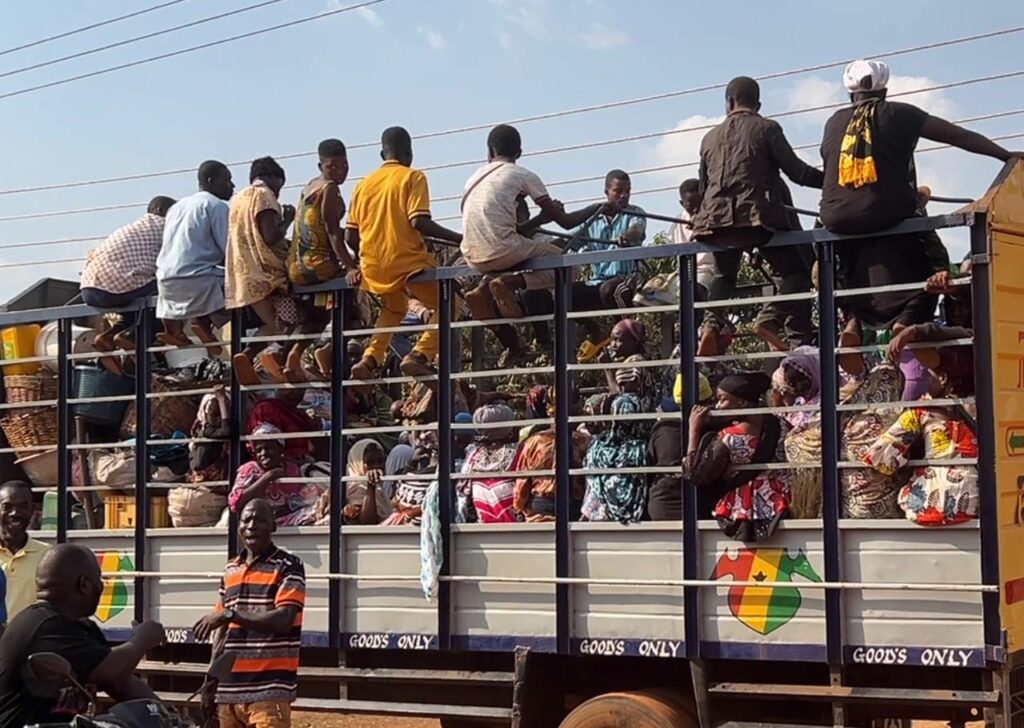
With little space left, traders squeeze themselves between the produce, perching on bags of grain or clinging to the sides of the trucks as the vehicles set off.
There are no seatbelts, no designated passenger seats and often little regard for the dangers of travelling this way.
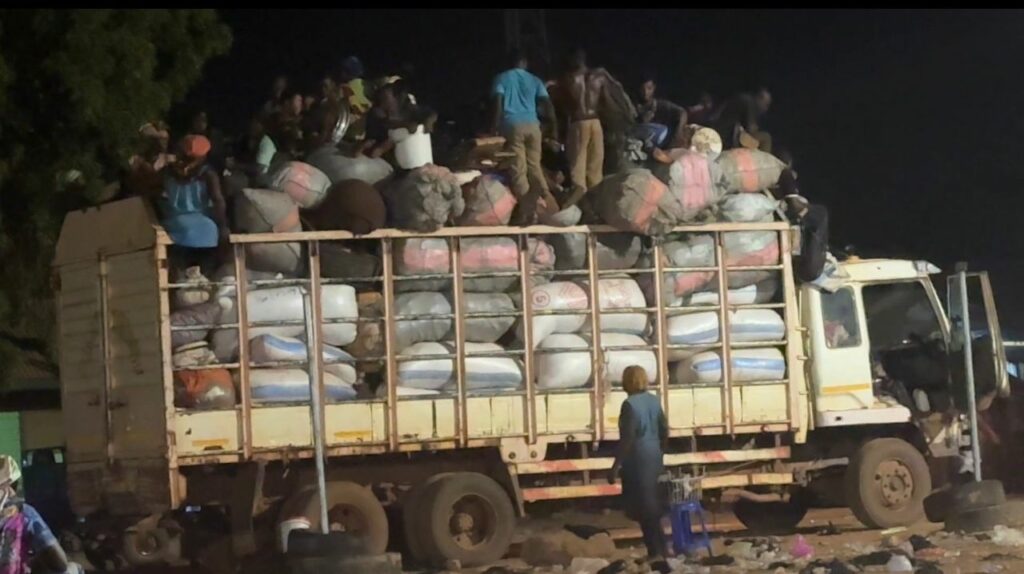
For many, however, it is the only option they can afford.
“I know it is risky,” says Amina, a trader who regularly travels to market on overloaded trucks. “But paying for separate transport for myself and my goods is expensive. If I don’t go this way, I may not be able to sell.”
Her dilemma reflects the reality facing many rural traders whose livelihoods depend on reaching market centres at the lowest possible cost.
Drivers, too, say they are responding to the economic pressures of their passengers.
Mutala, who frequently transports traders on market days, says many plead to ride with their goods because they cannot afford another vehicle.
“They ask us to help them,” he explains. “Sometimes, if you refuse, they may not get to the market at all.”
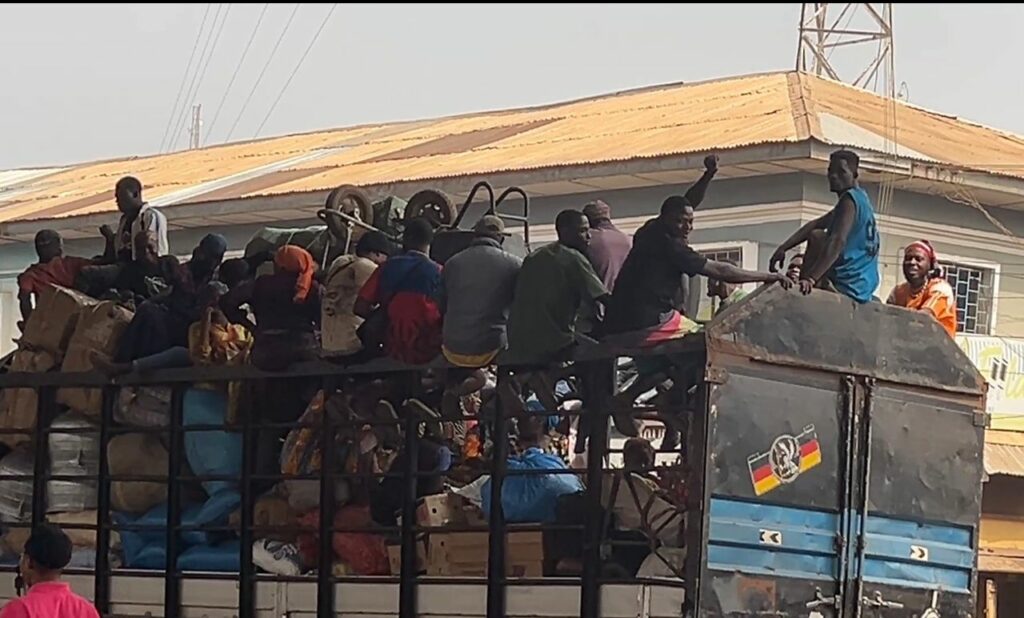
But the practice comes with potentially devastating consequences.
Mustapha still remembers the day an overloaded truck he was travelling in crashed, claiming about five lives. He survived, but the experience changed him forever.
“The incident is something I cannot forget,” he says. “It showed me how quickly a normal trip can turn into tragedy.”
His story is a reminder that the risks extend far beyond inconvenience.
According to provisional figures from the National Road Safety Authority, Ghana recorded 14,743 road crashes in 2025, resulting in 2,949 deaths and 16,714 injuries.
While crashes occur for many reasons, safety officials continue to caution against dangerous practices such as transporting passengers on overloaded cargo trucks, warning that excess weight can affect braking, stability and a driver’s ability to maintain control.
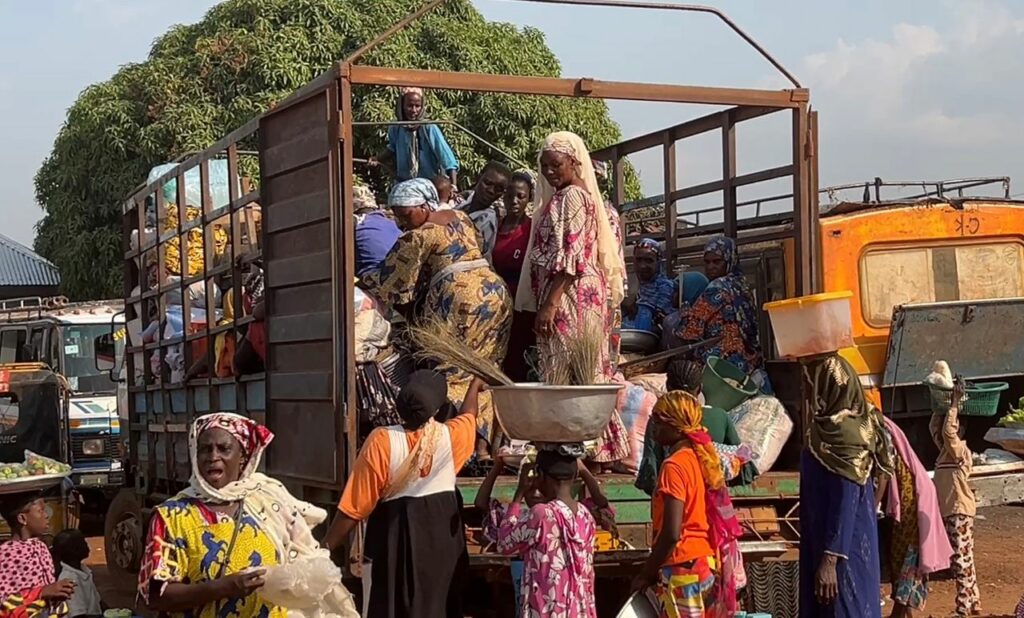
The National Road Safety Authority says changing behaviour will require sustained education and stricter enforcement of transport regulations.
The Motor Traffic and Transport Department has also pledged to intensify operations against dangerous overloading practices.
Yet the people climbing onto these trucks each market day are not thrill-seekers. They are farmers, traders and labourers trying to earn an income in difficult circumstances.
Some believe the solution lies not only in enforcement but also in making transportation more affordable and accessible for rural communities.
Others point to the need for improved road infrastructure and better public transport services linking farming communities to major markets.
Until those challenges are addressed, many traders will continue making the same calculation every market day: weighing the cost of safer transport against the need to make a living.
And as overloaded trucks pull away from Katinga with passengers sitting atop their goods, the journey to market becomes more than a business trip. For some, it is a daily gamble with their lives.
By Nadra Mohammed