
Fire, water, earth and air.
For centuries, these four elements have shaped our world; and standing at the intersection of all four are the men and women of the Ghana National Fire Service.
Firefighters are often among the first people called when disaster strikes.
Yet in recent months, some firefighters in Ghana have found themselves battling more than flames. At several fire scenes, tensions between firefighters and civilians have escalated into confrontations, raising questions about public understanding of emergency response operations.
To better understand the realities of the job, I spent a day with firefighter Alex King Nartey, following him from the start of his shift through the routines and responsibilities that prepare him and his colleagues for emergencies.
The day begins long before any emergency call comes in.
At the fire station, firefighters assemble for morning parade, receive briefings, and prepare themselves for whatever the day may bring.
For Alex, every shift starts with one important task; preparation!
Before a single fire call is received, every piece of equipment must be accounted for and inspected.
“We check every single thing, from the hoses, nozzles, ….”
It is a routine repeated daily across fire stations nationwide. Then comes the waiting.
For firefighters, an ordinary day can change in seconds.
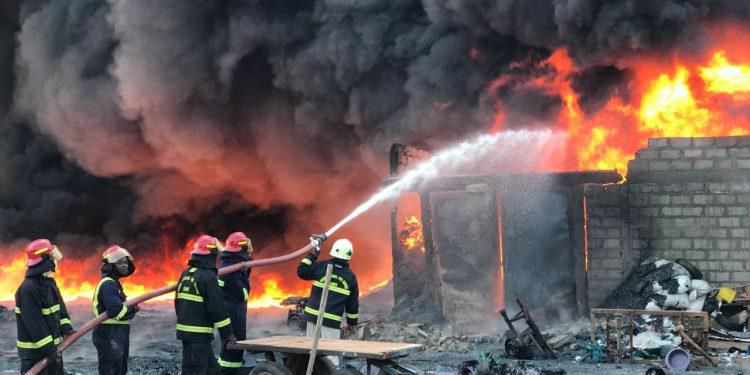
Just as we were on tour, a call came through, Information was gathered, the crew mobilized and within moments, we were on the road.
“Woow, wooow, wooow”….. the loud sirens paved way for the firetruck along the way, to make arrival to the scene swift.
While many members of the public only see the final moments of a firefighting operation, there are protocols that guide every response.
The first priority upon arrival is assessing the situation.
Firefighters determine the source of the fire, identify potential risks, establish safety zones, and evaluate whether anyone remains trapped.
Only then does the firefighting operation begin.
“We do an assessment when we get to the scene, then identify the weaknesses and challenges we will be confronting. We don’t just get to a fire scene and start spraying water, some fires require a foam concentrate to be doused” Alex King Nartey shared.
Just as firefighters follow protocols, civilians also have responsibilities during emergencies.
Public Relations Officer of the Ghana National Fire Service Desmond Ackah said “The public should allow firefighters do their work without interruption and should support by adhering to the various fire safety messages shared regularly. Safety is a personal thing” he said.
At the scene, some eyewitnesses interacted with Alex and his team, thanking them for their swift response, but also making a complaint about the lack of fire station at their area -Laterbiokorshie.
“It’s very bad”, he said. “We struggle a lot when fires occur due to the distance of the nearest station to our area.”
“The Assemblies need to open more fire stations to make our work easier”, Alex replied.
Another challenge lies beneath the streets. Fire hydrants, a critical source of water during emergencies, are sometimes inaccessible, faulty, or difficult to locate due to encroachment.
Alex appealed to the government, corporate Ghana, and affluent individuals to remember the Ghana National Fire Service when making donations, to better equip them with the tools, cars and stations needed to make their work easier.
Despite these limitations, firefighters continue to answer every call. For Alex and his colleagues, the work goes beyond extinguishing flames. It is about protecting communities, often at personal risk.
And while recent altercations between firefighters and civilians have made headlines, the solution may lie not in assigning blame, but in educating the masses.
While frustration often runs high when lives, livelihoods and property are at stake, firefighters say their work is most effective when communities work with them; not against them. A few moments of cooperation can make the difference between a fire being contained and a disaster escalating.
As fire outbreaks continue to challenge communities across the country, perhaps the biggest lesson is that firefighting is not a one-sided responsibility. It requires preparedness, public cooperation, funding, and a shared understanding of the realities on the ground.
By Nurah Mohammed