
The Ghana National Fire Service (GNFS) says it rescued more than 150 people from flood-related emergencies across the country following Monday’s (June 29) heavy rains, while confirming that at least 12 people lost their lives in separate incidents.
Speaking on the emergency response in an interview on TV3’s Ghana Tonight, ADO 1 Alex King Nartey with the GNFS Public Relations Department said firefighters were stretched across several communities as they carried out rescue operations and responded to multiple distress calls.
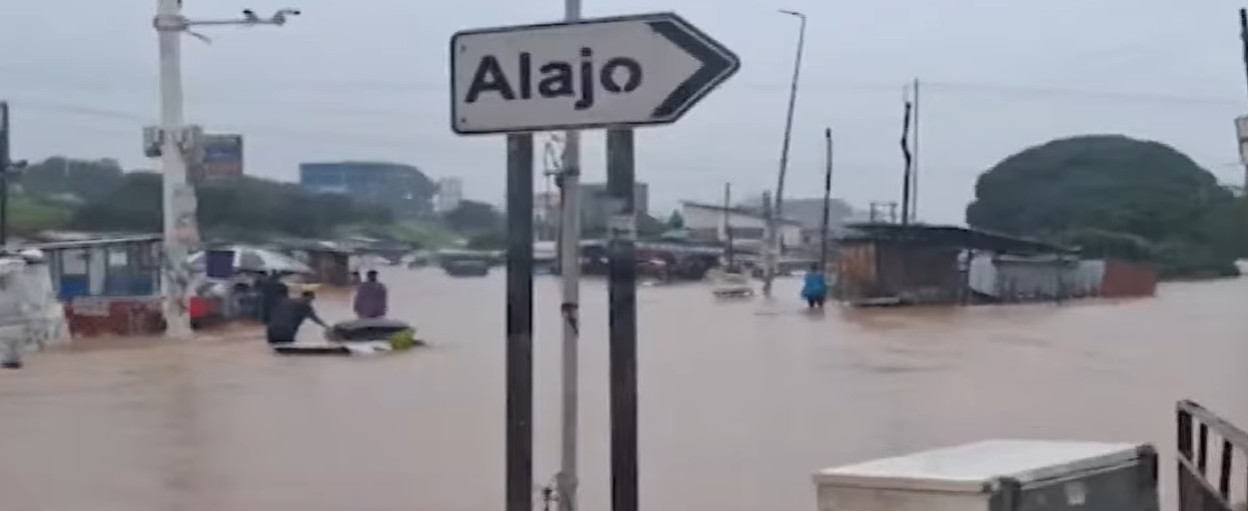
According to the GNFS, rescue operations were conducted in several flood-hit communities, including Tse Addo, Achimota, Kasoa, Nyanyanu, Taifa, Weija, Dome, Alajo and in Cape Coast.
“I will say that the total number of people we have rescued today will be in excess of over 150 people,” he said.
The Fire Service also confirmed recovering the body of an elderly man believed to be in his 60s at Alajo after floodwaters swept through the area. Police were subsequently called to the scene to take custody of the body.
Providing an update on casualties, Alex King Nartey noted that 12 deaths had so far been verified across affected communities.
“At Alajo, personally I was there. We recovered the body of one man we believe to be in his 60s who passed away. So, we had to get the police to come in and get the body.
“Other death toll that I can confirm will be 12 people,” he stated during the interview on Monday, June 29.
According to the breakdown, a couple lost their lives at Tema Newtown, while an electrocution incident at Alajo also claimed a life.
At Achimota-Alogboshie, a woman and her child died, while four people were confirmed dead at Odawna. Another man also lost his life at Achimota Abofu.
The Service indicated that reports of additional fatalities were still being verified.
“It looks like there are more but for verifiable purposes, I am sticking to 12 until I am able to verify the numbers,” the GNFS noted.
The Fire Service attributed the recurring devastation caused by flooding partly to human behaviour, stressing that improvements in drainage infrastructure alone would not solve the problem.
“I think attitudinal change has always been one thing I have never been shy to say. The Government can do their best with drainage systems but as a people, until we change our attitude, we will still be back here having the same discussion,” the Service stated.
The GNFS urged the public to heed safety advisories during periods of heavy rainfall and avoid flood-prone areas to minimise the risk of injury and loss of life.