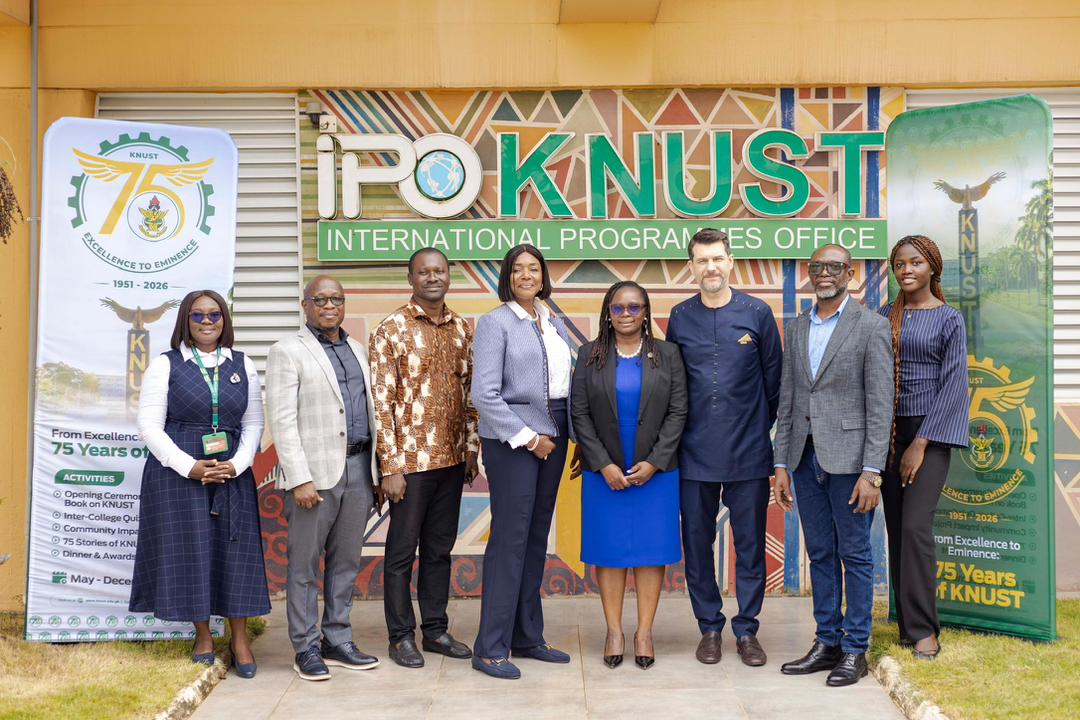

The Head of the Department of Economics at the Kwame Nkrumah University of Science and Technology (KNUST), Prof. Eric Fosu Oteng-Abayie, has appealed for constitutional reforms, fiscal decentralisation and the integration of Artificial Intelligence (AI) into Ghana’s education system as critical steps towards achieving sustainable economic transformation.
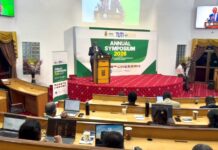
He made the appeal on Tuesday, June 30,2026, during a courtesy engagement between KNUST’s Department of Economics and a delegation from the International Monetary Fund (IMF), led by the Fund’s Resident Representative, Dr. Adrian Alter.
The meeting featured a presentation on the Regional Economic Outlook for Sub-Saharan Africa and discussions on Ghana’s IMF-supported economic programme.
Speaking on Ghana’s economic trajectory, Prof. Oteng-Abayie argued that the country’s repeated reliance on IMF support reflects longstanding structural weaknesses rather than temporary economic shocks.
“We have not really planned well,” he said, pointing to recurring flooding, inadequate infrastructure and weak long-term planning as evidence of the country’s development challenges.
“Our infrastructure is not able to hold up when you compare it with other developing countries,” he added.
The economist maintained that Ghana’s National Development Planning Commission lacks the constitutional authority needed to ensure continuity in national development planning. As a result, he said, successive governments often abandon long-term plans in favour of politically driven flagship programmes.
“This is the time to strengthen our Economic Development Commission through the constitutional review process,” he stated. “We also need to move beyond political decentralisation to real fiscal decentralisation.”
According to Prof. Oteng-Abayie, granting Metropolitan, Municipal and District Assemblies greater fiscal autonomy would enable them to mobilise local resources and invest in infrastructure tailored to their specific development needs.
“The infrastructure needed in Accra is different from what is required in the middle belt or northern Ghana,” he explained.
On Ghana’s engagement with the IMF, he noted that while previous programmes under the Extended Credit Facility (ECF) largely focused on restoring macroeconomic stability, the current Policy Coordination Instrument (PCI) presents an opportunity to pursue broader economic transformation.
“The IMF is looking at short- to medium-term stability, but not economic transformation,” he said. “If we are not stable and we are not building resilience into our policies, we will always go back. We will never take off into economic transformation.”
Prof. Oteng-Abayie identified low labour productivity, limited adoption of technology and inefficiencies in public spending—particularly in infrastructure, education and healthcare—as major constraints to Ghana’s economic progress.
He stressed that the success of the PCI would ultimately depend on policies that stimulate productivity, create jobs and promote inclusive growth.
Turning to the future of education, the economist called for a coordinated national effort to integrate Artificial Intelligence into Ghana’s educational system, warning that failure to prepare students for an AI-driven economy could deepen graduate unemployment.
“Students are going into a world driven by artificial intelligence,” he said. “If we are not upskilling them in AI, we risk a mismatch. Those who can match up will get the jobs, and those who cannot may remain unemployed for years.”
Although Ghana has developed a national AI policy and KNUST has introduced programmes in artificial Intelligence.
The delegation was also scheduled to pay a courtesy call on the Asantehene, Otumfuo Osei Tutu II.
By Benjamin Aidoo