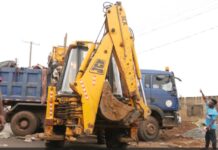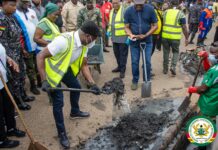

The government’s two-day nationwide clean-up exercise has officially ended, with many communities recording significant progress in clearing choked gutters and drains.
Across several parts of the country, residents, sanitation workers, assembly officials, and volunteers participated in the exercise to remove refuse, weeds, and silt from drainage systems as part of efforts to improve sanitation and reduce flooding.
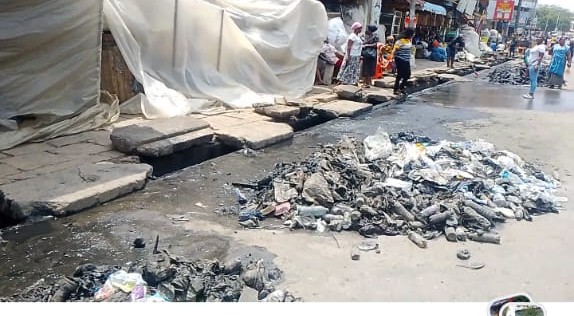
Despite the success of the exercise, concerns remain over the large heaps of debris and sand left along roadsides and beside gutters awaiting collection.
A tour of some streets in Accra, particularly within the Ablekuma South, Ablekuma North and the Accra Metropolitan Assembly (AMA), revealed that while many drains had been thoroughly desilted, the excavated waste has yet to be transported to designated disposal sites.
Piles of sand, plastic waste and other debris were seen lining several roads and drainage channels.
The situation has become a source of worry for traders who fear the delay in evacuating the waste could affect both their businesses and the effectiveness of the clean-up exercise.
“We appreciate the effort to clean the gutters because flooding affects all of us. But leaving the sand and rubbish here is creating another problem. Customers are finding it difficult to access our shops,” one trader said.
Another trader expressed concern over the possibility of rainfall washing the debris back into the drains.
“If it rains before the waste is collected, everything will end up back in the gutters. Then all the hard work done over the past two days would have been in vain. The authorities should complete the job as quickly as possible,” the trader noted.
Some traders also complained that the heaps of waste have generated dust and unpleasant odours, making the trading environment uncomfortable.
“Business has already been slow because people are avoiding this stretch. We are appealing to the assemblies and waste management companies to come for the debris immediately,” another trader appealed.
Residents have therefore called on the relevant Metropolitan, Municipal and District Assemblies (MMDAs), together with waste management agencies, to ensure the debris is evacuated promptly to prevent the drains from becoming choked again.
While many residents have praised the high level of participation in the nationwide exercise, they insist that the success of the initiative will ultimately depend on the timely removal of the collected waste and sustained maintenance of drainage systems.
The two-day clean-up forms part of broader efforts to improve environmental sanitation and reduce the perennial flooding experienced in many communities during the rainy season.
Residents remain hopeful that authorities will complete the final phase of the exercise by clearing the remaining debris and ensuring the gains made over the two days are not lost.